
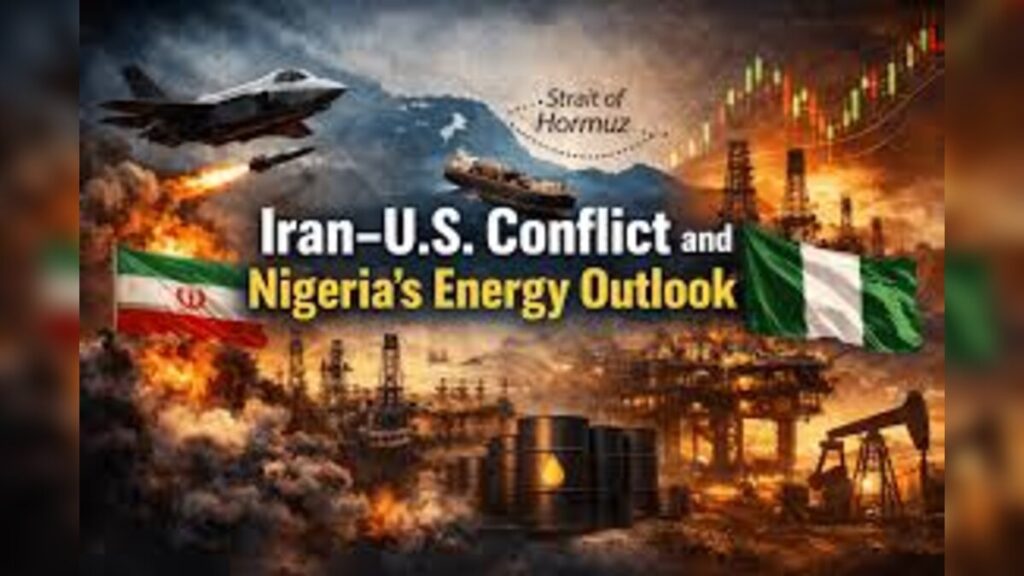
Rising geopolitical tension between the United States and Iran is once again shaking global oil markets, and Nigeria is feeling the ripple effects at home.
As crude prices fluctuate, economists are warning that ordinary citizens are the ones absorbing the shock through higher fuel and transport costs.
Ahead of a major energy gathering in Lagos, experts are already debating what Nigeria should do next—especially as inflation pressures deepen and household budgets continue to shrink.
Economists Push for Direct Cash Support
Energy economists say Nigeria may need to consider targeted cash transfers to protect vulnerable citizens from rising fuel costs.
The idea is simple: instead of broad, inefficient subsidies, send direct financial support to those most affected.
According to Professor Adeola Adenikinju, a former president of the Nigerian Association for Energy Economics, the current global oil situation creates a “double-edged sword” for Nigeria.
On one side, higher oil prices could boost national revenue.
On the other, they worsen living conditions for millions of people already struggling with inflation and rising transport fares.
The Data Problem Holding Everything Back
But there is a major obstacle—Nigeria doesn’t have a reliable national database of vulnerable citizens.
Adenikinju noted that while cash transfers sound like a practical solution, implementation is difficult without accurate records of who actually needs help.
This gap has long been one of the biggest weaknesses in Nigeria’s social welfare system.
He argued that even recent wage adjustments for civil servants only scratch the surface, since millions working in the informal economy are left out entirely.
Why Energy Prices Hit Nigerians So Hard
Fuel price increases don’t stay isolated at the pump.
They ripple across transportation, food supply chains, and manufacturing costs.
When petrol goes up, commercial transport fares rise. When transport rises, food prices follow.
The result is a cycle of inflation that disproportionately affects low-income households who spend most of their income on basic needs.




Economists say this is why energy policy discussions in Nigeria are no longer just technical—they are deeply social and political.
Lagos Conference Becomes Policy Pressure Point
These concerns are expected to dominate discussions at the upcoming 19th annual international conference of the Nigerian Association for Energy Economics, scheduled for April 26–29, 2026 in Lagos.
The conference theme, “Evolution of Energy Mix in Africa: The Role of Technology, Economics and Public Policy,” reflects the continent-wide urgency to rethink energy systems under global pressure.
Delegates will include policymakers, investors, academics, and industry leaders from across Africa and beyond.
Africa’s Energy Dilemma Gets Sharper
Association president Hassan Mahmud says Africa is stuck in a difficult position: it must transition to cleaner energy while still dealing with energy poverty and underdevelopment.
He noted that although Africa contributes less than 4% of global carbon emissions, it is still expected to decarbonise at a rapid pace—often without enough funding or technology support.
This imbalance, he argued, risks slowing down industrial growth across the continent if not properly managed.
Big Names, Big Ideas, and a Refinery Visit
The conference will also feature major figures in Nigeria’s energy space, including Tony Elumelu of Heirs Energies and representatives from the Dangote Group.
Participants are expected to visit the massive Dangote Refinery, a 650,000 barrels-per-day facility that has become central to Nigeria’s push for local refining capacity.
Experts believe domestic refining could reduce import dependence and stabilise fuel pricing over time.
Downstream Sector Seen as Job Engine
Another former association president, Professor Yinka Omorogbe, argues that Nigeria’s focus should shift more aggressively toward the downstream oil sector.
She believes the upstream sector—focused mainly on crude extraction—does little for job creation.
In contrast, refining, distribution, and petrochemical industries could generate hundreds of thousands of jobs if properly developed.
Her view reflects a growing policy debate in Nigeria about whether exporting crude is still sustainable in the long term.
Impact and Consequences
If oil prices continue to rise, Nigeria faces a difficult balancing act between revenue gains and domestic hardship.
Without intervention, inflation could worsen, pushing more households into financial stress.
Targeted cash transfers, if implemented, could help cushion the shock—but only if Nigeria resolves its long-standing data and identification challenges.
At the same time, failure to strengthen domestic refining capacity may keep fuel prices volatile and deepen economic inequality.
What’s Next?
The Lagos energy conference is expected to produce policy recommendations that could influence government decisions on social protection and energy reform.
Key next steps likely include:
- Debate on introducing targeted cash transfer systems
- Push for improved national welfare data infrastructure
- Policy focus on expanding downstream oil and gas investment
- Regional cooperation on Africa’s energy transition strategy
The real test will be whether these discussions translate into action once the conference ends.
Summary
Rising global oil tensions are forcing Nigeria to reconsider how it protects citizens from fuel price shocks.
Energy economists are calling for targeted cash transfers, but data gaps remain a major challenge.
With inflation already rising, the upcoming Lagos energy conference has become a critical platform for shaping Nigeria’s energy and social policy direction.
Bulleted Takeaways
- Global US–Iran tensions are driving volatility in oil markets
- Nigerian economists are proposing targeted cash transfers for vulnerable citizens
- Lack of reliable national welfare data is a major implementation barrier
- Fuel price increases are worsening inflation and transport costs
- The Nigerian Association for Energy Economics conference will be held in Lagos in April 2026
- Africa faces pressure to transition to clean energy despite limited funding
- Dangote Refinery will be a key focus of technical discussions
- Experts argue downstream oil sector development could create large-scale employment
- Policy outcomes from the conference may shape Nigeria’s energy and welfare strategy

