
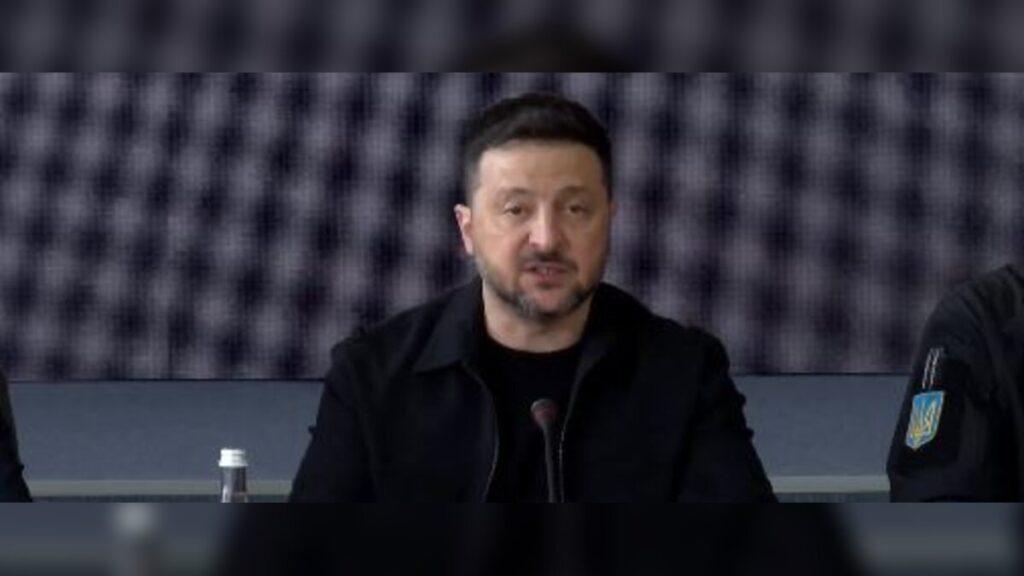
Ukrainian President Volodymyr Zelenskyy used an address marking the 40th anniversary of the Chornobyl disaster to warn that Russia has turned some of Europe’s most sensitive nuclear sites into part of its war strategy.
He said no one could have imagined, decades after the 1986 catastrophe, that Chornobyl and its Exclusion Zone would again become connected to military danger.
For Zelenskyy, Russia’s actions at Chornobyl and the Zaporizhzhia Nuclear Power Plant show a reckless disregard for radiation safety, civilian lives, and international security.
Chornobyl Became a Route of War, Zelenskyy Says
Zelenskyy said Russian forces used the Chornobyl area during their attempt to advance on Kyiv and seize the Ukrainian capital.
He accused them of moving military equipment through the Exclusion Zone, digging positions in restricted forests, deploying artillery, and firing from the area.
He argued that the occupation exposed how little Russian forces understood the meaning of the site they had entered.
Chornobyl is not just another piece of territory. It is the location of one of the world’s worst nuclear disasters, and the land around it remains tightly controlled because of radiation risks.
Ukrainian Workers and Guards Were Abused and Captured
The president also accused Russian troops of mistreating Ukrainian personnel working at the Chornobyl plant and related facilities.
He said some Ukrainian servicemembers, including National Guard members who were guarding the Chornobyl Nuclear Power Plant, remain in Russian captivity.
That point added a human dimension to the anniversary address.
Zelenskyy was not only speaking about damaged infrastructure and nuclear safety, but also about Ukrainians who were working or serving at the site when Russia’s invasion reached the area.
Zaporizhzhia Nuclear Plant Remains a Central Concern
Zelenskyy also turned attention to the Zaporizhzhia Nuclear Power Plant, describing it as Europe’s largest nuclear facility and accusing Russia of turning it into a tool of war.
He said Russian forces have used the plant to launch attacks on Ukrainian cities and villages, store weapons and ammunition, place military equipment on site, and mine the perimeter. He also said Russia is effectively holding the nearby city of Enerhodar hostage.
Fourteen Blackouts Underscore the Danger
According to Zelenskyy, the Zaporizhzhia plant has already gone through 14 full blackouts.
That detail is central to Ukraine’s warning because nuclear power plants depend on reliable power and safety systems to prevent dangerous incidents.



Each blackout adds to fears that the plant could be pushed closer to a serious safety failure.
Zelenskyy argued that only Ukrainian control, Ukrainian specialists, and Ukrainian safety protocols can guarantee that radiation risks are properly managed at Zaporizhzhia.
Drone Strike on Chornobyl Confinement Structure Raises Alarm
Zelenskyy also pointed to what he described as a Russian drone strike on the confinement structure covering the remains of Chornobyl’s fourth reactor unit.
He said the fact that Russia would strike such a structure proves it cannot be treated as a normal participant in civilized international relations.
The confinement structure is one of the most important protective elements at Chornobyl. Any military action involving it carries symbolic and safety concerns because it was built to help contain the legacy of the 1986 disaster.
Ukraine Calls for Stronger Sanctions on Russia’s Nuclear Sector
Zelenskyy urged the international community to strengthen sanctions against Russia, including measures targeting its nuclear sector and connected individuals or entities.
He thanked countries that have already reinforced national sanctions regimes, but said the pressure needs to go further.
His argument is that Russia’s nuclear behavior during the war should bring consequences not only for its military and political leadership, but also for nuclear-linked structures that support or benefit the Russian state.
Air Defense and Long-Range Capabilities Framed as Nuclear Safety Tools
The Ukrainian president also called for continued strengthening of Ukraine’s air defense and long-range capabilities. He said these systems protect people, infrastructure, and sensitive facilities such as Chornobyl.
He also argued that stronger Ukrainian military capabilities could help convince Russia that it must bring the war to an end. In his view, defending nuclear sites and civilian infrastructure is directly connected to Ukraine’s broader ability to resist Russian aggression.
Impact and Consequences
Zelenskyy’s address connects the memory of Chornobyl with the current war in a deliberate way.
His message is that nuclear safety is no longer only a technical issue. It has become a front-line security issue because military activity around nuclear facilities can threaten not just Ukraine, but the wider region.
The consequences are serious. If fighting, power failures, or reckless military activity continue around nuclear sites, the risk of a broader emergency remains.
Even without a major nuclear accident, repeated blackouts, military storage, mining, and attacks near sensitive facilities can damage public confidence and increase international alarm.
The speech also increases pressure on Ukraine’s partners. Zelenskyy is asking them to treat sanctions, air defense, and nuclear safety as connected parts of the same response.
What’s next?
Ukraine is likely to keep pushing for stronger international action around Zaporizhzhia, including demands for the return of the plant to Ukrainian control.
Kyiv will also continue pressing for sanctions that reach Russia’s nuclear sector, which has often been more difficult for some countries to target because of energy and technical dependencies.
On the military side, Ukraine will keep asking partners for more air defense systems and long-range capabilities.
Zelenskyy’s message suggests that Kyiv sees those tools not only as battlefield assets, but as protection for nuclear sites, energy infrastructure, and civilian life.
Summary
In a Chornobyl anniversary address, Zelenskyy accused Russia of turning nuclear facilities and radiation-sensitive areas into instruments of war.
He said Russian troops used the Chornobyl Exclusion Zone during their push toward Kyiv, mistreated Ukrainian personnel, and left some guards still in captivity.
He also warned that Russia has militarized the Zaporizhzhia Nuclear Power Plant, which has suffered 14 full blackouts.
Zelenskyy called for stronger sanctions, including against Russia’s nuclear sector, and urged partners to continue strengthening Ukraine’s air defense and long-range capabilities.
Bulleted Takeaways:
- Zelenskyy spoke during an address marking the 40th anniversary of the Chornobyl disaster.
- He said Russia turned Chornobyl and its Exclusion Zone into part of the war.
- Russian forces allegedly used the area while trying to advance on Kyiv.
- Zelenskyy accused Russian troops of digging positions, moving equipment, deploying artillery, and firing from the Chornobyl area.
- He said Ukrainian workers at Chornobyl-related facilities were abused.
- Some Ukrainian National Guard members who guarded the Chornobyl plant remain in Russian captivity.
- Zelenskyy accused Russia of turning the Zaporizhzhia Nuclear Power Plant into a war instrument.
- He said Russian forces store weapons and equipment there and have mined the perimeter.
- The Zaporizhzhia plant has reportedly experienced 14 full blackouts.
- Zelenskyy said only Ukrainian control and Ukrainian safety protocols can prevent radiation risks there.
- He called for stronger global sanctions, including against Russia’s nuclear sector.
- He urged partners to keep strengthening Ukraine’s air defense and long-range capabilities.
