
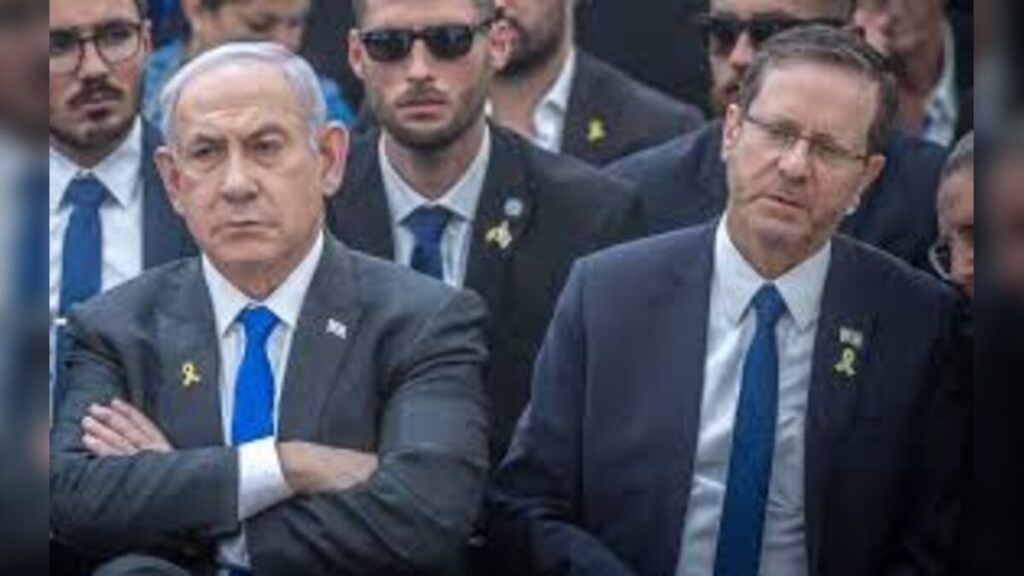
Fresh reports suggest that Isaac Herzog is not preparing to grant a pardon to Benjamin Netanyahu anytime soon.
Instead, the focus appears to be shifting toward a more negotiated solution—one that could ease tensions without taking the dramatic step of presidential intervention.
According to sources familiar with the matter, the president is leaning toward mediation efforts that could lead to a plea agreement rather than stepping in directly with a pardon.
A Strategy Built Around Dialogue, Not Decrees
Behind the scenes, the thinking seems to be less about legal shortcuts and more about political stability.
Herzog’s reported approach is rooted in trying to bring the different sides together, rather than making a unilateral move that could deepen divisions.
Officials close to the situation indicate that the president sees negotiation as a more balanced path—one that allows both legal and political considerations to play out without abruptly ending the process.
What the President’s Office Is Saying
In response to inquiries, the president’s office made its stance clear.
The priority, they say, is reaching an agreement between the parties involved in the case before even considering the possibility of a pardon.
The message is straightforward: efforts to find common ground outside the courtroom should come first. Only after those options are fully explored would other measures—like a pardon—be discussed.
That position aligns with Herzog’s broader emphasis on consensus-building, especially in a political climate that has often been sharply divided.
Netanyahu’s Long Legal Battle Still Unfolding
At the centre of all this is Netanyahu’s ongoing trial, which has stretched on for nearly six years.
The charges—bribery, fraud, and breach of trust—have made it one of the most closely watched legal cases in Israel’s history.




Despite the length of the proceedings, the case remains unresolved, and its outcome continues to carry major political implications.
Netanyahu, a dominant figure in Israeli politics for decades, has denied wrongdoing and maintained his position in office throughout the process.
Why a Pardon Isn’t a Simple Option
Granting a pardon in a case like this isn’t just a legal decision—it’s a political one with far-reaching consequences.
A presidential pardon could be seen by some as a way to close a drawn-out chapter, but by others as undermining the judicial process.
That tension likely explains why Herzog appears cautious.
Moving too quickly could inflame public opinion or deepen existing political divides, something he has repeatedly said he wants to avoid.
Impact and Consequences
If mediation succeeds, it could bring a quicker resolution to a case that has dragged on for years, potentially reducing political uncertainty in Israel.
A plea deal might also prevent further strain on the judicial system and lower the political temperature.
On the other hand, failure to reach an agreement could prolong the trial even further, keeping the issue at the centre of national debate.
The continued uncertainty may also affect governance, public trust, and political alliances.
Internationally, how Israel handles such a high-profile case could influence perceptions of its legal and democratic institutions.
What’s Next?
The next phase is likely to involve quiet behind-the-scenes discussions aimed at exploring whether a plea agreement is even possible.
Legal teams, political figures, and possibly intermediaries may all play roles in shaping any potential deal.
If negotiations stall, pressure could grow on Herzog to reconsider other options, including the possibility of a pardon.
For now, though, mediation appears to be the preferred path.
Summary
President Isaac Herzog is reportedly holding off on pardoning Prime Minister Benjamin Netanyahu, choosing instead to encourage negotiations that could lead to a plea deal.
The approach reflects a broader effort to maintain unity and avoid escalating political tensions while Netanyahu’s long-running trial continues.
Bulleted Takeaways
- Isaac Herzog is not planning an immediate pardon for Benjamin Netanyahu
- Focus is on mediation and potential plea agreement instead
- President’s office says negotiations should come before any pardon decision
- Netanyahu’s trial has been ongoing for nearly six years
- Charges include bribery, fraud, and breach of trust
- A pardon could have major political and legal consequences
- Mediation could reduce tensions if successful
- Outcome remains uncertain as discussions continue
