
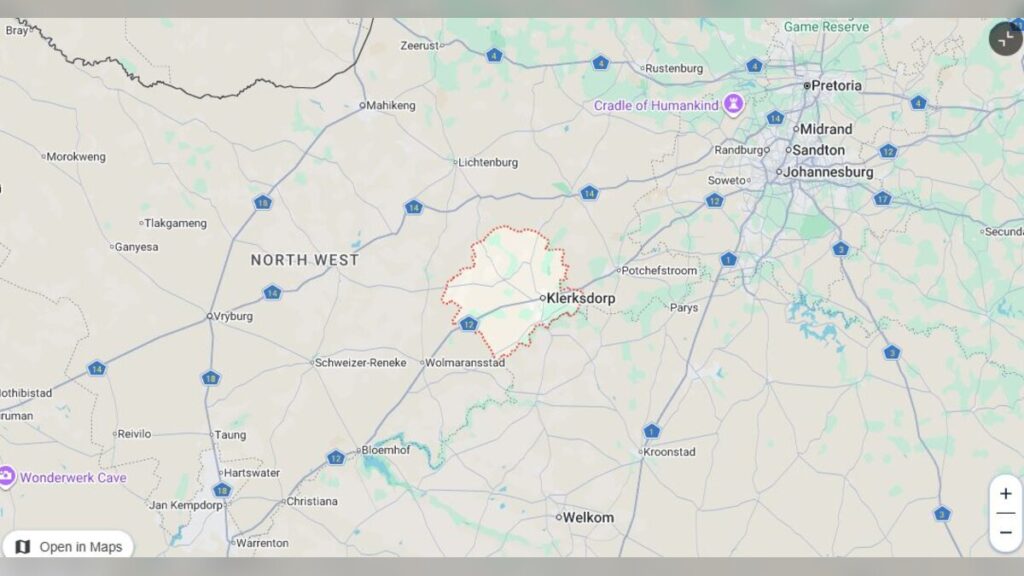
South African parliamentary committees are pressing for urgent intervention in Matlosana after hearing that the local municipality could be forced to return more than R23 million to the National Treasury.
The money had been allocated to help tackle growing infrastructure problems, but delays in getting projects moving have now put a large share of the funding at risk.
Oversight Meeting Exposes Delays and Weak Delivery
The warning emerged during a joint oversight meeting involving the Select Committee on Public Infrastructure and the Select Committee on Cooperative Governance and Public Administration, which also covers Traditional Affairs, Human Settlements, and Water and Sanitation.
During the session, government departments briefed lawmakers on infrastructure work underway in the municipality, but the updates only deepened concern about slow implementation and weak project delivery.
Lawmakers made it clear that the issue is no longer just about red tape or routine delays. In their view, the municipality is struggling at a time when residents are already facing severe service delivery problems.
Wastewater Crisis Puts Municipality Under Intense Pressure
Much of the concern centers on Matlosana’s worsening wastewater situation.
According to the latest Green Drop Report, released in March by the Department of Water and Sanitation, the municipality scored just 11.9%, placing it in the high-risk, dysfunctional category.
That score reflects a serious breakdown in wastewater management.
The Green Drop system measures the condition of municipal wastewater treatment works across South Africa, looking at management standards, compliance levels, and operational risk.
A result below 31% is considered high risk, while only scores above 90% qualify for certification. Against that benchmark, Matlosana’s position is extremely poor.
R70 Million Was Allocated, but Spending Has Lagged
The Department of Water and Sanitation told the committees that R70 million had been set aside to support infrastructure improvements in the municipality.
But despite the scale of the crisis, Matlosana has had difficulty using the funds effectively.
Officials warned that if the municipality fails to spend the money before the end of the municipal financial year on 30 June 2026, more than R23 million may have to be sent back to the National Treasury.



For lawmakers, that possibility is especially alarming because the funding was supposed to help respond to urgent service failures, not sit idle while conditions get worse.
Lawmakers Say Accountability Can No Longer Be Avoided
Committee leaders used the meeting to deliver a blunt message. Mxolisi Kaunda, chairperson of the Select Committee on CoGTA, said it was unacceptable for a municipality in the middle of such a severe wastewater crisis to risk losing millions simply because of delays.
He said officials and contractors must be held accountable for failing to deliver.
That criticism was echoed by Rikus Badenhorst, chairperson of the Select Committee on Public Infrastructure, who said the situation reflects a recurring pattern of poor planning and implementation.
He warned that returning unspent funds has become a damaging trend that weakens both service delivery and economic recovery.
Committees Push for a Coordinated Response
The committees are now calling for a coordinated intervention to stop the crisis from getting worse.
Their concern is not only financial. If infrastructure work continues to stall, untreated wastewater could keep being released, raising serious public health and environmental risks for surrounding communities.
Lawmakers stressed that spending public money must lead to visible improvements for residents.
In other words, the issue is not just whether the funds are used before the deadline, but whether they are used effectively enough to change conditions on the ground.
Impact and Consequences
The biggest immediate consequence is that Matlosana could lose more than R23 million that it badly needs for infrastructure repairs.
That would be a major setback for a municipality already struggling with one of the country’s most serious wastewater management failures.
The wider consequences are even more troubling. Continued project delays could mean untreated wastewater keeps flowing into the environment, increasing health risks and adding pressure on already failing systems.
Politically, the situation also exposes deeper weaknesses in planning, procurement, contractor oversight, and municipal execution. If those problems are not fixed, even future funding may not translate into real service delivery.
What’s next?
The next few weeks will be crucial. The municipality will face growing pressure to accelerate project rollout before the 30 June 2026 financial year deadline.
Committees are likely to demand tighter monitoring, faster decision-making, and clear accountability from both officials and contractors.
There will also be close attention on whether national and provincial authorities step in more directly.
If no urgent corrective action is taken, Matlosana may not only lose part of its funding, but also sink deeper into an infrastructure and sanitation crisis that becomes even harder to reverse.
Summary
Parliamentary committees have sounded the alarm over Matlosana’s risk of returning more than R23 million in unspent infrastructure funding, even as the municipality faces a deepening wastewater crisis.
With a Green Drop score of just 11.9%, Matlosana has been classified as high-risk and dysfunctional.
Lawmakers say delays, weak planning, and poor implementation are putting both public money and public health in danger, and they want urgent action before the funding deadline hits.
Bulleted Takeaways:
- Matlosana Local Municipality could return more than R23 million in unspent funds to the National Treasury.
- The money was allocated to help address worsening infrastructure problems.
- Parliament’s oversight committees raised serious concerns about delays and poor implementation.
- The municipality scored 11.9% in the latest Green Drop Report.
- That score places Matlosana in the high-risk, dysfunctional category for wastewater management.
- A total of R70 million had been allocated for infrastructure improvements.
- The key spending deadline is 30 June 2026, the end of the municipal financial year.
- Lawmakers say officials and contractors must be held accountable for failures in delivery.
- Committees warned that untreated wastewater could continue to pose health and environmental risks.
- They are calling for urgent, coordinated action to stop the crisis from worsening.
