
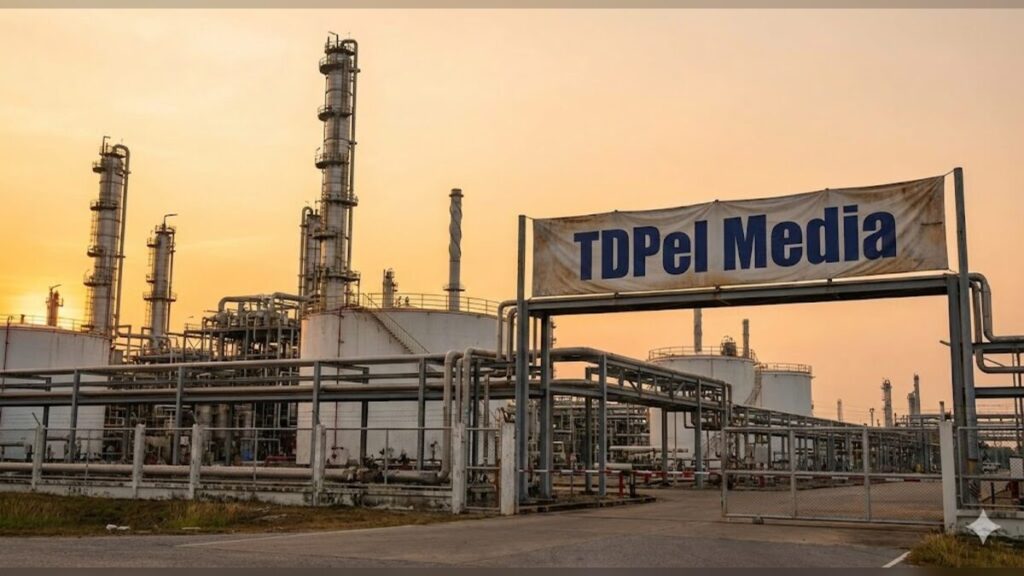
The European Commission has launched a new package of measures aimed at shielding households and businesses from another fossil fuel price shock, while also using the moment to push harder toward cleaner, homegrown energy.
The plan, called AccelerateEU, is being presented as both an emergency response and a longer-term strategy to reduce Europe’s vulnerability to imported fossil fuels.
Brussels Says Europe Is Paying the Price of Energy Dependence
According to the Commission, Europe has once again been hit by the cost of relying heavily on imported fossil fuels.
Officials say that since the escalation of the conflict in the Middle East, the EU has spent an extra €24 billion on energy imports without receiving any additional energy in return.
That figure is being used to underline the Commission’s main argument: dependency on volatile global fossil fuel markets is not just expensive, it is also a strategic weakness.
AccelerateEU Mixes Immediate Relief With Long-Term Change
The package combines short-term support for consumers with structural measures designed to speed up the clean energy transition.
On the immediate side, the Commission says member states may need to coordinate closely on issues such as refilling gas storage, using flexibility in storage rules, and possibly releasing oil stocks in exceptional circumstances.
It also wants stronger oversight of transport fuels through a new Fuel Observatory, which would monitor production, imports, exports, and stock levels across the EU.
That new monitoring system is meant to help identify shortages more quickly and guide targeted responses if supplies come under pressure.
Brussels also says it will provide clarity on existing aviation flexibilities to help the sector deal with higher fuel costs and supply disruption.
Support Measures Would Target the Most Vulnerable
The Commission says relief measures should be timely, targeted, and temporary.
Among the options it highlights are income support schemes, energy vouchers, social leasing measures, and lower electricity excise duties for vulnerable households.
It also plans to introduce a Temporary State Aid Framework to give national governments more room to support sectors most exposed to the crisis.
The message from Brussels is that governments should act quickly where needed, but do so in a way that avoids locking Europe more deeply into fossil fuel dependence.
Clean Energy and Electrification Sit at the Core of the Plan
Beyond emergency action, the Commission is making clear that the real answer, in its view, lies in moving faster toward electrification and clean energy.
It says an Electrification Action Plan will be presented by the summer, including an ambitious target and measures to remove barriers in industry, transport, and buildings.



It also points to the need for faster deployment of sustainable aviation fuels and stronger use of renewables.
Brussels is also calling for rapid repowering of existing wind farms, offshore wind projects, hydropower plants, and other renewable infrastructure so that more electricity can be generated without waiting for entirely new systems to be built from scratch.
Grid Upgrades and Tax Changes Are Part of the Push
The Commission says electrification will only work if Europe’s grid system can handle it.
That means faster implementation of current legislation, quicker progress on the European Grids Package, and new rules on network charges and taxation.
One key goal is to make sure electricity is taxed less heavily than fossil fuels, which would reinforce the shift away from oil and gas.
This part of the plan reflects a broader Commission view that the clean transition is not only about producing more renewable power, but also about redesigning the system around it.
Brussels Wants Public and Private Money to Move Faster
The Commission says major resources are already available, including €219 billion under the Recovery and Resilience Facility as well as cohesion funds.
But it also acknowledges that public money alone will not be enough. The estimated investment need for the energy transition is €660 billion a year until 2030, which means private finance will have to play a central role.
To help unlock that, the Commission points to its Clean Energy Investment Strategy, adopted in March 2026, and says it will convene a Clean Energy Investment Summit bringing together investors, industrial leaders, developers, and public financiers.
Middle East Crisis Has Given the Plan New Urgency
The timing of the package is not accidental.
The Commission says AccelerateEU answers a request from EU leaders made at the March 19 European Council for targeted temporary measures to address the spike in imported fossil fuel prices tied to the crisis in the Middle East.
The proposals are due to be discussed by EU leaders at the informal European Council in Cyprus on April 23 and 24.
That makes this more than a policy paper.
It is also a political signal that Brussels wants to frame the current energy strain as another reason to double down on the Green Deal rather than retreat from it.
Impact and Consequences
The immediate impact of AccelerateEU could be more coordinated action across Europe to cushion households, businesses, and fuel-dependent sectors from another price surge.
If implemented quickly, measures such as vouchers, tax relief, state aid flexibility, and better fuel monitoring could help soften the pressure on vulnerable consumers and exposed industries.
The broader consequence is strategic. The Commission is trying to turn an energy shock into a turning point by arguing that fossil fuel dependence is now a security problem as much as an economic one.
If member states back the package, Europe could move faster on electrification, grid expansion, and renewable upgrades.
But that will also mean political fights over spending, infrastructure, and how quickly countries are willing to shift away from legacy energy systems.
What’s next?
The next major step is political. EU leaders are expected to discuss the package in Cyprus, where the Commission will be looking for support for both the immediate relief measures and the longer-term clean energy push.
After that, attention will turn to delivery: the summer Electrification Action Plan, the creation of the Fuel Observatory, progress on grids legislation, and whether member states make full use of available EU funding.
A lot will depend on speed. The Commission has made clear that this crisis response will evolve as the geopolitical situation develops, so the toolbox unveiled now is likely only the start of a wider energy policy push.
Summary
The European Commission has proposed a new emergency-and-transition package called AccelerateEU, aimed at protecting Europeans from another fossil fuel price shock while speeding up the move to clean, domestic energy.
Brussels says the Middle East crisis has already cost the EU an extra €24 billion in energy imports, and it is using that warning to justify stronger coordination, targeted consumer support, closer fuel monitoring, more investment, faster grid upgrades, and a bigger electrification push.
The plan is designed not just to manage the current pressure, but to reduce the chances of Europe being hit the same way again.
Bulleted Takeaways:
- The European Commission has launched AccelerateEU to respond to a new fossil energy price shock.
- Brussels says the EU has spent an extra €24 billion on energy imports since the Middle East crisis escalated.
- The package combines emergency relief with longer-term clean energy and electrification measures.
- A new Fuel Observatory is planned to monitor transport fuel production, imports, exports, and stock levels.
- Possible support tools include vouchers, income support, social leasing, and lower electricity excise duties for vulnerable households.
- The Commission will introduce a Temporary State Aid Framework for exposed sectors.
- An Electrification Action Plan is due by summer.
- Brussels wants faster grid upgrades and tax rules that favor electricity over fossil fuels.
- The EU says €219 billion is available through the Recovery and Resilience Facility, but much more private investment is needed.
- EU leaders are set to discuss the measures in Cyprus as the bloc considers how to respond to the latest energy shock.
