
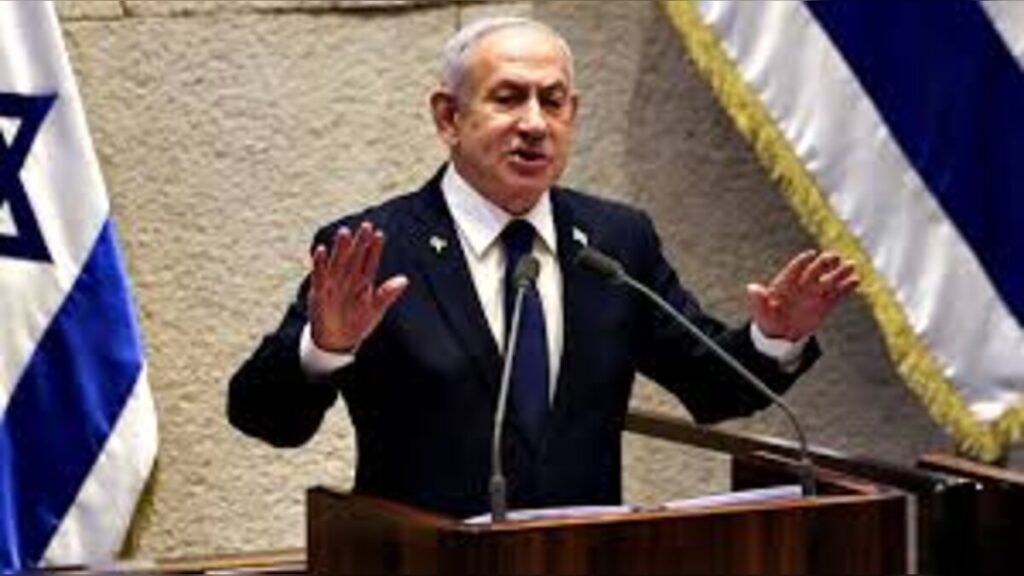
Israeli President Isaac Herzog is not moving toward granting a pardon for Prime Minister Benjamin Netanyahu anytime soon, according to a report that has reignited public attention on one of Israel’s longest-running political legal battles.
Instead of heading straight into a decision on pardon, Herzog is reportedly focusing on something more indirect—trying to push both sides toward a negotiated settlement that could resolve the case outside the courtroom.
Mediation first, pardon later according to officials
The New York Times report, citing senior Israeli officials familiar with the matter, suggests Herzog believes the immediate focus should not be a pardon at all.
Instead, he reportedly wants to encourage mediation between Netanyahu’s legal team and prosecutors in an effort to reach a plea agreement.
Those officials say the president is trying to avoid deepening political division and prefers a route that could reduce tensions rather than escalate them further.
Herzog frames approach as national unity strategy
Behind the scenes, the president’s position is being described less as hesitation and more as a strategy for national unity.
According to the report, Herzog is aware that any direct move on a pardon would be politically explosive given Netanyahu’s polarising status in Israeli politics.
So for now, the presidency appears to be prioritising negotiation over confrontation, with court proceedings still ongoing in the background.
President’s office confirms preference for negotiated outcome
When asked about the matter, Herzog’s office responded by reiterating that the president has consistently supported a resolution reached through agreement between the parties.
The statement emphasised that mediation and dialogue are considered “necessary steps” before any consideration of a pardon request itself.
In simpler terms, the message is that the legal process is still the priority, and any final decision on pardon remains far off.



Netanyahu’s long-running trial continues to hang over Israeli politics
Benjamin Netanyahu has been on trial for nearly six years, facing charges that include bribery, fraud, and breach of trust.
The case has become one of the most politically charged legal proceedings in Israel’s history, dividing public opinion and repeatedly influencing national elections and coalition politics.
While Netanyahu denies wrongdoing, the trial continues to cast a long shadow over his leadership and Israel’s political stability.
Background context: why the case remains so sensitive
Legal experts in Israel have long noted that presidential pardons are rare and usually considered only after a legal process is complete or a clear resolution is reached.
Herzog himself has previously signalled openness to reconciliation-based outcomes, especially in politically sensitive cases involving national leaders.
This approach reflects a broader concern in Israel about institutional strain, where prolonged legal and political battles often overlap.
Impact and Consequences
The immediate impact of Herzog’s stance is that it keeps Netanyahu’s legal uncertainty alive, without accelerating either a pardon or a direct resolution.
Politically, it also avoids a sharp institutional clash between the presidency, the judiciary, and the prime minister’s office.
However, it prolongs an already drawn-out legal process, which continues to influence governance, coalition stability, and public trust in political institutions.
Internationally, the situation is also being watched closely as it reflects how democratic systems handle trials involving sitting leaders.
What’s next?
The next step is expected to be behind-the-scenes negotiation efforts rather than public decisions.
If mediation gains traction, it could lead to a plea deal discussion or some form of legal compromise, though nothing is guaranteed.
At the same time, Netanyahu’s trial continues in court, meaning legal proceedings will run parallel to any political efforts at resolution.
A formal pardon request remains on the table, but it is clearly not the immediate focus.
Summary
Israeli President Isaac Herzog is not moving toward a pardon for Prime Minister Benjamin Netanyahu in the near future.
Instead, he is reportedly prioritising mediation efforts aimed at reaching a possible plea deal outside the courtroom.
Netanyahu’s long-running trial on charges of bribery, fraud, and breach of trust continues, making the case one of the most politically sensitive legal battles in Israel today.
Bulleted Takeaways
- Herzog is not planning an immediate pardon for Netanyahu
- Focus is shifting toward mediation and possible plea negotiations
- NYT report cites senior Israeli officials familiar with discussions
- President aims to prioritise national unity and reduce political tension
- Herzog’s office confirms preference for agreement outside court
- Netanyahu has faced trial for nearly six years
- Charges include bribery, fraud, and breach of trust
- Legal proceedings continue alongside political discussions
- No final decision on pardon has been made or scheduled
- Case remains one of Israel’s most politically sensitive legal disputes

