
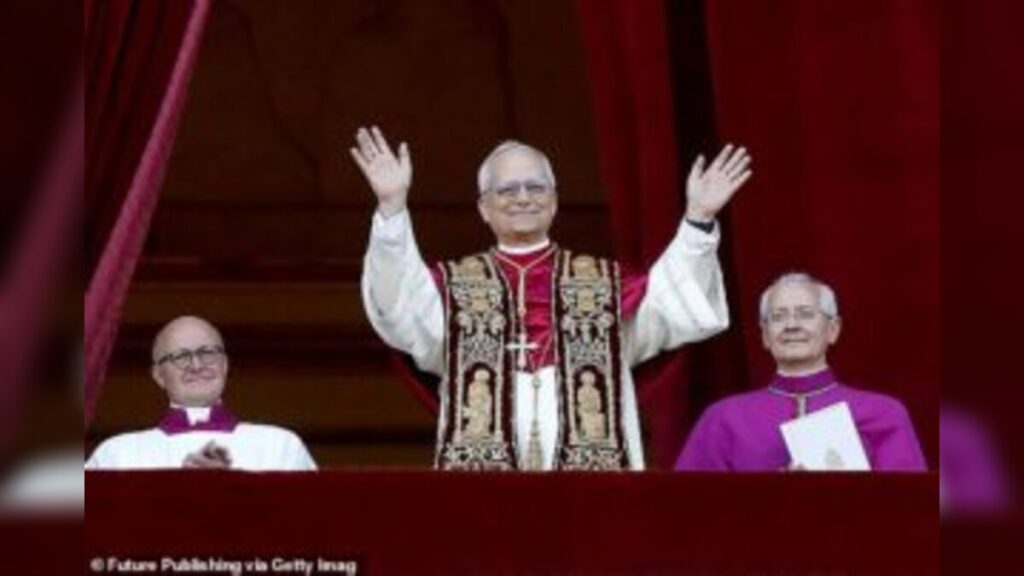
When Pope Leo XIV stepped onto the balcony of St. Peter’s Basilica, people weren’t just paying attention to his words.
They were talking about the look. From a classic red mozzetta to structured robes that felt almost cinematic, his presence marked a shift in how modern papal style is being perceived.
The Chicago-born pontiff has even surprised observers with unexpected touches, like appearing in a Chicago White Sox cap during a casual moment.
That mix of tradition and modern familiarity has made him one of the most visually discussed popes in recent memory.
The Designer Behind the Vatican’s Quiet Reinvention
Behind this carefully balanced image is Filippo Sorcinelli, an openly gay Italian designer who has worked with multiple popes, including Pope Francis and Pope Benedict XVI.
Sorcinelli doesn’t work like a typical fashion designer chasing trends.
Instead, his process is tightly embedded within Vatican structure, working through the Office for Liturgical Celebrations.
Every garment must follow strict theological, symbolic, and seasonal rules.
He describes his work as shaping “silent theology”—meaning the clothing speaks without words, reinforcing authority, tradition, and spiritual meaning.
Not Fashion, but Symbol and Authority
According to Sorcinelli, papal clothing is not meant to impress in a modern fashion sense.
It is designed to communicate stability and spiritual discipline.
For Pope Leo XIV, that has meant returning to structured vestments, cufflinks, and formal silhouettes that emphasize order rather than personality.
Even color choices are not personal—they follow the Church’s liturgical calendar.
At the same time, subtle modern elements slip through.
The Pope has been seen wearing an Apple Watch, and even the occasional baseball cap, which contrasts sharply with centuries-old tradition.
Three Popes, Three Different Visual Identities
Sorcinelli has worked across three very different papacies, each with its own style philosophy.
Pope Benedict XVI leaned heavily into tradition, rich fabrics, and historical continuity.




His look reflected formality and deep-rooted symbolism.
Pope Francis took the opposite direction, favoring simplicity and minimalism as a statement of humility.
Now Pope Leo XIV is seen as a blend of both approaches—balancing tradition with a more approachable, modern edge while still maintaining liturgical structure.
The Making of a Papal Image
Sorcinelli’s connection to church aesthetics began early in life, helping his mother clean a parish church.
That experience, he says, shaped his understanding of how faith is expressed not just in words but in objects, fabrics, and spaces.
Designing for the Vatican is highly controlled. Nothing is direct or casual.
Each garment passes through institutional review, and changes are rare once traditions are set.
Even so, Sorcinelli describes the system not as restrictive, but as deeply symbolic—where every stitch carries meaning.
Identity, Faith, and Controversy in the Background
Sorcinelli has also drawn attention because of his openness about being gay while working within a traditional religious institution.
He rejects the idea that his identity conflicts with his work, instead describing it as a creative tension that informs his perspective.
In his view, faith is not about exclusion but about structure and spiritual meaning.
He also insists that his role is not political.
It is about continuity, doctrine, and preserving visual tradition inside a highly symbolic system.
When Vatican Style Meets Pop Culture
Interestingly, Pope Leo XIV’s image has also crossed into mainstream culture.
He was featured in fashion conversations and even listed among Vogue’s best dressed public figures of 2025.
The attention wasn’t just about luxury or aesthetics—it was about contrast.
A centuries-old religious role suddenly being discussed alongside modern fashion icons created a unique cultural crossover.
Impact and Consequences
The evolving visual identity of Pope Leo XIV has had wider effects than expected:
- Global attention on Vatican symbolism has increased significantly
- Religious vestments are being reinterpreted through modern cultural lenses
- The Pope’s image bridges tradition and pop culture in unusual ways
- Debates continue about modernizing religious presentation without losing meaning
- Designers working with religious institutions are gaining new visibility
It has also subtly changed how people talk about religious leadership—not just in terms of doctrine, but appearance and messaging.
What’s Next?
As Pope Leo XIV approaches his first anniversary as pontiff, attention on his evolving style is likely to continue.
Future public appearances will further shape how his papacy is visually defined.
Behind the scenes, the Vatican is expected to maintain strict control over liturgical design, even as public curiosity grows.
Any changes will likely remain gradual, symbolic, and carefully measured rather than dramatic.
Summary
Pope Leo XIV’s papal image is not accidental—it is carefully constructed within Vatican tradition and shaped by designer Filippo Sorcinelli.
His style blends historical papal formality with subtle modern touches, creating a unique visual identity that reflects both continuity and quiet evolution inside the Catholic Church.
Bulleted Takeaways
- Pope Leo XIV has gained attention for his distinctive papal style
- Designer Filippo Sorcinelli creates vestments through strict Vatican guidelines
- Papal clothing is designed as symbolic communication, not fashion expression
- Pope Benedict XVI, Pope Francis, and Pope Leo XIV each represent different style philosophies
- Leo XIV blends traditional vestments with subtle modern elements like an Apple Watch
- Sorcinelli describes his work as “silent theology” expressed through clothing
- Vatican vestments follow strict liturgical rules and approval processes
- The Pope has been featured in global fashion discussions including Vogue
- His image reflects a balance between tradition, authority, and modern visibility
- The visual identity of the papacy continues to evolve carefully within church boundaries

