
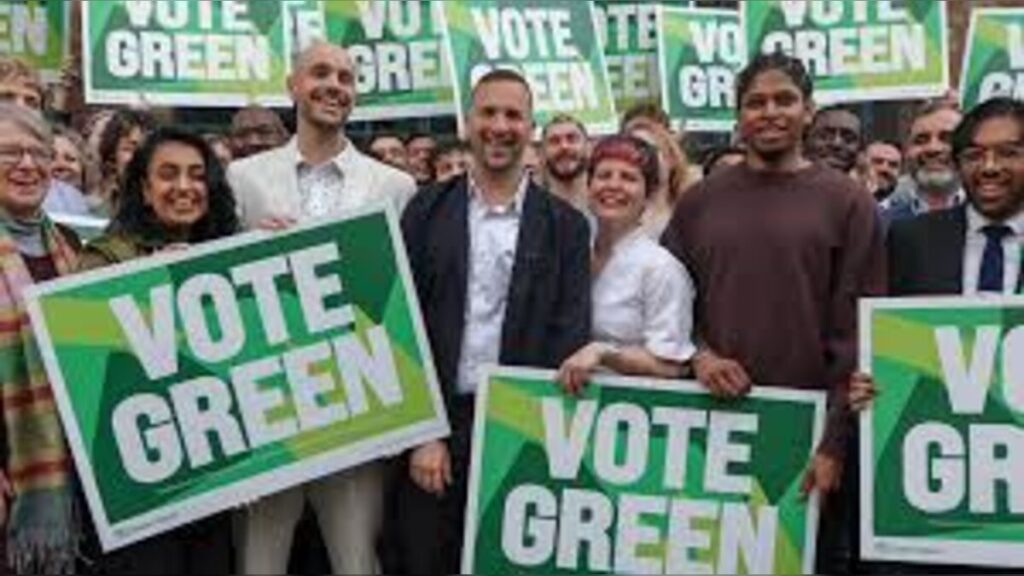
The Green Party is under intense scrutiny after allegations emerged that some of its local election candidates have shared or promoted deeply offensive anti-Semitic conspiracy theories online while still being presented as champions of “compassion” and “inclusive communities” in campaign materials.
With local elections approaching and the party expected to perform strongly in several councils, the controversy has raised fresh questions about how thoroughly candidates are screened before being allowed to stand.
Candidates Promoting “Compassion” While Sharing Extremist Claims
At the heart of the criticism is a striking contradiction: several prospective councillors have publicly promoted values like fairness, compassion, and community safety in their campaign messaging, while allegedly sharing content accused of spreading anti-Semitic narratives.
Some of the material attributed to candidates includes claims linking Jewish or Zionist groups to global terrorist events, including the September 11 attacks, as well as inflammatory language describing Jews in dehumanising terms.
Campaign leaflets from some of these candidates highlight themes such as “safe communities” and “social justice,” which critics say clash sharply with their online histories.
Camden Candidate Aziz Hakimi and 9/11 Conspiracy Posts
One of the most controversial cases involves Aziz Hakimi, a civil engineer and businessman selected to contest a seat in Camden, north London.
According to reports, Hakimi reposted material suggesting “Zionists” were responsible for the 2001 World Trade Centre attacks and previously expressed support for Hamas in 2018.
He also allegedly shared content dismissing arson attacks on Jewish charity ambulances as a “false flag.”
Local political figures reacted strongly.
Richard Olszewski, leader of the Labour group on Camden Council, described the posts as “abhorrent” and said he was shocked that such a candidate had been approved by the Greens.
Raja Ateeq and Walsall Campaign Controversy
In Walsall, candidate Raja Ateeq has also come under fire.
His campaign literature reportedly highlights “compassion in action,” but online posts attributed to him after the October 7 attacks in Israel included celebratory remarks about unity among Muslim countries.
He is also alleged to have used derogatory language referring to Jewish people, sparking further criticism from opponents and community groups.
The contrast between his campaign messaging and the reported posts has been a central focus of the backlash.
Claims Linked to Candidate in Bournemouth
Feda Shahin, standing in Bournemouth, is accused of promoting false historical claims, including allegations that “Zionists killed 20 million Christians in the Soviet Union,” as well as statements suggesting Jewish people “love genocide.”
Despite this, Green Party materials reportedly describe her as someone who “cares deeply about social fairness” and building “inclusive communities.”




Additional Allegations in Lambeth
In south London, charity worker Saiqa Ali—who was selected as a candidate in Lambeth—was reported to have posted comments suggesting the UK government is “overrepresented with Zionists.”
Another widely shared post allegedly featured a graphic image comparing Israel to a snake wrapped around the globe, accompanied by a call to “cut the head of this snake” alongside the hashtag #FreePalestine.
Following the backlash, Ali stepped down as a candidate and issued a statement rejecting antisemitism “in all its forms.”
Green Party Response and Internal Investigation
The Green Party has acknowledged the controversy and stated that it is investigating the claims surrounding several candidates.
In some cases, the party said the posts were only identified after nomination deadlines had passed, making removal more complicated.
It also confirmed that it has begun removing some of the content from public circulation and reviewing candidate selection processes.
A party spokesperson insisted that the views expressed in the reported posts “do not represent the Green Party.”
Reaction From Advocacy Groups and Local Leaders
The Campaign Against Antisemitism called on the party to take stronger action, urging the Greens to expel candidates linked to conspiracy theories or hate speech.
Local political leaders have also weighed in, with several expressing alarm that individuals accused of spreading extremist narratives were still being endorsed in official campaign materials.
The issue has added pressure on the party at a sensitive time, as it seeks to expand its presence in local government across the UK.
Context: Rising Scrutiny of Political Vetting in the UK
This controversy comes amid broader concerns in UK politics about social media vetting and candidate accountability.
In recent years, multiple parties have faced criticism for failing to identify problematic posts before selecting candidates.
Political analysts have repeatedly warned that rushed vetting processes for local elections can allow controversial material to go unnoticed until after nominations close.
The Green Party, in particular, has faced periodic scrutiny over internal processes as it expands its electoral footprint beyond its traditional base.
Impact and Consequences
The immediate impact is reputational.
The allegations risk undermining the Green Party’s messaging around inclusivity and social justice at a time when it is trying to win over more voters in urban councils.
There is also potential electoral fallout.
Opponents are likely to use the controversy in campaigning, especially in tightly contested wards where even small shifts in voter trust can influence outcomes.
Internally, the party may be forced to tighten candidate screening procedures, potentially introducing stricter social media audits or earlier-stage background checks.
What’s Next?
The Green Party’s investigation will determine whether further candidates are removed or disciplined before polling day.
There is also growing expectation that the party will review its selection rules to prevent similar controversies in future elections.
Meanwhile, political rivals are expected to continue pressing the issue in debates and local campaigning, particularly in areas where Green candidates are seen as strong challengers.
The broader question—how parties balance rapid candidate selection with thorough vetting—remains unresolved and likely to resurface in future election cycles.
Summary
The controversy surrounding Green Party candidates centres on allegations that some individuals promoted extremist or anti-Semitic conspiracy theories online while presenting themselves as advocates of compassion and inclusivity in local election campaigns.
While the party has launched investigations and distanced itself from the comments, the situation has sparked wider debate about vetting standards, political accountability, and the risks of online histories resurfacing during elections.
Bulleted Takeaways
- Several Green Party candidates are accused of sharing anti-Semitic conspiracy theories online
- Campaign messaging highlighting “compassion” contrasts with alleged past posts
- Aziz Hakimi linked to 9/11-related conspiracy claims and controversial reposts
- Raja Ateeq and Feda Shahin also face criticism over alleged online content
- Saiqa Ali resigned after posts describing UK politics in conspiratorial terms surfaced
- The Green Party says it is investigating and removing problematic material
- Campaign Against Antisemitism has called for stronger disciplinary action
- The controversy raises wider questions about candidate vetting in UK politics
- Potential electoral and reputational consequences could affect upcoming local elections

