
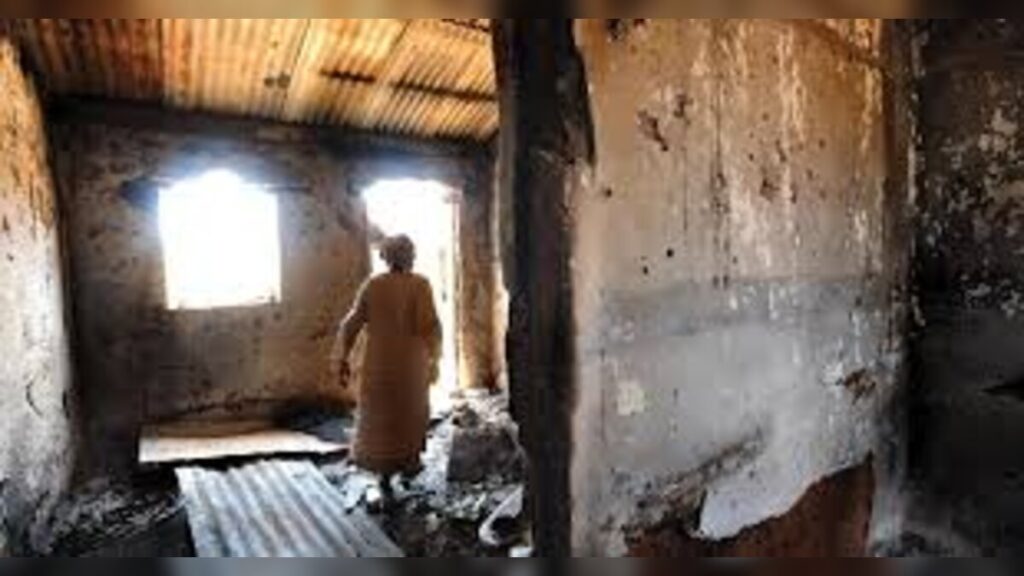
What began as a simple clash between two families didn’t stay contained for long.
According to reports, the disagreement—likely rooted in a personal or domestic issue—gradually intensified, drawing in extended relatives and sympathizers.
Before anyone could rein it in, the situation snowballed into something far more dangerous.
In many communities, especially where family ties run deep, disputes rarely stay private.
Once emotions get involved and sides are taken, even minor misunderstandings can morph into something bigger.
When Tensions Turn Into Retaliation
As the conflict deepened, it reportedly shifted from verbal exchanges and minor confrontations into a cycle of retaliation.
One act triggered another, and soon enough, both sides were locked in a pattern of back-and-forth attacks.
This kind of escalation isn’t unusual in places where trust breaks down quickly and conflict resolution systems are either weak or bypassed entirely.
Instead of mediation, people sometimes resort to self-help justice—responding directly to perceived wrongs.
The Dangerous Pattern of Reprisal Attacks
Reprisal attacks tend to follow a predictable pattern.
One incident leads to revenge, which then sparks another response, creating a loop that becomes harder to stop over time.
What makes it even more dangerous is how quickly others—friends, neighbors, or even unrelated groups—can get pulled in.
At that point, the original cause of the dispute often gets lost.



What remains is a lingering sense of grievance and a need to “even the score,” which keeps the cycle alive.
Why These Conflicts Escalate So Quickly
There are several reasons disputes like this can spiral:
Limited access to conflict resolution mechanisms means people may not have trusted avenues to settle disagreements peacefully.
Deep-rooted cultural or family loyalties can amplify tensions, making compromise difficult.
Misinformation or rumors often worsen the situation, especially when emotions are already high.
In some cases, underlying issues—like land disagreements, inheritance disputes, or longstanding grudges—can also fuel the fire, even if they aren’t obvious at first.
Impact and Consequences
The fallout from such conflicts can be severe.
At the most immediate level, lives and property are put at risk.
Injuries, destruction, and even loss of life can occur when violence escalates unchecked.
Beyond that, communities often suffer long-term damage.
Trust erodes, fear spreads, and normal daily activities can be disrupted.
Schools, markets, and social gatherings may be affected as people try to avoid being caught in the crossfire.
Economically, families involved—and even those nearby—may face losses due to damaged property or interrupted livelihoods.
Socially, divisions can linger for years, making reconciliation much harder.
What’s Next?
The immediate priority in situations like this is de-escalation.
Community leaders, security agencies, and local authorities typically step in to restore calm and prevent further violence.
There may also be efforts to mediate between the families involved, encouraging dialogue and possibly compensation or restitution where necessary.
In some cases, law enforcement may investigate and hold individuals accountable for any crimes committed during the conflict.
Longer term, preventing a repeat often depends on strengthening local conflict resolution systems and promoting early intervention before disputes grow out of control.
Summary
A disagreement that started between two families gradually escalated into a series of reprisal attacks, highlighting how quickly tensions can spiral when left unchecked.
What began as a localized issue turned into a broader conflict, affecting not just those directly involved but the wider community as well.
Bulleted Takeaways
- The conflict began as a dispute between two families
- It escalated into repeated retaliatory attacks
- Additional individuals were drawn into the situation over time
- Weak conflict resolution and rising tensions fueled the escalation
- The situation poses risks to lives, property, and community stability
- Intervention from authorities and community leaders is crucial
- Long-term peace depends on reconciliation and stronger mediation systems

