
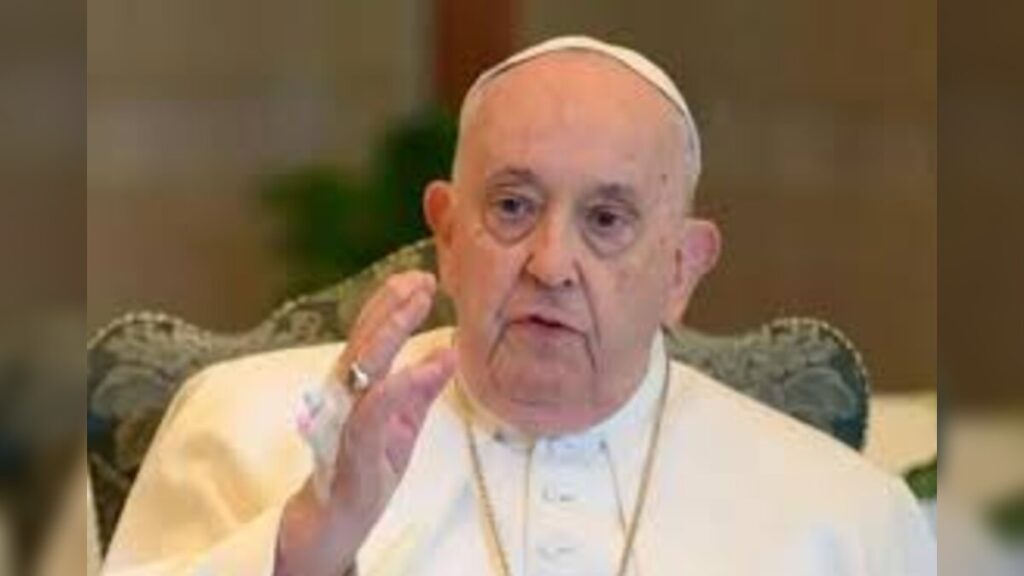
On April 21, 2025, the steady toll of bells from St. Peter’s Basilica marked the passing of Pope Francis.
It wasn’t just the end of a life, but the closing chapter of a papacy that felt, to many, deeply human.
Over 12 years, the Argentinian pontiff reshaped how millions viewed the Catholic Church—not through grand gestures alone, but through tone, presence, and a persistent call for compassion.
What follows isn’t just a timeline, but a closer look at the defining turns that shaped his legacy.
A Pope From the “Ends of the Earth”
When Pope Francis stepped onto the balcony in 2013, history quietly shifted.
Born in Buenos Aires, he became the first Latin American pope and the first Jesuit to hold the office.
Even his choice of name—Francis—signaled intent.
Inspired by St. Francis of Assisi, it pointed toward humility, care for the poor, and concern for the environment.
His first words, a simple “good evening,” felt less like a proclamation and more like a conversation.
Turning Faith Toward the Planet
In 2015, he released Laudato Si’, a document that reached far beyond church walls.
It reframed climate change as a moral issue, not just a scientific one.
By calling Earth “our common home,” he challenged both believers and non-believers to rethink responsibility.
The encyclical didn’t just echo within Catholic circles—it became a reference point for global environmental discussions, influencing activists, policymakers, and even skeptics.
A Historic Voice in American Politics
That same year, he made a rare visit to the United States, becoming the first pope to address Congress.
Standing before lawmakers, he spoke not in political jargon but in moral language—touching on inequality, migration, and dignity.
By invoking figures like Martin Luther King Jr. and Dorothy Day, he bridged faith and social justice, reminding leaders that policy decisions carry human consequences.
Sitting at the Same Table
In 2017, he launched the World Day of the Poor—but it wasn’t just symbolic.
He personally shared meals with thousands of disadvantaged people in Rome.
For him, charity wasn’t meant to stay abstract. It had to be visible, shared, and personal.
This initiative echoed one of his consistent messages: the Church must not stand above the poor—it must stand with them.



Facing the Church’s Deepest Wound
No part of his leadership was more difficult than addressing the clergy abuse crisis.
In response, he created the Pontifical Commission for the Protection of Minors and later introduced Vos Estis Lux Mundi.
These reforms aimed to make reporting abuse easier and holding leaders accountable more consistent worldwide.
He also removed the “pontifical secret” in such cases—an unprecedented step toward transparency, though critics argued more could still be done.
A Lone Figure in a Global Crisis
One of the most unforgettable images of his papacy came during the height of COVID-19.
Alone in an empty St. Peter’s Square, under the rain, he delivered a blessing to a frightened world.
It was a moment that required no explanation—just presence.
Throughout the pandemic, he urged cooperation, respect for science, and fairness in vaccine distribution, especially for poorer nations.
Walking Into a Wounded Land
In 2021, he became the first pope to visit Iraq. The trip was risky, but symbolic.
Amid ruins in Mosul and meeting Grand Ayatollah Ali al-Sistani in Najaf, he emphasized coexistence between faiths.
It wasn’t just diplomacy—it was a message that dialogue is stronger than division.
Reimagining How the Church Listens
His push for the Synod on Synodality marked a shift in how decisions could be made within the Church.
Launched in 2021, it invited voices often left out—women, laypeople, and marginalized communities.
Rather than dictating outcomes, it focused on listening.
For an institution often seen as hierarchical, this was a notable pivot toward inclusion.
A Final Journey Across Continents
In the final months of his life, he undertook one last demanding trip across Asia and Oceania—covering Indonesia, Papua New Guinea, East Timor, and Singapore.
In places where Catholics are a minority, he emphasized unity across religions, care for Indigenous communities, and hope for younger generations.
It was less about expanding influence and more about reinforcing connection.
Impact and Consequences
The legacy of Pope Francis is complex but unmistakable.
He shifted the Church’s tone from rigid authority to pastoral presence.
His environmental advocacy helped merge faith with global climate conversations.
His reforms on abuse pushed transparency further than before, even if debates continue.
And his emphasis on inclusivity challenged long-standing internal structures.
At the same time, his approach drew criticism from both conservatives—who saw him as too progressive—and reformers—who felt he didn’t go far enough.
That tension, in many ways, defined his papacy.
What’s Next for the Catholic Church?
With his passing, attention turns to the future.
The next pope will inherit not just an institution, but a direction—one leaning toward dialogue, social justice, and global engagement.
Questions remain: Will the Church continue along this path of openness?
Or will it recalibrate toward tradition? The next conclave will likely reflect these competing visions.
Summary
From his first humble greeting to his final international journey, Pope Francis redefined what leadership in the Catholic Church could look like.
His papacy blended symbolism with substance, focusing on people often overlooked and issues often avoided.
Bulleted Takeaways
- First Latin American and Jesuit pope, signaling a global shift in Church leadership
- Used Laudato Si’ to place climate change at the center of moral debate
- Became the first pope to address U.S. Congress, emphasizing justice and dignity
- Founded the World Day of the Poor to encourage direct engagement with poverty
- Introduced reforms like Vos Estis Lux Mundi to address abuse accountability
- Delivered a powerful global message during COVID-19 with symbolic leadership
- Strengthened interfaith ties through historic visits, including to Iraq
- Promoted inclusivity through the Synod on Synodality
- Ended his papacy with a major international journey focused on unity and hope

