
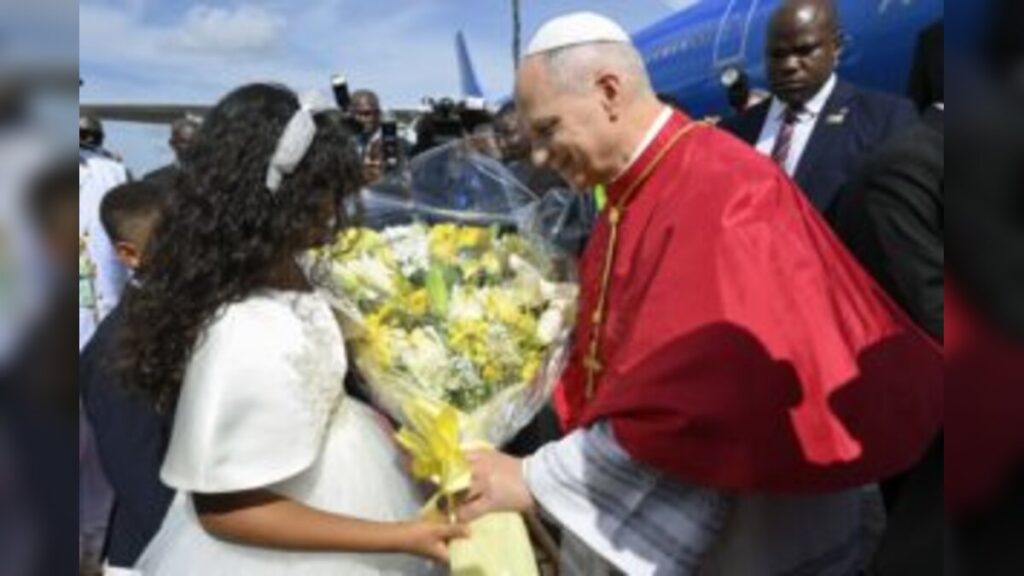
When Pope Leo XIV touched down in Douala for a three-day apostolic journey, the tone was set early: this wouldn’t be a routine diplomatic visit.
Speaking at the presidential palace on April 15, he went straight to the heart of Cameroon’s future—its youth—and made a case that felt both urgent and deeply personal.
His message wasn’t wrapped in abstraction.
It was grounded in the everyday reality many young people face: joblessness, exclusion, and the quiet frustration that builds when opportunity feels out of reach.
Why Young People Took Center Stage
Rather than focusing first on politics or policy, the pope zeroed in on young people as the country’s most valuable resource.
In his view, they’re not just beneficiaries of development—they’re drivers of it.
He acknowledged something often left unsaid in official speeches: when young people feel locked out of meaningful work or participation, the consequences can spill into unrest.
That’s where his argument sharpened—education, skills training, and entrepreneurship aren’t just social programs; they are tools for peacebuilding.
He framed investment in youth as a strategic decision, not charity.
The Hidden Cost of Neglect
The pope didn’t shy away from naming the darker outcomes tied to neglect.
He warned that without proper support systems, young people can drift toward destructive paths—drug abuse, exploitation, or apathy.
There’s also a quieter loss: talent migration.
When opportunities shrink at home, many of the brightest minds look outward.
Cameroon, like several African nations, has long grappled with this “brain drain,” where skilled youth leave in search of better prospects abroad.
His message was clear—keeping talent at home requires creating reasons for them to stay.
Faith as a Quiet Source of Strength
Interestingly, the pope highlighted something less tangible but equally powerful: spirituality.
He described Cameroonian youth as deeply rooted in faith, a trait he believes acts as a buffer against some of the pressures of modern life.




In a world increasingly shaped by global market forces, he suggested that this spiritual grounding gives young people a sense of identity and purpose.
When nurtured properly, it can inspire values like justice, solidarity, and forgiveness—qualities essential for a stable society.
A Nation Rich in Diversity
Beyond youth issues, the pope turned attention to Cameroon itself—often called “Africa in miniature” for its cultural and geographic diversity.
Rather than seeing this diversity as a challenge, he described it as a strength.
Languages, traditions, and cultures, in his view, are not obstacles to unity but building blocks for it.
If managed well, they can foster a sense of shared identity and mutual respect.
Dialogue Over Division
Another key thread in his address was the importance of dialogue—especially between religious groups.
In regions where tensions can simmer beneath the surface, interreligious cooperation becomes more than symbolic.
He encouraged political leaders to lean on religious communities as partners in mediation and reconciliation, suggesting that moral authority can sometimes succeed where politics alone struggles.
The Church’s Ongoing Role
The pope also reaffirmed the Catholic Church’s presence in Cameroon—not just as a spiritual institution but as a provider of education, healthcare, and humanitarian services.
He emphasized collaboration, noting that meaningful progress requires partnerships between religious bodies, governments, and civil society.
The Church, he said, intends to remain actively involved in efforts that promote dignity and unity.
A Broader Message of Hope
Stepping back, his visit carried a wider message.
He spoke about a global atmosphere of discouragement—where many feel powerless to effect change.
Yet, he pointed to a growing hunger for justice, participation, and bold leadership.
His presence in Cameroon, he explained, was meant as both encouragement and a challenge: to keep pushing for a society built on fairness, dialogue, and shared responsibility.
Impact and Consequences
If taken seriously, the pope’s appeal could influence both policy direction and public discourse in Cameroon.
Prioritizing youth development could:
- Reduce unemployment-driven unrest
- Slow down migration of skilled workers
- Strengthen social cohesion
His emphasis on interreligious dialogue may also help ease tensions in regions experiencing conflict, particularly where identity and belief intersect with politics.
However, translating these ideas into action depends heavily on political will, funding, and long-term commitment—areas where many countries, not just Cameroon, often struggle.
What’s Next?
The immediate impact of the visit will likely be symbolic—strengthening ties between Cameroon and the Vatican while drawing global attention to the country’s challenges.
In practical terms, the next steps could include:
- Policy discussions around youth employment and education reform
- Expanded collaboration between religious organizations and the state
- Increased advocacy from civil society groups leveraging the pope’s message
Whether this moment becomes a turning point or fades into routine diplomacy will depend on follow-through.
Summary
Pope Leo XIV used his visit to Douala to spotlight a critical issue: the future of Cameroon rests heavily on how it treats its young population. By linking youth empowerment to peace, economic stability, and national unity, he reframed a social concern as a strategic priority.
He also reinforced the importance of faith, diversity, and dialogue as pillars for building a more stable and inclusive society.
Bulleted Takeaways
- Youth empowerment was presented as essential for long-term peace and stability
- Education, skills training, and entrepreneurship are key investment areas
- Neglecting young people can lead to unrest, migration, and social decay
- Cameroon’s cultural diversity was framed as a national strength
- Interreligious dialogue was highlighted as a tool for conflict resolution
- The Catholic Church reaffirmed its role in social development
- The visit aimed to inspire action in a time marked by global uncertainty

