
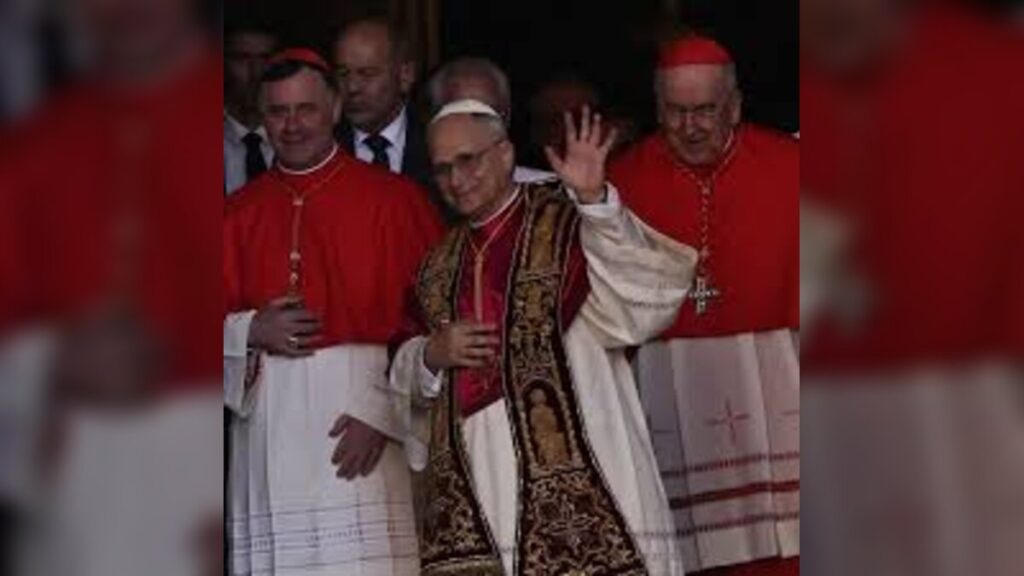
When Pope Francis arrives in Equatorial Guinea, it is not just another stop on an Africa itinerary.
It is the kind of visit that carries quiet diplomatic weight, the sort that goes far beyond prayers and public Masses.
Equatorial Guinea may not always dominate global headlines, but it sits in a region where religion, governance, and international relations often overlap in complicated ways.
That makes the final leg of the Pope’s Africa trip feel less like a celebration and more like careful navigation.
A Closing Chapter of an Africa Journey With Extra Pressure
By the time a papal visit reaches its final country, the tone often shifts.
Energy is lower, logistics are tighter, and the political symbolism becomes sharper.
That is exactly the atmosphere surrounding this stop.
This trip across Africa has already included encounters meant to highlight unity, peacebuilding, and social development.
But ending in Equatorial Guinea adds another layer—because the Vatican’s presence there is always interpreted through both spiritual and political lenses.
Even routine messages about peace or poverty reduction tend to echo differently in countries where governance debates are already sensitive.
Diplomacy Without Saying Too Much Out Loud
One of the Vatican’s most consistent challenges in international visits is balancing moral messaging with political neutrality.
The Pope rarely criticizes governments directly, yet every statement is still carefully read between the lines.
In Equatorial Guinea, that balance becomes even more delicate.
The country has long been discussed in global policy circles for issues around governance structure, resource wealth, and development inequality.



None of that is directly the focus of the visit, but it forms the backdrop anyway.
So when speeches are delivered, even simple calls for peace, dignity, or fairness can carry multiple interpretations depending on the audience.
Why Africa Remains Central to Papal Diplomacy
Africa has become increasingly important in modern Catholic diplomacy.
The Church continues to grow rapidly across the continent, with large communities in both urban and rural areas.
Visits like this one are not just symbolic—they are strategic in a soft-power sense.
They strengthen ties with local bishops’ conferences, reinforce humanitarian initiatives, and highlight the Vatican’s focus on regions experiencing rapid demographic change.
Historically, papal trips to Africa have also drawn attention to global inequality, conflict resolution, and interfaith dialogue, themes that remain consistent across decades.
The Quiet Political Undercurrent Behind the Scenes
Even though papal visits are officially pastoral, they inevitably intersect with politics.
Government leaders often appear alongside the Pope, and public ceremonies are carefully coordinated.
In Equatorial Guinea, that coordination becomes especially important.
Every handshake, every speech, and every public appearance is observed not just by citizens but by international analysts looking for subtle signals.
This is why the visit is often described as a “diplomatic challenge”—not because of conflict, but because of interpretation.
Impact and Consequences
The immediate impact of this visit is symbolic reinforcement: it signals continued Vatican engagement with African nations, including those less frequently visited by global leaders.
Diplomatically, it can help soften or open channels of dialogue between the Holy See and national governments, especially on humanitarian and development issues.
For Equatorial Guinea, the visit offers international visibility and a moment of global attention that is often rare outside economic or political news cycles.
On a broader level, it reinforces the Vatican’s role as a non-state diplomatic actor that still carries influence in global moral and humanitarian discussions.
What’s Next?
After this final stop, attention typically shifts back to Vatican messaging and follow-up diplomacy.
The Pope’s speeches and meetings during the trip will likely be reviewed and interpreted in different international contexts.
Local Church leaders in Equatorial Guinea are also expected to continue the themes raised during the visit, particularly around social support, education, and community development.
In the wider picture, future papal travel plans may build on the themes of this Africa trip, especially if emphasis continues on smaller or geopolitically sensitive nations.
Summary
The Pope’s visit to Equatorial Guinea marks the final and most diplomatically sensitive stage of his Africa trip.
While the trip remains pastoral at its core, the political and symbolic dimensions are unavoidable, making this stop a careful balancing act between faith messaging and international perception.
Bulleted Takeaways
- Pope Francis concludes Africa trip with a visit to Equatorial Guinea
- The stop carries strong diplomatic and symbolic significance
- Vatican messaging focuses on peace, dignity, and social justice themes
- Africa remains central to Catholic growth and international outreach
- Visits often require careful political neutrality despite underlying tensions
- Equatorial Guinea gains global visibility through the papal visit
- The trip reinforces the Vatican’s role in soft-power diplomacy
- Attention now shifts to interpretation of speeches and long-term impact

