
In the remote Bolivian town of Curahuara de Carangas, something remarkable is quietly getting a second life.
The centuries-old St. James Church—better known as the “Sistine Chapel of the Andes”—is set for a major restoration after years of weather damage and gradual decay.
The church sits in the high-altitude province of Sajama, and at more than 12,000 feet above sea level, it already feels like a place slightly removed from time.
Now, a new restoration effort aims to protect its murals, structure, and cultural identity before they fade further.
A Church Built in the Early Colonial Era
The story of the building goes back to the late 1500s and early 1600s, when construction began between 1587 and 1608.
Built using stone and adobe, it reflects early colonial-era architecture shaped by both European influence and Andean materials.
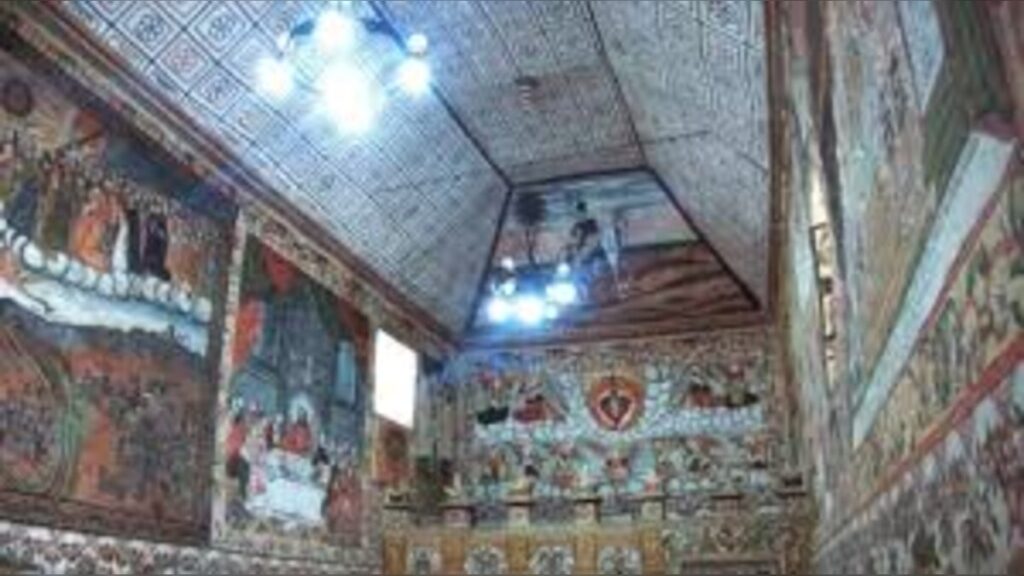
Inside, the walls are covered in vividly painted biblical scenes completed in 1777, according to historical records from Curahuara de Carangas.
Over time, these artworks have made the church famous far beyond Bolivia, earning it the nickname that compares it to the Sistine Chapel in Rome.
The structure itself is equally distinctive, featuring thick stone buttresses, Renaissance-style arches, and a gated entrance supported by carved pillars.
International Funding Steps In
The restoration project was officially announced during a press conference attended by Bolivian officials, church representatives, and international partners.
A key contribution comes from the United States, which is investing $66,240 through its Department of State’s Cultural Preservation Fund.
The programme has been supporting heritage protection efforts in Bolivia for over 26 years, focusing on safeguarding historical sites from damage, neglect, and illegal cultural trafficking.
US officials said the goal is not just preservation, but also making Bolivia’s cultural history more accessible to global audiences.
Why the Restoration Matters Now
Bolivian authorities say the project is about more than repairing old walls.
It is also about identity and national pride.




Officials from the Ministry of Sustainable Tourism, Cultures, Folklore, and Gastronomy described culture as something that connects communities and helps people understand their origins.
The restoration, they argue, strengthens both social unity and tourism potential.
The bishop of Oruro also welcomed the initiative, thanking international partners including Germany, which previously supported earlier restoration work on the church.
What Will Actually Be Fixed
The restoration plan is fairly detailed and technical.
It includes repairing and waterproofing the thatched roof, rebuilding structural buttresses, and restoring exterior walls that have deteriorated over time.
Architect Josefina Matas, who will lead the project, explained that all work will respect the original construction methods and materials to preserve authenticity.
That means using traditional techniques rather than modern replacements wherever possible, especially in maintaining the stone-and-adobe structure that defines the church’s character.
A Heritage Site With Tourism Potential
The church has been a nationally declared monument since 1960, but tourism officials believe it still has untapped potential.
With restoration underway, local authorities hope Curahuara de Carangas could attract more visitors as part of Bolivia’s growing religious and cultural tourism strategy.
That could bring new income opportunities to a remote region where economic activity is limited.
Similar heritage restoration projects across Latin America have shown that preserved colonial churches often become focal points for cultural tourism, especially when paired with improved infrastructure and guided historical tours.
Impact and Consequences
The immediate impact of the project will be the physical stabilization of one of Bolivia’s most important religious heritage sites.
Without intervention, experts warn that moisture, altitude weather conditions, and age-related deterioration could continue to damage the murals and structure.
Economically, the restoration could slowly shift Curahuara de Carangas into a tourism-linked economy, bringing in visitors, researchers, and cultural organisations.
This may create small business opportunities but also require better local infrastructure.
Culturally, the project strengthens Bolivia’s efforts to protect indigenous colonial-era heritage at a time when many historic sites in Latin America face similar risks from neglect and environmental exposure.
What’s Next?
Restoration work is expected to begin after planning and structural assessments are finalised.
Engineers and conservation specialists will first focus on stabilising the roof and external support structures before moving to interior artwork preservation.
Over the longer term, authorities hope the site will be integrated into national tourism routes, potentially linking it with other historic churches across the Andes region.
There is also ongoing discussion about expanding international funding partnerships to ensure long-term maintenance after the initial restoration phase.
Summary
The historic St. James Church in Curahuara de Carangas, Bolivia—known as the “Sistine Chapel of the Andes”—is set for restoration with support from the United States and local authorities.
The project will repair structural damage, preserve 18th-century murals, and strengthen cultural tourism in the region while protecting one of Bolivia’s most important colonial-era monuments.
Bulleted Takeaways
- St. James Church in Bolivia is being restored after years of deterioration
- The site is nicknamed the “Sistine Chapel of the Andes” for its murals
- Built between 1587 and 1608 in the high Andes region of Sajama
- Restoration funded partly by US Cultural Preservation Fund with $66,240
- Work includes roof repairs, structural buttress rebuilding, and wall restoration
- Church declared a national monument in 1960
- Officials hope project boosts cultural tourism and local development
- Earlier restoration support also came from Germany
- Project aims to preserve colonial-era art and architecture using traditional methods

