
The war between Ukraine and Russia has taken on a quieter but economically powerful dimension: energy infrastructure.
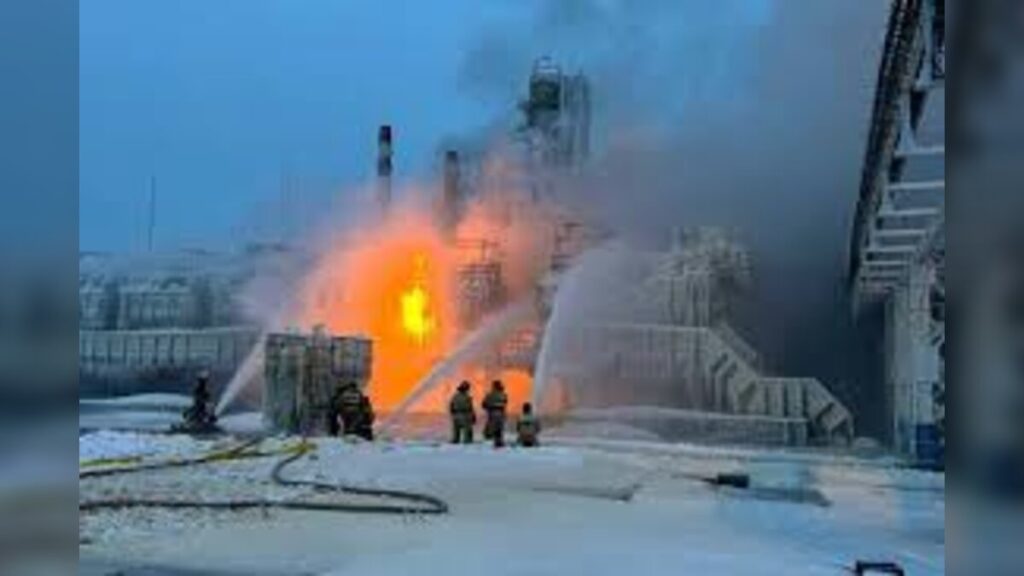
Rather than only focusing on battlefield positions, Ukraine has increasingly targeted oil refineries and fuel facilities deep inside Russian territory, aiming at the systems that keep Russia’s war economy running.
These strikes, often carried out using long-range drones, are not just symbolic.
They hit refineries, storage depots, and processing sites that are essential for domestic fuel supply and export revenue.
Why Oil Facilities Have Become a Strategic Target
Energy infrastructure has become one of the most sensitive pressure points in the conflict.
Russia relies heavily on oil and refined fuel exports to support its budget, especially under ongoing Western sanctions.
By disrupting refinery output, Ukraine is attempting to create internal economic strain—raising costs, tightening supply, and forcing difficult decisions on fuel distribution inside Russia.
This strategy reflects a broader shift in modern warfare, where economic disruption can be as influential as territorial gains.
Fuel Markets React as Prices Start to Move
According to reporting highlighted by AP News, these attacks have contributed to volatility in fuel markets.
When refineries are damaged or forced offline, the immediate effect is a reduction in supply of refined products like gasoline and diesel.
That doesn’t just affect Russia internally.
Global fuel markets can react as traders price in potential shortages or supply disruptions, especially in already sensitive energy conditions.




However, analysts also note a counterbalance: higher fuel prices can reduce demand, which may soften the overall impact of supply shocks.
Russia’s Energy System Under Pressure
Russia has one of the largest oil refining sectors in the world, but it is not immune to repeated disruption. Some facilities have reportedly had to pause operations temporarily after drone strikes, leading to localized fuel shortages in certain regions.
In response, Russia has previously taken steps such as restricting fuel exports or adjusting refinery operations to stabilise domestic supply.
Still, repeated attacks on infrastructure create logistical strain, forcing repairs, rerouting, and increased protection costs.
A War Extending Into Economic Warfare
This phase of the conflict reflects a broader pattern: the war is no longer confined to frontlines.
Instead, it is increasingly about economic endurance—who can absorb sustained pressure on industry, energy, and infrastructure.
Ukraine’s strategy appears focused on reducing Russia’s ability to generate revenue while also signalling that key infrastructure is within reach, even far from the border.
Impact and Consequences
The most immediate impact is uncertainty in energy markets, especially around fuel prices and supply stability.
Even limited disruptions to refining capacity can ripple through regional and global fuel pricing systems.
For Russia, repeated strikes increase pressure on domestic logistics, maintenance costs, and energy security planning.
Over time, this can strain regional fuel distribution and complicate economic planning.
For global markets, the uncertainty adds another layer of volatility at a time when energy prices are already influenced by geopolitics, sanctions, and shifting demand patterns.
What’s Next?
Going forward, Russia is likely to continue reinforcing its energy infrastructure with additional air defences and protective systems around key industrial sites.
Ukraine, meanwhile, may continue prioritising long-range strikes as a way to maintain pressure without direct battlefield escalation.
The broader question is how long both sides can sustain this phase of economic targeting before it forces changes in negotiation dynamics or military strategy.
Energy markets will also be watching closely, especially if refinery disruptions begin to have more sustained effects on supply chains.
Summary
Ukraine’s strikes on Russian oil facilities represent a shift toward economic warfare, targeting infrastructure that supports both military operations and national revenue.
While the immediate physical damage may be limited in scale, the broader effect is felt through fuel markets, pricing stability, and energy security concerns.
The situation highlights how modern conflicts increasingly extend beyond the battlefield into economic systems that affect both regional and global markets.
Bulleted Takeaways
- Ukraine has intensified long-range strikes on Russian oil refineries and fuel facilities
- The goal is to disrupt Russia’s energy production and revenue streams
- Fuel markets have shown volatility due to supply uncertainty
- Some Russian facilities have reportedly paused operations after attacks
- Russia may respond with export controls and infrastructure reinforcement
- The conflict is increasingly shaped by economic and infrastructure warfare
- Global fuel prices could be affected by continued disruptions
- Both countries are escalating strategies beyond traditional battlefield engagements

