
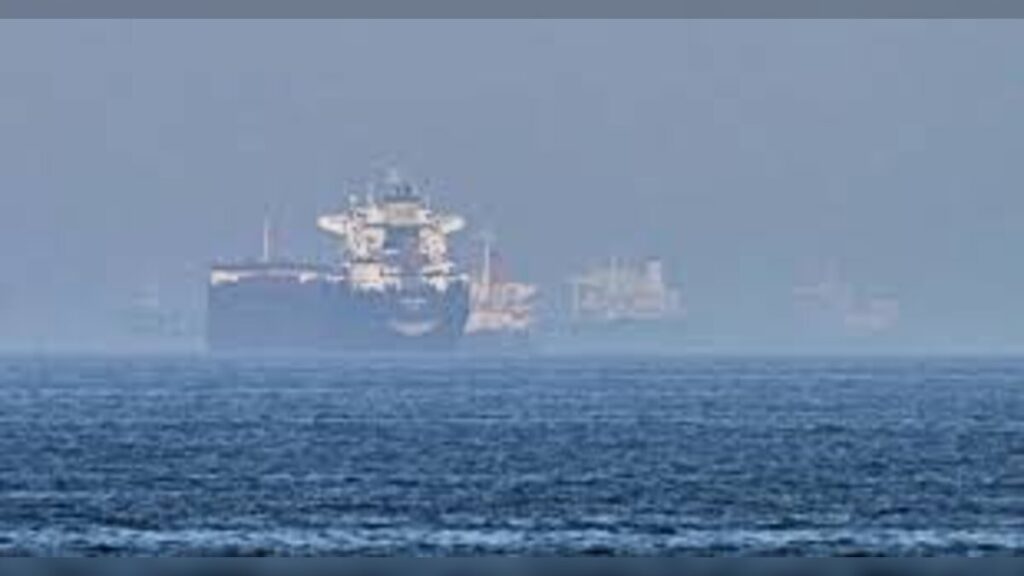
Reports emerging from Iranian state-aligned media have claimed a sharp escalation at sea, alleging that two missiles fired by Iran’s navy struck a United States Navy frigate operating near the Strait of Hormuz.
According to Fars News Agency, the ship reportedly changed course and retreated after being hit, though independent verification of the incident has not yet been provided.
If confirmed, the event would mark one of the most serious direct naval confrontations reported in the region in recent times, especially in one of the world’s most sensitive maritime corridors.
Why the Strait of Hormuz Is Always on Edge
The Strait of Hormuz is one of the most strategically important waterways on the planet, linking the Persian Gulf to global shipping routes.
A significant portion of the world’s oil supply passes through this narrow stretch of water, making it a frequent flashpoint during periods of geopolitical tension between Iran and Western naval forces.
Control and surveillance of the area have long been contested, with Iran asserting strong oversight while the United States Navy continues to conduct operations to ensure open navigation for commercial vessels.
Iran Claims “Protocol Violation” Triggered the Strike
Iranian sources claim the incident followed what they described as a violation of navigation and security protocols by the U.S. vessel near Jask, a key coastal area close to the Strait.
Officials reportedly argued that the ship’s movement signaled an attempt to pass through the strait without proper coordination with Iranian forces.
Tehran has repeatedly stated that any foreign military movement through the area must be coordinated in advance with Iranian authorities, framing it as a matter of sovereignty and regional security control.
Rising Warnings From Iranian Military Command
The alleged strike followed a series of increasingly direct warnings from Iranian military leadership earlier the same day.
Iran’s unified armed forces command reportedly cautioned the U.S. Navy against entering or operating near the Strait of Hormuz without coordination, describing such actions as violations of security protocols.
The statement also included explicit threats against foreign military presence in the area, reinforcing Iran’s position that it maintains control over maritime security in the region.




New Maps and Military Messaging Escalate the Situation
Adding to the tension, Iran’s Islamic Revolutionary Guard Corps (IRGC) Navy released a new map outlining what it considers its operational control zone within the Strait of Hormuz.
The map details a defined maritime area stretching between Iranian coastal points and nearby Gulf territories, signaling an attempt to visually reinforce territorial influence over critical sea lanes.
While Iranian media presented the map as a clarification of control, analysts note that maritime boundaries in the Strait remain internationally disputed and heavily monitored by multiple naval forces.
US Navy Silence and Regional Uncertainty
As of now, there has been no independent confirmation of damage to any U.S. naval vessel, and U.S. authorities have not publicly verified the reported missile strike.
In previous similar incidents in the region, conflicting accounts have often emerged in the immediate aftermath, with official confirmations sometimes taking days or longer.
The lack of clarity has left room for uncertainty, especially given the high stakes and rapid escalation potential in the Gulf region.
Impact and Consequences
If the reports are confirmed, the incident would represent a major escalation in direct military confrontation risks between Iran and U.S. naval forces.
It could further destabilize shipping confidence in the Strait of Hormuz, potentially affecting global oil prices and maritime insurance costs almost immediately.
For regional actors, the situation raises fears of miscalculation at sea, where fast-moving naval encounters leave little room for de-escalation once engagements begin.
Internationally, such an event would likely intensify diplomatic pressure on both sides to prevent further incidents in one of the world’s most critical shipping chokepoints.
What’s Next?
The immediate next step is likely clarification from U.S. defense and naval authorities regarding whether any vessel was struck or forced to change course.
At the same time, Iran may continue issuing statements reinforcing its control claims over the Strait and warning against foreign naval presence.
Diplomatic channels, especially involving Gulf states and global shipping stakeholders, are expected to become more active if maritime traffic begins to slow or reroute.
If tensions persist, increased naval escorts or patrol operations by multiple countries in the region could follow.
Summary
Reports from Iranian-aligned sources claim that missiles struck a U.S. Navy frigate near the Strait of Hormuz, prompting the vessel to turn back.
The incident follows heightened warnings from Iran about foreign naval activity in the area and renewed assertions of control over the strategic waterway.
While the claims remain unverified by independent or U.S. sources, the situation highlights ongoing volatility in one of the world’s most sensitive maritime regions.
Bulleted Takeaways
- Iranian media claims two missiles struck a U.S. Navy frigate near the Strait of Hormuz
- The ship reportedly retreated after the alleged strike
- Iran says the action followed a “violation of navigation protocols” near Jask
- The Strait of Hormuz remains a critical global oil shipping route
- Iran issued warnings earlier the same day against U.S. naval presence in the area
- The IRGC released a map asserting control over parts of the Strait
- U.S. authorities have not independently confirmed the incident
- The situation raises risks of escalation in a heavily militarized maritime zone
- Global shipping and energy markets could be affected if tensions rise further
- The Strait of Hormuz remains one of the most strategically sensitive waterways worldwide

