
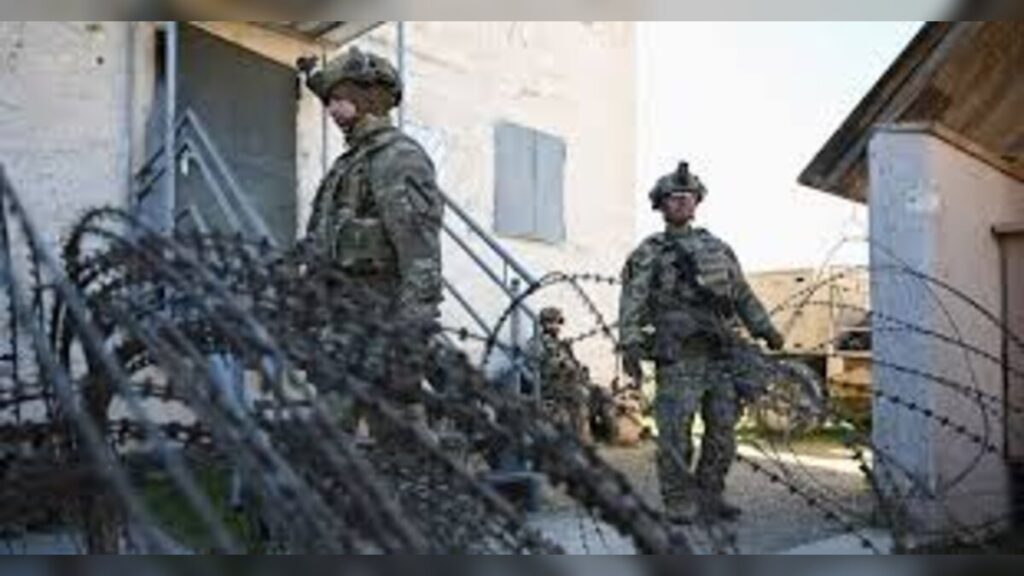
The reaction from Germany was notably calm after news emerged that the United States planned to pull back around 5,000 troops from its overseas deployment.
The response from Boris Pistorius summed up the mood in Berlin: this wasn’t seen as a shock move, but something long anticipated in defence circles.
Rather than panic or alarm, officials treated it more like a planned adjustment in an evolving security landscape.
Pistorius himself made it clear that such a shift had been expected, given broader changes in US military posture and global priorities.
A Longstanding US Military Presence in Europe
For decades, the United States has maintained a significant military footprint across Europe, with Germany serving as one of its key hubs.
US forces have been stationed there as part of NATO commitments, deterrence strategy, and rapid-response capabilities.
The announced reduction of about 5,000 troops doesn’t erase that presence, but it does reflect a gradual recalibration.
Over time, Washington has signaled interest in redistributing forces, especially as attention shifts toward other global regions.
Still, the presence of American troops in Germany remains central to NATO operations and collective defence planning.
Pistorius Says the Move Was Expected, Not Alarming
Speaking in response to the announcement, Pistorius downplayed any sense of crisis.
His message was straightforward: this kind of troop adjustment had been on the radar for some time.
Rather than framing it as a withdrawal of support, he described it as part of ongoing military planning between allies.
In his view, it fits into a broader pattern where force levels are regularly reviewed based on strategic needs rather than sudden political decisions.




That tone matters in Berlin, where officials are careful not to overreact to shifts that are still within alliance frameworks.
What the Change Could Mean for European Security
Even if the reduction is relatively modest in scale, any change in US troop levels in Europe naturally raises questions about readiness and deterrence.
For NATO allies, the key concern is not just numbers, but capability—how quickly forces can be deployed, how well coordination works, and whether gaps are created in strategic coverage.
Germany, as one of NATO’s central logistics and command hubs, is likely to remain a critical base regardless of troop adjustments.
However, smaller footprints can still influence planning, training exercises, and rapid deployment capacity.
A Signal of Shifting Global Priorities
This move also reflects a broader pattern in US defence strategy.
Over recent years, Washington has increasingly balanced its commitments between Europe, the Indo-Pacific, and other global regions.
While Europe remains a core alliance priority, the redistribution of forces suggests a more flexible, global approach to military positioning.
Allies in Europe have been gradually encouraged to strengthen their own defence capabilities as part of shared burden expectations within NATO.
Impact and Consequences
The immediate impact is limited in operational terms, but politically it reinforces an ongoing theme: Europe is being asked to take more responsibility for its own security structure.
For Germany, the announcement is unlikely to change day-to-day defence operations, but it does feed into broader debates about military readiness, spending, and long-term strategic independence.
Within NATO, it may also accelerate discussions about force sharing, readiness targets, and infrastructure upgrades across member states.
What’s Next?
The next step will likely involve coordination between US and NATO leadership to ensure the troop adjustment does not create operational gaps.
Germany is expected to continue hosting a substantial US military presence, even after the reduction.
At the same time, European allies may push for clearer timelines and assurances regarding future force levels.
Further updates could also emerge as part of wider NATO restructuring discussions, especially as global security priorities continue to shift.
Summary
The US decision to withdraw around 5,000 troops from deployment in Europe has been met with calm acceptance in Germany.
Defence Minister Boris Pistorius described the move as expected, framing it as part of routine strategic adjustment rather than a sudden shift.
While the change is limited in scale, it contributes to ongoing conversations about NATO responsibilities and Europe’s role in its own defence.
Bulleted Takeaways
- The US plans to withdraw around 5,000 troops from its overseas deployment
- German Defence Minister Boris Pistorius said the move was expected
- US military presence in Germany remains a key part of NATO defence structure
- The reduction is seen as part of broader global realignment of US forces
- NATO coordination is expected to manage any operational adjustments
- Europe continues facing pressure to increase its own defence responsibilities
- The change is more strategic than disruptive in immediate military terms
