
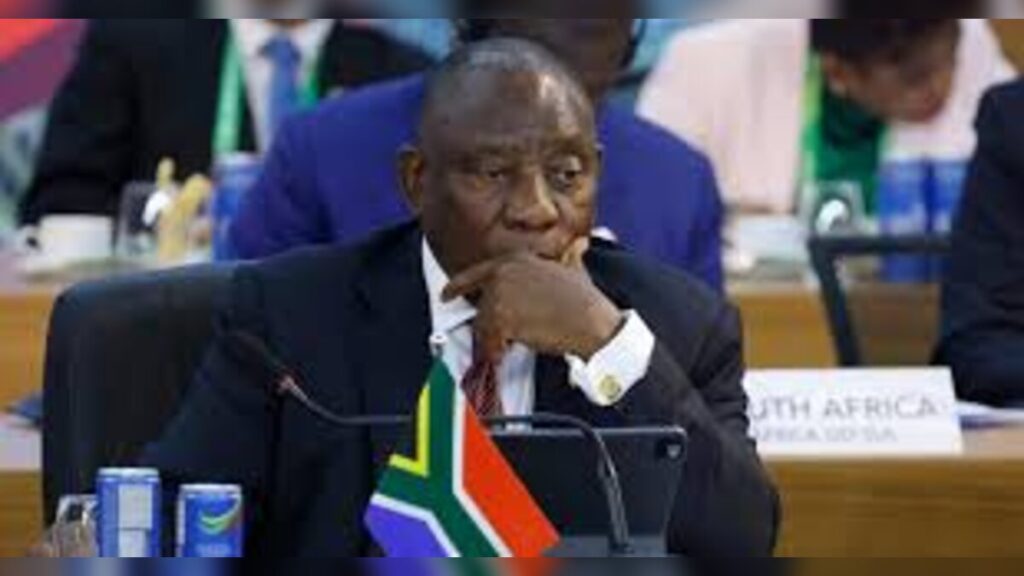
President Cyril Ramaphosa has brought the conversation around colonialism and reparations back into the spotlight, using his Africa Month message to push for renewed global attention on historical injustice.
His message wasn’t framed as symbolic reflection alone.
Instead, it leaned heavily on the idea that Africa’s colonial past is still actively shaping present-day inequality, from economic gaps to political instability across parts of the continent.
A Shared African Identity, But a Heavy Historical Burden
In his weekly newsletter, Ramaphosa reflected on Africa Month as a moment of unity, stressing that Africans share a common identity despite linguistic and cultural diversity.
But alongside that celebration, he pointed to a deeper reality: the long shadow of colonialism.
According to him, independence did not erase the structural damage left behind, and many countries are still dealing with systems shaped by exploitation and external control.
The message is consistent with long-standing African Union discussions that have increasingly framed colonial history as a continuing development issue, not just a historical chapter.
Colonialism, Slavery and the Question of Economic Justice
Ramaphosa highlighted how colonial systems extracted wealth from Africa while leaving behind weakened institutions and underdeveloped economies.
He also revisited the transatlantic slave trade, describing it as one of the most severe forms of dehumanisation in history.
Millions of Africans were forcibly taken, and entire communities were disrupted for generations.
The President linked this history to modern inequalities, arguing that the wealth of several developed nations was built in part on Africa’s exploitation.
Similar arguments have been echoed in global academic and policy debates, including by economists who study “historical extraction models” and their long-term impact on development gaps between regions.
Cultural Loss and Ongoing Calls for Restitution
Beyond economic harm, Ramaphosa also raised the issue of cultural theft during the colonial era.
He pointed to African artefacts housed in foreign museums and institutions, as well as the controversial display of human remains taken during colonial expansion.




These issues remain active points of negotiation globally, with increasing pressure on European institutions to return cultural heritage items to their countries of origin.
In recent years, several museums in Europe have begun returning artefacts to African nations, but advocates argue that the process is still slow and incomplete.
UN Position Adds Momentum to Reparations Discussion
The reparations debate gained new energy after a United Nations General Assembly resolution recognised the transatlantic slave trade as one of the gravest crimes against humanity.
The resolution calls for acknowledgment of harm, restitution, and the return of stolen cultural property—principles that align closely with Ramaphosa’s position.
He also referenced academic thought, including the work of Guyanese historian Walter Rodney, who described slavery as a form of “social violence” with long-lasting developmental consequences.
Ramaphosa Pushes Back on Arguments Against Reparations
The President dismissed common objections to reparations, especially those based on time passed or changes in modern political systems.
In his view, these arguments ignore the intergenerational impact of colonialism, including persistent inequality, debt burdens, and unemployment across many African economies.
He emphasised that reparations should not be symbolic alone but tied directly to development outcomes.
What Reparations Could Look Like in Practice
Rather than focusing only on financial compensation, Ramaphosa outlined a broader vision of redress.
He suggested that reparations could include:
- Development investment in African economies
- Debt relief or restructuring support
- Expanded access to global markets
- Technology and skills transfer
- Return of cultural artefacts and heritage items
This approach aligns with broader African Union discussions, which often frame reparations as part of a development and justice package rather than a single monetary settlement.
Impact and Consequences
Ramaphosa’s renewed call adds political weight to a long-running global debate that has often stalled due to disagreements over responsibility, valuation, and implementation.
For African states, it strengthens a coordinated diplomatic position that could influence negotiations with former colonial powers and international institutions.
For global politics, it places additional pressure on Western governments and museums already facing growing demands for restitution and acknowledgment of historical wrongdoing.
Economically, if reparations frameworks gain traction, they could reshape development financing conversations, particularly around debt relief and foreign aid structures.
What’s Next?
The next step is likely to unfold at diplomatic and multilateral levels, especially within the African Union and the United Nations system.
South Africa is expected to continue advocating for a unified continental stance, which could lead to coordinated proposals or negotiation frameworks.
At the same time, responses from former colonial powers will be closely watched, particularly in Europe where debates over restitution and historical accountability are already ongoing.
Whether reparations progress beyond symbolic resolutions into binding agreements will depend on sustained political alignment across multiple regions.
Summary
President Cyril Ramaphosa has reignited the reparations debate by linking colonial history and slavery to present-day inequality in Africa.
His message frames reparations not only as moral recognition but as a practical tool for development, economic justice, and cultural restoration.
The discussion is gaining momentum globally, but its future depends on political will, international cooperation, and agreement on what meaningful redress actually looks like.
Bulleted Takeaways
- Ramaphosa calls for renewed global focus on reparations for colonialism and slavery
- He links historical exploitation to current inequality and economic challenges in Africa
- The speech was delivered during Africa Month in his weekly newsletter
- He highlights cultural losses, including stolen artefacts and human remains
- A UN resolution has increased international momentum for reparations discussions
- Reparations are framed as development tools, not just financial compensation
- Proposed measures include debt relief, investment, and technology transfer
- The debate continues to divide global opinion but is gaining diplomatic traction

