
The Israel Defense Forces says its troops uncovered an underground Hezbollah tunnel network in the Qantara area of southern Lebanon, describing the discovery as part of ongoing operations near Israel’s northern border.
According to the IDF, soldiers located two underground tunnels with a combined length of roughly 2 kilometers.
The tunnel network was said to be about 10 kilometers from Israel’s northern communities, placing it close enough to raise serious security concerns for Israeli border residents.
Weapons and Long-Stay Supplies Found Underground
Inside the tunnels, Israeli troops reportedly found a large amount of military equipment and supplies.
The IDF said the underground network contained weapons, living quarters, water tanks, and equipment for prolonged stays.
That detail suggests the tunnels were not simply passageways.
The presence of living areas and stored supplies indicates they may have been designed to support fighters underground for extended periods.
Israel Frames the Discovery as a Border Threat
The IDF presented the tunnel find as evidence that Hezbollah has built military infrastructure close to Israeli communities.
For Israel, underground routes near the border are especially sensitive because they can be used for concealment, movement, storage, or future attack planning.
The discovery comes during a period of continued tension between Israel and Hezbollah along the Lebanon border, where strikes, alerts, and military activity have kept the area unstable.
Hamas Intelligence Official Killed, IDF Says
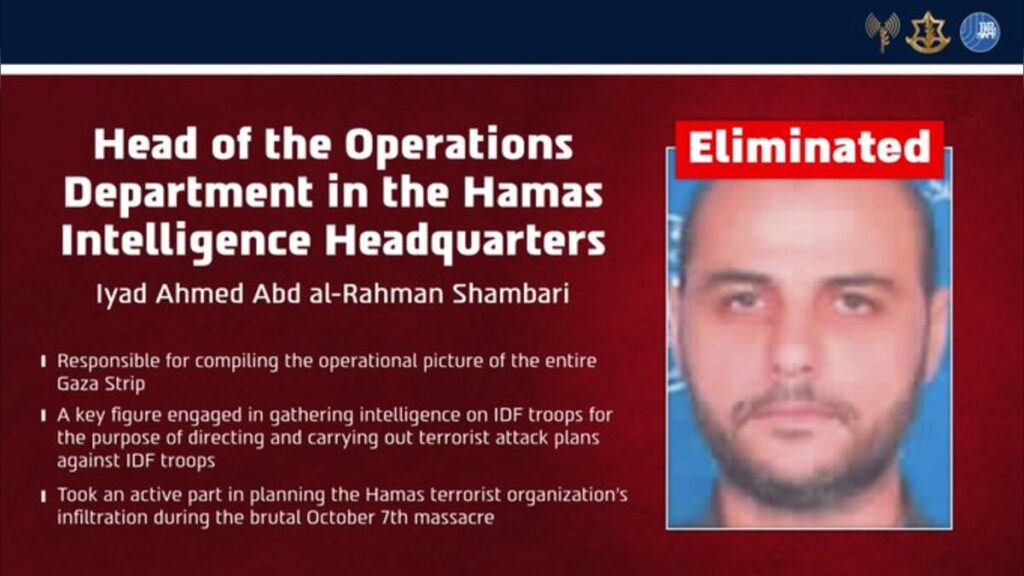
In a separate update, the IDF said it eliminated Iyad Ahmed Abd al-Rahman Shambari, whom it identified as the head of the Operations Department in Hamas’ Military Intelligence Headquarters.
Israel described Shambari as a key figure involved in gathering intelligence on IDF troops. According to the military, that intelligence was used to direct and carry out attack plans against Israeli forces.




IDF Links Shambari to October 7 Planning
The IDF also accused Shambari of taking an active role in planning Hamas’ infiltration during the October 7 massacre.
By highlighting that allegation, Israel is framing the strike not only as a current battlefield action but also as part of its broader effort to target individuals it says were connected to the October 7 attacks and later operations against Israeli troops.
Multi-Front Pressure Continues
The two announcements point to Israel’s continued military focus on both Hezbollah in Lebanon and Hamas in Gaza or related operational areas.
The tunnel discovery centers on northern border security, while the killing of a Hamas intelligence figure is tied to Israel’s campaign against Hamas command and planning networks.
Together, the updates show that Israel is still targeting both physical infrastructure and individual commanders or operatives it believes are central to attacks.
Impact and Consequences
The reported tunnel discovery could increase Israeli concerns about Hezbollah’s military preparations near the northern border.
If the tunnels were built for prolonged use, they may indicate planning for sustained operations, hidden weapons storage, or movement of fighters in southern Lebanon.
The killing of a Hamas military intelligence official could also affect Hamas’ ability to collect and use battlefield intelligence, at least in the short term.
However, militant organizations often replace targeted figures, so the longer-term impact will depend on how central Shambari was to active operations and whether Israel can continue disrupting the wider network.
For civilians, the consequences remain serious.
Israeli communities near the Lebanon border may see the tunnel discovery as proof of continued danger, while Lebanese areas near military infrastructure may face heightened risk of further strikes and ground activity.
What’s next?
The IDF may release more details about the tunnels, including whether they were destroyed, sealed, mapped further, or linked to additional underground infrastructure in southern Lebanon.
On the Hamas front, Israel is likely to continue targeting intelligence and operations figures it says are connected to attacks on IDF troops or the October 7 assault.
Further military updates may identify more commanders, infrastructure, or weapons sites as operations continue.
Summary
The IDF says it uncovered two Hezbollah tunnels in the Qantara area of southern Lebanon, totaling about 2 kilometers in length and located roughly 10 kilometers from Israel’s northern communities.
Troops reportedly found weapons, living quarters, water tanks, and equipment for extended stays inside.
In a separate announcement, Israel said it killed Iyad Ahmed Abd al-Rahman Shambari, a Hamas military intelligence official accused of gathering intelligence on IDF troops and helping plan the October 7 infiltration.
Bulleted Takeaways:
- The IDF says it exposed a Hezbollah tunnel network in Qantara, southern Lebanon.
- Troops reportedly found two underground tunnels.
- The tunnels had a combined length of about 2 kilometers.
- The network was located roughly 10 kilometers from Israel’s northern communities.
- Soldiers found weapons, living quarters, water tanks, and equipment for prolonged stays.
- Israel says the tunnels belonged to Hezbollah.
- In a separate update, the IDF said it eliminated Iyad Ahmed Abd al-Rahman Shambari.
- Shambari was identified as head of the Operations Department in Hamas’ Military Intelligence Headquarters.
- The IDF accused him of gathering intelligence on Israeli troops.
- Israel also linked him to planning Hamas’ October 7 infiltration.
- The updates show Israel continuing operations against Hezbollah infrastructure and Hamas command figures.
