
It was the kind of announcement that sends a shock through airports before most people have even had their morning coffee.
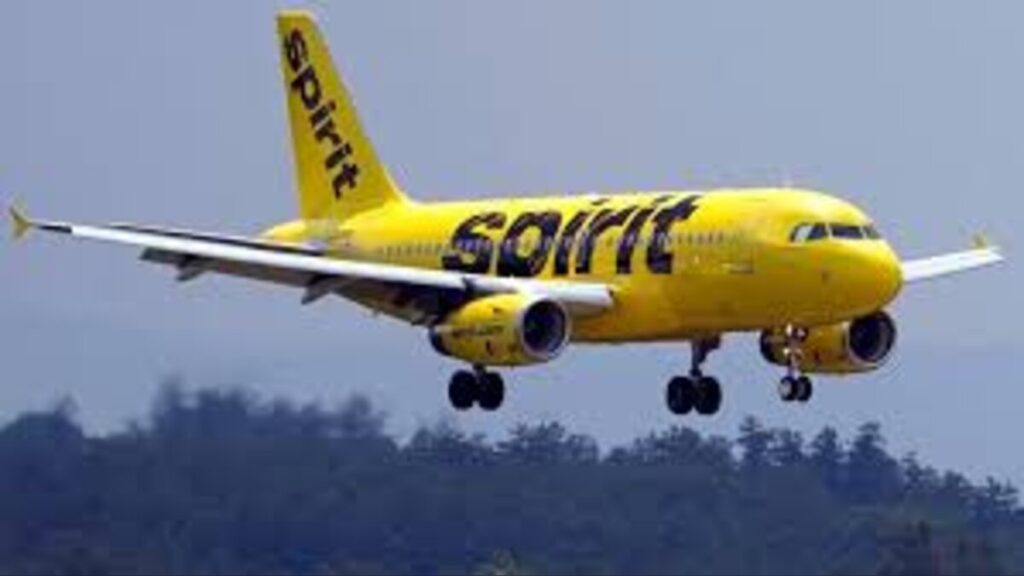
Spirit Airlines confirmed it was shutting down operations completely, bringing an abrupt end to more than three decades of flights marked by bright yellow planes, budget fares, and a “pay-for-everything-extra” model that reshaped low-cost travel in the United States.
By early Saturday morning, every Spirit flight had been canceled. Customer service lines went silent.
Ticket counters were empty. For thousands of passengers mid-journey or planning weekend trips, the airline they booked simply stopped existing overnight.
“Orderly Wind-Down” Marks the End of an Era
In its official statement, Spirit described the move as an “orderly wind-down,” though for many passengers it felt anything but orderly.
The airline said it was “with great disappointment” that operations ended on May 2, 2026, and emphasized that years of financial strain had finally become impossible to absorb.
The company pointed to a sudden spike in fuel costs as the final blow, but the reality runs deeper than one bad market swing.
Spirit had spent years fighting turbulence—two bankruptcy filings since 2024, more than $2.5 billion in losses after the pandemic, mounting debt, and aircraft grounded by engine issues.
Even survival talks in recent months collapsed under pressure.
Failed Rescue Deals and Political Tensions
Behind the scenes, efforts to save the airline stretched all the way into government-level discussions.
A proposed $500 million federal rescue package tied to equity stakes reportedly fell apart after disagreements between bondholders and policymakers.
Complicating matters further was the fallout from a blocked JetBlue–Spirit merger in 2024, which some officials now point to as a turning point in the airline’s financial decline.
Whether fair or not, that decision became part of a larger political argument about competition, pricing, and consumer protection.
At the same time, rising jet fuel prices linked to geopolitical tensions in the Middle East added fresh strain at exactly the wrong moment.




Passengers Left Stranded as Flights Vanish Overnight
The shutdown wasn’t gradual. It was immediate.
By around 3 a.m. Eastern Time, Spirit had no aircraft in the air. No call centers were active.
No airport staff remained to handle bookings or complaints. U.S.
Transportation Secretary Sean Duffy warned travelers bluntly not to show up at airports, saying there would be “no one there to assist you.”
For passengers already in transit or with upcoming bookings, uncertainty quickly turned into confusion.
Refund processes are now expected to move through credit card reversals and bankruptcy claims, depending on how tickets were purchased.
A Low-Cost Model That Changed Air Travel
Spirit Airlines wasn’t just another carrier—it was a symbol of ultra-budget flying in America.
For 34 years, it built its identity around rock-bottom base fares and aggressive add-on pricing for everything from seat selection to carry-on luggage.
That model reshaped expectations in the industry.
Some passengers loved the affordability. Others criticized the fees.
But few airlines influenced pricing psychology quite like Spirit.
At its peak, it operated hundreds of daily flights across the U.S., Latin America, and the Caribbean, employing roughly 17,000 workers.
Impact and Consequences
The immediate impact is massive. Thousands of employees are suddenly without jobs, and tens of thousands of passengers are stranded or forced into costly rebookings with other airlines.
Air travel markets are also bracing for ripple effects.
Competing airlines are stepping in to absorb routes, but short-term capacity gaps could push fares higher on certain corridors despite temporary government coordination.
There’s also a broader industry consequence: the collapse of one of America’s most recognizable low-cost carriers raises questions about how sustainable the ultra-budget airline model really is under rising fuel costs and heavy debt pressure.
What’s Next?
In the short term, attention shifts to passengers and employees.
Major U.S. airlines have begun offering reduced or capped fares for stranded Spirit customers, while also opening hiring pipelines for displaced staff.
Spirit’s financial aftermath will move into bankruptcy proceedings, where creditors, ticket holders, and investors will sort out claims over time.
Longer term, aviation analysts expect regulators and airlines to revisit the balance between ultra-low fares and financial stability, especially in an environment of volatile fuel prices and high operational costs.
Summary
Spirit Airlines has permanently ceased operations after 34 years, citing financial collapse driven by rising fuel costs, debt, failed restructuring attempts, and prolonged industry pressure.
All flights were canceled immediately, leaving passengers and employees facing sudden disruption while the airline enters wind-down and bankruptcy processes.
Bulleted Takeaways
- Spirit Airlines shut down operations on May 2, 2026 after 34 years
- All flights were canceled and operations stopped immediately
- About 17,000 employees are affected
- Company cited rising fuel prices and long-term financial losses
- Spirit had over $2.5 billion in losses since the pandemic
- Two bankruptcy filings since 2024 preceded the collapse
- A proposed $500 million rescue deal failed to materialize
- Passengers will receive refunds through card payments or bankruptcy claims
- Other airlines are offering discounted fares and hiring displaced workers
- Shutdown marks the end of one of the U.S. ultra-low-cost airline pioneers

