
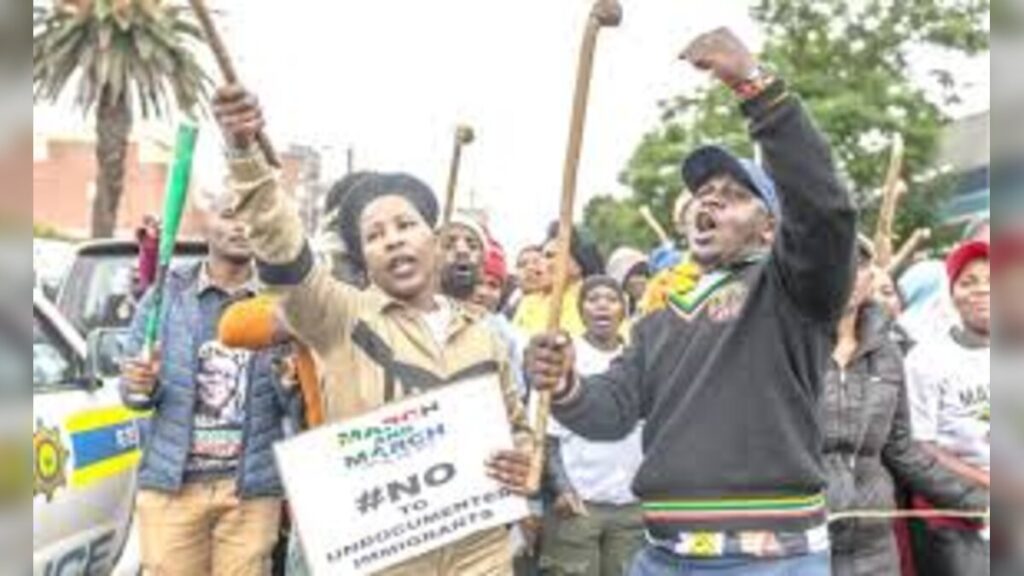
Tension is rising again within parts of the African diaspora in South Africa, as a Nigerian group warns that incidents of violence and hostility against foreign nationals are becoming more frequent and more dangerous.
The Nigerian Citizens Association in South Africa (NICASA) has now stepped forward with a strong appeal for urgent diplomatic intervention, saying the situation is no longer something that can be brushed aside or treated as isolated.
At the centre of the concern are repeated reports of harassment, intimidation, and attacks allegedly directed at Nigerians and other African migrants living in various parts of the country.
NICASA Calls for Immediate Government Intervention
Speaking on behalf of the community, NICASA President Frank Onyekwelu urged the Nigerian government and African leaders to step in without delay.
He called on President Bola Tinubu, the Ministry of Foreign Affairs, and diaspora-focused institutions such as the Nigerians in Diaspora Commission (NiDCOM) to respond with what he described as urgency and strategic diplomacy.
According to him, the protection of citizens abroad is not just a diplomatic formality but a constitutional and moral responsibility that must be taken seriously.
He warned that delays or silence could worsen public perception that Nigerians abroad are left without protection from their own government.
Reports of Harassment, Policing Concerns, and Rising Tension
The association expressed concern over what it described as a pattern of discriminatory treatment, including alleged cases of police brutality and targeted harassment against foreign nationals.
Onyekwelu said inflammatory political rhetoric and selective enforcement of laws have contributed to a climate where xenophobic behaviour appears to be normalised in some communities.
These claims reflect long-standing tensions in South Africa, where foreign nationals—particularly from other African countries—have previously been caught up in outbreaks of xenophobic violence tied to economic frustration and competition for jobs.
South Africa has experienced multiple waves of such unrest in the past decade, often prompting regional concern and diplomatic engagement from neighbouring states.
Appeal for Diplomatic Pressure and Accountability
NICASA is urging Nigerian authorities to open high-level talks with South African officials to ensure stronger protection for migrants.
The group also wants the creation of clearer reporting systems for abuse cases, as well as accountability mechanisms for law enforcement officers accused of misconduct.




In its statement, the association argued that without consequences for perpetrators, the cycle of abuse is likely to continue unchecked.
It also emphasised that Nigerian citizens in South Africa are largely law-abiding and economically active, contributing to businesses, trade, and local communities.
Highlighting the Role of Diplomatic Missions
The group acknowledged the efforts of Nigeria’s diplomatic mission in South Africa, particularly the Consul-General, for ongoing community engagement and support.
However, it stressed that diplomatic goodwill alone is not enough without stronger backing from the federal government.
This reflects a broader issue often raised by diaspora communities across Africa, where consular offices are expected to respond to crises but may lack the resources or political weight to resolve systemic problems alone.
A Call for African Unity Against Xenophobia
Beyond Nigeria and South Africa, NICASA extended its appeal to African leaders and institutions, urging a continental response to rising hostility between Africans themselves.
It called on the African Union and regional bodies to address what it described as “intra-African intolerance” that undermines the idea of continental unity.
The association argued that Africa’s long-term progress depends on cooperation rather than division, especially at a time when migration and cross-border economic activity are increasing.
Context: Xenophobia in South Africa Has Deep Roots
South Africa has faced recurring xenophobic outbreaks since the mid-2000s, often linked to economic inequality, unemployment, and competition in informal sectors.
Foreign nationals from Zimbabwe, Nigeria, Somalia, Mozambique, and other African countries have frequently been targeted during periods of unrest.
While the South African government has repeatedly condemned such violence, critics argue that enforcement and prevention measures have not always been consistent or effective.
Impact and Consequences
If tensions continue, the consequences could extend beyond individual safety concerns.
For migrants, there is increased risk of economic disruption, fear-driven relocation, and reduced participation in local communities.
For Nigeria and other African states, persistent incidents could strain diplomatic relations and increase pressure on governments to adopt stronger protection frameworks for citizens abroad.
At a regional level, ongoing xenophobic tensions threaten the broader vision of African integration and free movement across borders.
What’s Next?
NICASA is expected to continue pushing for diplomatic engagement between Nigeria and South Africa, possibly escalating its appeals to regional and continental bodies if conditions do not improve.
There may also be renewed calls for joint security and monitoring mechanisms involving both governments and African Union institutions.
On the South African side, authorities may face increasing pressure to demonstrate stronger enforcement against xenophobic violence and improve community-level conflict prevention.
Summary
The Nigerian Citizens Association in South Africa has raised serious concerns about what it describes as ongoing xenophobic attacks and discrimination against Nigerians and other African migrants.
It is calling for urgent intervention from Nigerian authorities, stronger diplomatic engagement with South Africa, and a coordinated African response to address rising hostility.
Bulleted Takeaways
- NICASA warns of rising xenophobic attacks against Nigerians in South Africa
- Group appeals to President Tinubu and Nigerian authorities for urgent action
- Allegations include harassment, intimidation, and police brutality
- Calls made for stronger diplomatic engagement with South African government
- Suggestion to create formal systems for reporting abuse and violence
- NICASA praises Nigerian diplomatic mission but demands stronger backing
- Organisation urges African Union involvement in addressing intra-African hostility
- Xenophobia in South Africa has historical roots linked to economic tensions
- Concerns raised about impact on safety, unity, and African integration

