
Electric vehicles are still gaining serious ground in the UK.
Last year alone, 473,348 EVs were sold, marking a strong 23.9% rise compared to 2024.
That surge has pushed the total number of electric cars on UK roads to around 1.8 million, showing just how quickly the shift away from petrol and diesel is happening.
A big part of this growth is being driven by familiar names and newer affordable models.
The Tesla Model Y continues to dominate as the UK’s most popular pure-electric car, with 24,298 units delivered last year.
At the same time, smaller, cheaper EVs like the Renault 5 are beginning to build strong interest among everyday private buyers who want something practical without breaking the bank.
But while the market is expanding overall, not every electric car has managed to win over drivers.
Not Every EV Has Been a Success Story
For every success like the Model Y, there are models that quietly disappear after failing to find buyers.
Some EVs arrived with big expectations, strong branding, and futuristic designs—but still ended up struggling in real-world sales.
In several cases, cars have been pulled from showrooms entirely, not because of technology failure, but simply because demand never matched the hype.
That gap between expectation and reality is where these three models stand out.
Honda e Falls Short Despite Early Excitement
The Honda e arrived in 2020 with plenty of attention.
It was meant to represent Honda’s electric future, closely inspired by its earlier Urban EV concept that had impressed many people.
At first glance, it looked like a hit—compact, stylish, and packed with modern tech.
But the reality was different.
Despite its charm, it struggled to sell and was eventually discontinued just three years after launch in 2023.
The main issue was range. With an official figure of around 137 miles, it already lagged behind rivals, but real-world winter driving often brought that closer to 70 miles, which made it hard to live with daily.




On top of that, its price—between £32,000 and £37,000—felt too high for such limited practicality.
Even though it had fans, fewer than 4,000 units a year were being sold across Europe, which sealed its fate.
GWM Ora 03 Struggles to Find Buyers in the UK
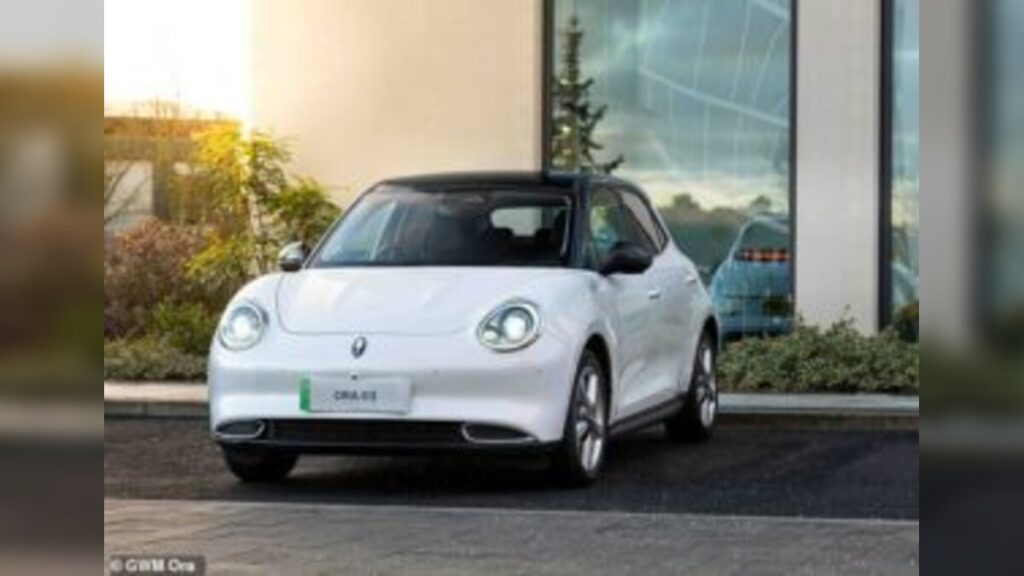
The GWM Ora 03—originally launched as the Ora Funky Cat—was another EV that couldn’t gain traction in the British market.
Backed by China’s Great Wall Motors, it arrived in the UK in late 2022, but the unusual original name didn’t help its appeal.
Even after being renamed the Ora 03, sales still failed to pick up.
By 2025, the model managed just 542 registrations, a sharp drop compared to rivals like the MG4 EV, which reached around 9,000 units in the same period.
Despite attempts to reposition the brand, demand stayed weak, and the model has now effectively been dropped, with only remaining stock still available.
Broader strategy changes across Europe have also cast doubt over the brand’s future direction.
Lexus UX 300e Quiet Exit After Low Demand
Lexus entered the full-electric space with the UX 300e, hoping to build on its reputation for hybrid success.
However, the model never gained strong momentum.
Since 2021, fewer than 3,400 units are believed to have been registered in the UK.
It eventually disappeared from the brand’s website and was quietly removed from sale in late 2025.
One of its biggest weaknesses was range—around 186 miles—which lagged behind competitors.
It also used a CHAdeMO charging system rather than the more widely adopted CCS standard, making it feel outdated as infrastructure moved on.
While the hybrid UX continues, the electric version has been replaced in spirit by the larger Lexus RZ, which offers better range and faster charging but comes at a higher price.
Impact and Consequences
These failed or discontinued EVs highlight a clear lesson in the electric car market: design and branding alone are not enough.
Buyers are becoming more practical, focusing on range, charging speed, and long-term value.
Manufacturers are also under pressure as competition increases.
Chinese brands, European legacy automakers, and Tesla are all pushing aggressively, leaving little room for models that miss the mark.
The fallout is simple—cars that don’t meet expectations are being removed faster than ever, as companies refocus on stronger performers.
What’s Next?
The UK EV market is expected to keep growing, especially as more affordable models enter the space and charging infrastructure expands.
Future electric cars will likely focus less on experimental designs and more on real-world usability: longer range, lower prices, and faster charging compatibility.
Brands that failed with earlier models are already adjusting strategies, and new generations of EVs are being developed with more cautious, data-driven planning.
Summary
The UK’s electric car market is booming, with nearly half a million EVs sold last year and strong overall growth.
However, not every model has succeeded. Cars like the Honda e, GWM Ora 03, and Lexus UX 300e struggled due to limited range, pricing issues, or weak demand, leading to their early withdrawal from the market.
Bulleted Takeaways
- UK EV sales reached 473,348 units last year, up 23.9%
- Total EVs on UK roads now stand at around 1.8 million
- Tesla Model Y remains the top-selling electric car in the UK
- Honda e was discontinued due to short range and high price
- GWM Ora 03 failed to gain traction, with just 542 UK registrations in 2025
- Lexus UX 300e was quietly withdrawn after poor sales and limited range
- Key EV failure factors include range, charging tech, and pricing
- Future EV development will focus more on practicality and affordability

