
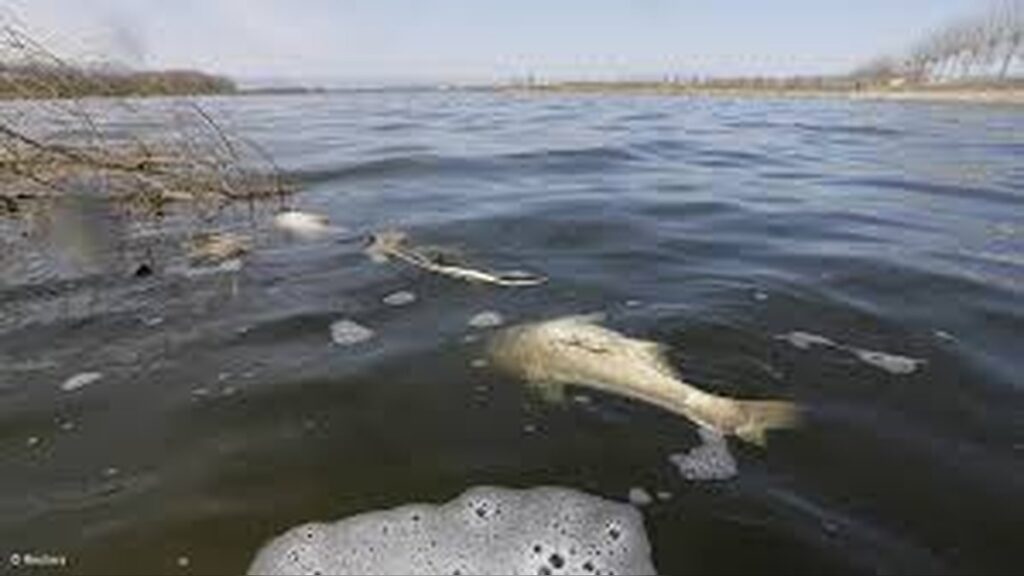
South Africa’s ongoing water and sanitation crisis came under sharp scrutiny this week as the South African Human Rights Commission (SAHRC) publicly criticised the Emfuleni and Merafong municipalities.
The focus was simple but serious: communities have been living for years with unreliable water supply, sewage spills, and dependence on water tankers.
What should be basic service delivery has instead turned into a long-running emergency for thousands of residents in parts of Gauteng.
“People Are Living in a Sewer” — SAHRC Raises Alarm
During hearings, SAHRC acting Gauteng provincial manager Khululiwe Sithole delivered one of the most striking assessments yet.
She said the commission continues to receive constant complaints—messages, videos, and images—often sent outside working hours showing deteriorating conditions.
Her description of some areas was blunt.
In parts of Emfuleni, sewage is reportedly flowing through streets and even entering homes.
The commission’s concern is not new.
Emfuleni has long been flagged in national discussions around failing infrastructure, with ageing pipes and repeated system breakdowns contributing to ongoing breakdowns in service delivery.
Tankers, Old Pipes, and a System Under Pressure
In Merafong, officials told the inquiry that the municipality spends around R700,000 every month just to keep water tankers operating.
These tankers serve communities affected by water restrictions, particularly in areas like Kokosi extensions 4, 5, and 6.
Municipal representatives explained that much of the infrastructure is outdated and requires replacement, not just repair.
The system relies heavily on ageing pipes and older technology that struggles to meet current demand.
They also said they are working with the Department of Water and Sanitation and other stakeholders, but acknowledged that the problems have been building for years.
Tension in the Hearing Over the Real Cause
The hearings became more heated when Emfuleni officials suggested that informal settlements were partly responsible for the pressure on water systems.
That claim was strongly rejected by the SAHRC.



Sithole argued that informal settlements cannot be used as a blanket explanation for infrastructure failure, especially in areas where communities have existed for over a decade.
The commission pushed for more than explanations, demanding clear timelines and measurable progress instead of repeated assurances.
SAHRC chairperson Henk Boschoff also raised concern over Merafong, suggesting that some individuals may be benefiting from service delivery contracts while communities continue to suffer.
A Different Picture in Midvaal
Not all municipalities faced the same level of criticism.
Midvaal Municipality was highlighted as an example of relatively better performance, with significantly fewer complaints reaching the commission.
Officials were praised for responsiveness and engagement with residents and the SAHRC.
However, challenges still exist. Midvaal is dealing with rapid population growth, infrastructure pressure, and reliance on Rand Water.
The municipality also manages water delivery to 47 informal settlements using tanker systems while working toward long-term groundwater solutions.
Delayed Projects and Infrastructure Backlogs
One of the major concerns raised was the long-delayed wastewater treatment works project in Meyerton.
Initially expected to be completed in 2017, the project remains unfinished, despite partial completion of two phases.
Officials explained that the project is funded through national infrastructure grants and managed externally, with Rand Water acting as implementing agent.
Midvaal leadership stressed that the municipality is not fully responsible for delivery delays but remains affected by them.
Impact and Consequences
The consequences of these failures are visible and ongoing.
Communities in Emfuleni and Merafong continue to face health risks linked to sewage contamination and unreliable water supply.
When infrastructure breaks down at this scale, it affects schools, clinics, households, and local businesses.
It also increases reliance on costly emergency measures like water tankers, which are not sustainable long-term solutions.
There is also a governance impact. Repeated complaints to the SAHRC highlight declining trust between residents and local authorities, especially where responses are slow or inconsistent.
What’s Next?
The SAHRC has indicated that it will continue monitoring municipalities and expects concrete action plans, not just explanations.
Municipalities like Emfuleni and Merafong are under pressure to show measurable progress, including infrastructure upgrades and clearer timelines for repairs.
At national level, oversight visits and funding interventions are expected to continue, especially for large infrastructure projects that have already experienced long delays.
Midvaal’s model may also be examined more closely as a benchmark for better performance in similar conditions.
Summary
The SAHRC has strongly criticised Emfuleni and Merafong municipalities over ongoing water shortages, sewage spills, and poor infrastructure management.
While Merafong continues to rely heavily on water tankers and Emfuleni faces severe sanitation breakdowns, Midvaal has been highlighted for comparatively better service delivery.
The commission is now demanding clearer timelines and real progress rather than repeated assurances.
Bulleted Takeaways
- SAHRC criticises Emfuleni and Merafong for poor water and sanitation services
- Residents reportedly face sewage spills and long-term water shortages
- Merafong spends about R700,000 monthly on water tankers
- Emfuleni blamed informal settlements, but SAHRC rejected this explanation
- Midvaal praised for better responsiveness and fewer complaints
- Meyerton wastewater project delayed since 2017 despite partial completion
- Infrastructure issues linked to ageing pipes and system failures
- SAHRC demands clear timelines and measurable progress from municipalities

