
Woolwich Works, once an old munitions factory, felt very different on this morning.
Instead of machinery or industrial noise, it was filled with delegates from governments, charities, businesses, and international organisations gathered for the Global Partnerships Conference.
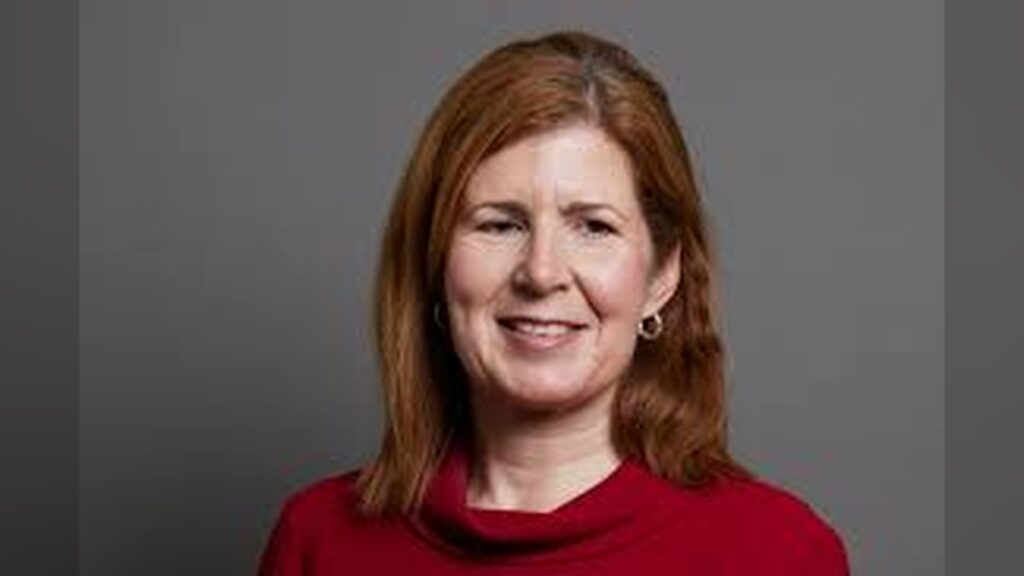
Baroness Baroness Chapman stepped up to deliver the opening speech, setting a tone that mixed optimism with urgency.
Her message wasn’t wrapped in technical jargon or distant diplomacy—it was direct, personal, and focused on one word she kept returning to: partnership.
A Room Full of Experience, Newcomers, and Shared Expectations
From the start, she made it clear the room was not made up of one type of participant.
Some had spent decades working in international development conferences, while others were attending for the first time, unsure of what to expect but aware of the global pressures shaping the moment.
She acknowledged both groups equally—those who had “seen it all” and those stepping into what she described as increasingly “choppy waters” of global cooperation.
The underlying idea was simple: everyone in the room is now part of the same challenge.
That challenge, she suggested, is no longer abstract. It is immediate, complex, and interconnected.
Why Woolwich Works Matters More Than It Looks
The choice of venue wasn’t accidental.
The building once produced ammunition, but now hosts conversations about global cooperation and development. That contrast became part of her message.
A place once associated with conflict has become a space for collaboration.
For her, that transformation symbolised what global partnerships should aim for—turning old systems of division into structures that support progress.
It was a small detail, but it reinforced a broader theme: change is possible, even in places with heavy histories.
Choosing Partnership in a World That Feels Less Stable
One of the strongest threads in her speech was the idea of choice.
She leaned on a poem recited earlier at the event and highlighted a single word—“choose.”
Choose partnership. Choose humanity. Choose cooperation.
She linked that idea to global uncertainty: conflicts affecting the Middle East, shifting global power dynamics, climate pressures, and fragile economic conditions.




None of these issues, she argued, can be solved by countries acting alone.
Instead, she described a world where development is not charity, but stability investment—a way to prevent larger crises from spreading.
Global Systems Under Pressure and the Need for a Reset
The speech didn’t avoid difficult realities.
She pointed to rising debt burdens in parts of Africa, gaps in development financing, and global investment flows that rarely reach the regions that need them most.
She argued that existing systems are not keeping pace with today’s challenges.
Whether in health access, climate response, or economic development, the structure itself needs redesigning.
Her message was blunt in places: doing more of the same will not be enough.
From Policy Language to Real-World Partnerships
Rather than focusing on abstract policy talk, she repeatedly returned to the idea of practical cooperation between governments, private companies, philanthropists, and civil society.
She referenced examples of collective action in her own background, including community-driven approaches to public services in the South Wales Valleys, linking it to broader international cooperation.
The point was that successful systems—whether local or global—depend on shared responsibility, not top-down instruction.
The Compact That Is Meant to Turn Words Into Action
A key moment in the conference was the introduction of a new “Compact,” described as a shared framework for faster, more open, and more collaborative development work.
It is not a finished solution, but a starting point.
According to the speech, its value depends entirely on whether participants choose to act on it.
She encouraged delegates to sign it, debate it, and most importantly, implement it rather than treat it as another conference document.
Impact and Consequences
The immediate impact of the speech is its attempt to shift tone in global development discussions—from slow, heavily bureaucratic cooperation to faster, more flexible partnerships.
If taken seriously, the Compact could influence how aid, finance, and technology are shared between countries, especially in regions facing debt pressure and infrastructure gaps.
However, there is also a risk: many global agreements begin with strong momentum but lose influence once political attention shifts.
The success of this initiative will depend on whether governments and institutions follow through beyond the conference stage.
It also reflects a broader trend in international policy—less emphasis on traditional aid models and more focus on blended finance, private sector involvement, and locally led development.
What’s Next?
Over the next few days of the conference, delegates are expected to debate the Compact and refine its commitments.
The real test will come afterward, when countries decide whether to sign and implement its principles.
If adoption is strong, it could shape new funding models and partnerships in global development over the coming years.
If not, it may remain another well-meaning but underused framework.
Much will also depend on geopolitical stability and economic conditions, which continue to influence how much countries are willing or able to cooperate.
Summary
Baroness Chapman’s opening speech at the Global Partnerships Conference focused on urgency, cooperation, and reform.
Delivered at Woolwich Works, it framed global development as a shared responsibility requiring new partnerships and faster action.
The introduction of the Compact signals an attempt to move from discussion to commitment, but its impact will depend entirely on whether global actors choose to act on it.
Bulleted Takeaways
- Baroness Baroness Chapman opened the Global Partnerships Conference in London at Woolwich Works.
- The venue symbolises transformation from a former ammunition factory into a cooperation hub.
- The speech focused on global instability, inequality, and the need for development reform.
- A new “Compact” was introduced to encourage faster and more collaborative global partnerships.
- She emphasized that development is essential for global stability, not optional aid.
- The address called for cooperation between governments, business, and civil society.
- Debt pressures and unequal financial flows were highlighted as major global challenges.
- The success of the Compact depends on whether delegates choose to implement it after the conference.f

