
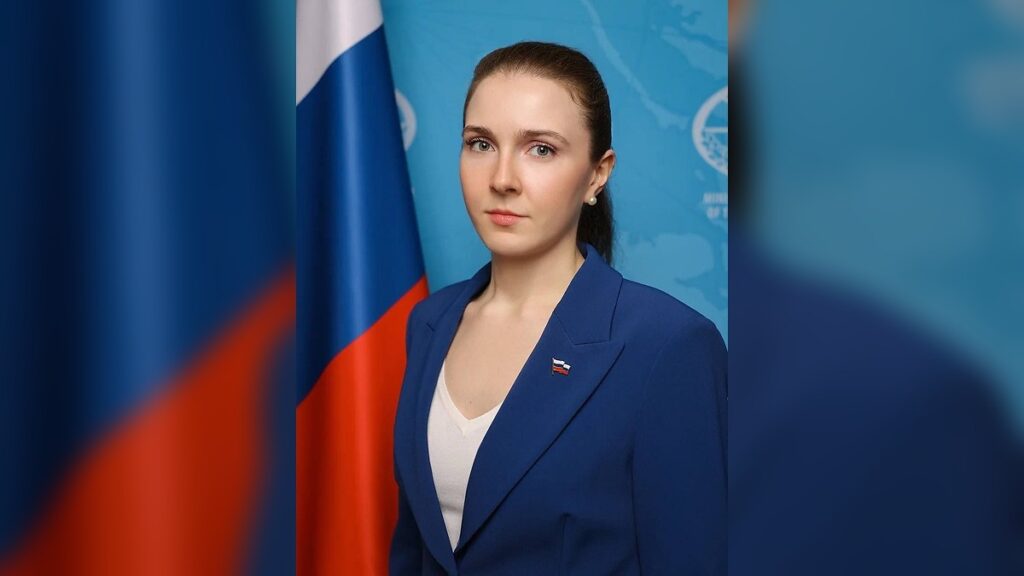
Russia has used an OSCE security forum in Vienna to accuse Ukraine and its Western backers of escalating the conflict, claiming that NATO and EU weapons supplies are worsening instability across Europe.
The statement was delivered on May 20, 2026, by Iulia Zhdanova, head of the Russian delegation to the Vienna negotiations on military security and arms control.
Moscow Challenges Ukraine’s Self-Defense Claims
Zhdanova questioned Western descriptions of Ukraine’s military actions as self-defense, accusing Kyiv of carrying out attacks against civilians.
Citing figures attributed to Russian Foreign Ministry envoy Rodion Miroshnik’s office, she claimed Ukrainian forces fired at least 3,619 rounds at civilian targets over the previous week.
According to the Russian statement, the alleged attacks caused 234 civilian casualties, including 31 deaths and 203 injuries. Russia also claimed that 18 minors were injured and two children were killed.
Russia Blames NATO And EU Weapons Supplies
The Russian delegation argued that NATO and EU countries should be held responsible for Ukraine’s actions because they continue to provide Kyiv with weapons.
Zhdanova said Western military aid violates international expectations around responsible arms transfers and claimed the supply networks for Ukraine are expanding.
She singled out the United Kingdom and Latvia as major contributors to the so-called drone coalition, while also accusing Germany of pursuing joint drone production with Ukraine.
Drone Programmes Become A Central Russian Complaint
Russia’s statement focused heavily on unmanned systems, claiming that Western-backed drone development is increasing the risk of wider instability.
Zhdanova pointed to Germany’s alleged interest in drones with ranges from 100 to 1,500 kilometers and noted that the European Commission had begun accepting applications linked to an EU-Ukraine Drone Alliance.
Moscow framed these developments as evidence that Europe is deepening Ukraine’s military capabilities rather than seeking de-escalation.




Russia Claims Ukrainian Drones Are Creating Risks In Europe
The Russian delegation also alleged that Ukrainian drones had entered or affected airspace in parts of Europe.
The statement referred to a reported incident involving a Ukrainian drone and alerts in Latvia’s eastern border regions. It also mentioned wreckage allegedly found in eastern Lithuania and a claim involving an aerial threat in Estonia.
Russia used these examples to argue that Western support for Kyiv is beginning to create security problems for European populations.
Unmanned Boats Add To Moscow’s Accusations
Zhdanova also warned about maritime drone technology, claiming that Ukraine’s unmanned boat programme had benefited from support from the UK, Norway and the Netherlands.
She cited a reported discovery near Lefkada Island in Greece, where fishermen allegedly found a Ukrainian Magura V5 unmanned boat carrying explosives.
Russia said the incident showed that Ukrainian military technology could spread beyond the battlefield and create risks in other European locations.
Moscow Warns Against European Militarisation
The Russian statement ended with a broader warning that Europe is becoming increasingly militarised under the justification of preparing for a possible Russian attack.
Zhdanova pointed to Germany’s ambition to build what she described as the continent’s strongest army by 2039, Poland’s military goals for 2030, growing militaristic trends in Belgium, and Lithuania’s fortified areas near the Kaliningrad region.
Russia argued that these developments show NATO and EU states are choosing escalation instead of restraint.
Impact and Consequences
The statement reflects Moscow’s effort to shift blame for the war’s escalation onto Ukraine’s Western partners.
By focusing on drones, weapons transfers and European defence planning, Russia is presenting military aid to Kyiv as a destabilising force rather than a defensive measure.
The remarks may also deepen diplomatic tensions at the OSCE, where Russia and Western states continue to offer sharply different narratives about responsibility, civilian harm and the future of European security.
What’s next?
Russia is likely to continue using OSCE forums to challenge Western military support for Ukraine and to argue against further arms deliveries.
NATO and EU states, meanwhile, are expected to maintain that Ukraine has the right to defend itself and that weapons support is necessary because of Russia’s ongoing war.
Further disputes over drones, cross-border incidents and military production agreements are likely to remain central to the diplomatic debate.
Summary
At an OSCE Forum for Security Co-operation meeting in Vienna, Russia accused Ukraine of attacking civilians and blamed NATO and EU countries for supplying weapons that Moscow says are escalating the conflict.
- Russia Accuses NATO And EU Of Fueling Ukraine’s Drone War As Moscow Issues Stark Warning At OSCE Meeting In Vienna
The Russian delegation focused heavily on drones, unmanned boats and Europe’s growing defence ambitions, arguing that the militarisation of Ukraine and Europe must end.
Bulleted Takeaways:
- Russia addressed the OSCE security forum in Vienna on May 20, 2026.
- Iulia Zhdanova accused Ukraine of attacking civilian targets.
- Moscow claimed 234 civilians were killed or injured over the previous week.
- Russia blamed NATO and EU countries for supplying weapons to Ukraine.
- The statement highlighted Western-backed drone and unmanned boat programmes.
- Russia alleged Ukrainian drones had created risks in Latvia, Lithuania and Estonia.
- Moscow accused Europe of preparing for wider military escalation.
