
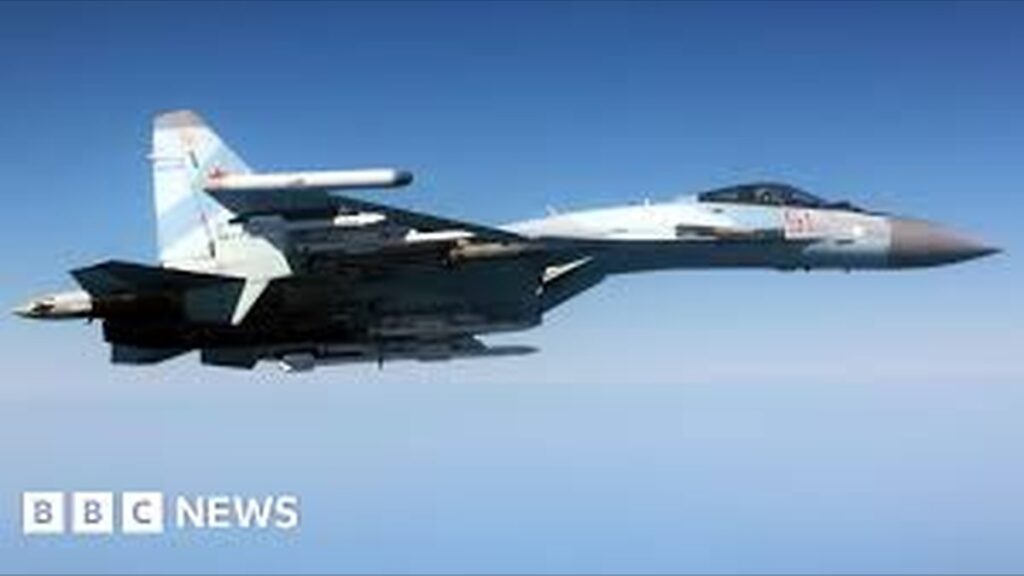
A British military surveillance aircraft found itself at the center of a tense encounter after the United Kingdom’s Ministry of Defence confirmed that an unarmed RC-135 Rivet Joint aircraft was involved in incidents while carrying out what officials described as a “routine international flight.”
The episode has once again drawn attention to the increasingly delicate military standoff between NATO nations and Russia, especially in contested airspace zones around Eastern Europe and the Baltic region.
The aircraft involved is one of the Royal Air Force’s most advanced intelligence-gathering planes.
Although it carries no weapons, the Rivet Joint is designed to collect electronic signals, monitor communications, and track military activity from long distances.
These missions are considered vital for national security and alliance coordination, particularly during periods of heightened geopolitical strain.
What Happened During the Flight
According to defence officials, the aircraft was operating within international airspace when the incidents occurred.
While full operational details were not publicly disclosed, such encounters typically involve Russian fighter jets intercepting or shadowing NATO surveillance aircraft flying near sensitive borders.
Military analysts say these interactions have become increasingly common over the past few years.
NATO aircraft regularly conduct reconnaissance missions to observe troop movements, radar systems, and other strategic activities.
Russia, in turn, often responds aggressively to demonstrate its ability to monitor and challenge foreign military presence near its territory.
The Ministry of Defence stressed that the Rivet Joint aircraft remained unarmed throughout the operation and was following internationally recognized flight rules.
Why the Rivet Joint Aircraft Matters
The RC-135 Rivet Joint is regarded as one of the most sophisticated airborne intelligence assets in the Western military arsenal.
Operated by the Royal Air Force in partnership with the United States, the aircraft specializes in signals intelligence, commonly known as SIGINT.
Its onboard systems can intercept communications, detect radar emissions, and gather electronic data from hundreds of miles away.
This information is later analyzed to assess military readiness and identify potential threats.
Despite its lack of weaponry, the aircraft plays a crucial role in defence planning.
Intelligence gathered during these flights helps NATO allies make decisions about troop positioning, air defence readiness, and regional security assessments.
Growing Pressure Between NATO and Russia
The incident comes at a time when relations between Russia and Western nations remain deeply strained. Since the outbreak of the war in Ukraine, military activity around NATO’s eastern flank has intensified considerably.
Surveillance flights by British and allied aircraft have increased as governments seek real-time intelligence on regional developments.
Russia has repeatedly criticized these operations, accusing NATO of escalating tensions near its borders.




At the same time, Western officials argue that these patrols are legal, necessary, and defensive in nature.
International law permits military aircraft to operate in international airspace, provided they do not violate sovereign territory.
Experts note that close encounters between aircraft carry serious risks, especially when fighter jets operate at high speed and in close proximity.
Similar Incidents Have Happened Before
This is far from the first time a Rivet Joint aircraft has attracted international attention.
In previous years, British and American reconnaissance planes have reportedly faced interceptions from Russian jets over the Black Sea and Baltic Sea.
One notable incident in 2022 involved a British surveillance aircraft being approached by Russian fighters in what UK officials later described as a potentially dangerous situation.
That episode prompted diplomatic concern and renewed calls for better communication mechanisms between military forces operating in crowded airspaces.
Cold War-style aerial shadowing has gradually returned as tensions between major powers continue to rise.
The Strategic Importance of Intelligence Missions
Modern warfare relies heavily on information dominance.
Surveillance aircraft like the Rivet Joint provide governments with early warning capabilities and a clearer understanding of adversaries’ military intentions.
Unlike satellites, aircraft can rapidly reposition and gather targeted intelligence in real time.
This flexibility makes them especially valuable during fast-moving geopolitical crises.
For NATO, maintaining regular reconnaissance flights also serves another purpose: reassurance.
These operations demonstrate alliance presence and commitment to collective defence, particularly for member states located close to Russia.
Impact and Consequences
The incident is likely to deepen already existing distrust between Moscow and Western governments.
Even if no weapons were fired and no airspace violations occurred, repeated military encounters increase the possibility of miscalculation.
Defence experts warn that one mistake — whether through aggressive maneuvering or communication failure — could quickly escalate into a wider diplomatic or military crisis.
The episode may also encourage NATO allies to strengthen aerial monitoring missions while pushing Russia to intensify its own air patrols.
That creates a cycle of military posturing that raises tensions across Europe.
Politically, the event reinforces growing public awareness of how fragile regional security has become since the Ukraine conflict transformed Europe’s defence landscape.
What’s Next?
British defence officials are expected to continue surveillance operations despite the incident.
NATO countries are unlikely to reduce intelligence-gathering flights because such missions are considered essential for monitoring military developments.
Russia may also continue intercepting or shadowing allied aircraft near its borders as part of its broader strategy of asserting military presence.
In the coming months, observers expect increased discussions about aerial safety protocols, communication channels between rival militaries, and ways to prevent dangerous misunderstandings in international airspace.
There may also be renewed diplomatic engagement aimed at reducing risks during military encounters, although meaningful progress could prove difficult given current geopolitical tensions.
Summary
The UK Ministry of Defence confirmed that an unarmed RAF Rivet Joint surveillance aircraft encountered incidents while conducting a routine international flight.
Although details remain limited, the situation highlights the growing tension between NATO and Russia as military surveillance operations intensify around Eastern Europe.
The Rivet Joint aircraft, despite carrying no weapons, remains one of Britain’s most important intelligence-gathering platforms.
Its missions are considered crucial for monitoring security threats and supporting NATO operations.
As relations between Russia and Western nations remain strained, similar aerial encounters are expected to continue, raising concerns about safety, escalation risks, and long-term regional stability.
Bulleted Takeaways
- The RAF Rivet Joint aircraft was conducting a routine international surveillance mission.
- The aircraft involved was unarmed during the incident.
- The UK Ministry of Defence confirmed the encounter publicly.
- Rivet Joint planes specialize in signals and electronic intelligence gathering.
- NATO surveillance activity has increased significantly since the Ukraine war began.
- Russia frequently intercepts or shadows allied reconnaissance aircraft near its borders.
- Experts warn that repeated close military encounters increase the risk of accidental escalation.
- Britain and NATO are expected to continue intelligence flights despite rising tensions.
- The incident reflects broader geopolitical strain between Russia and Western allies.
- Discussions about air safety and military communication protocols may intensify afterward.

