
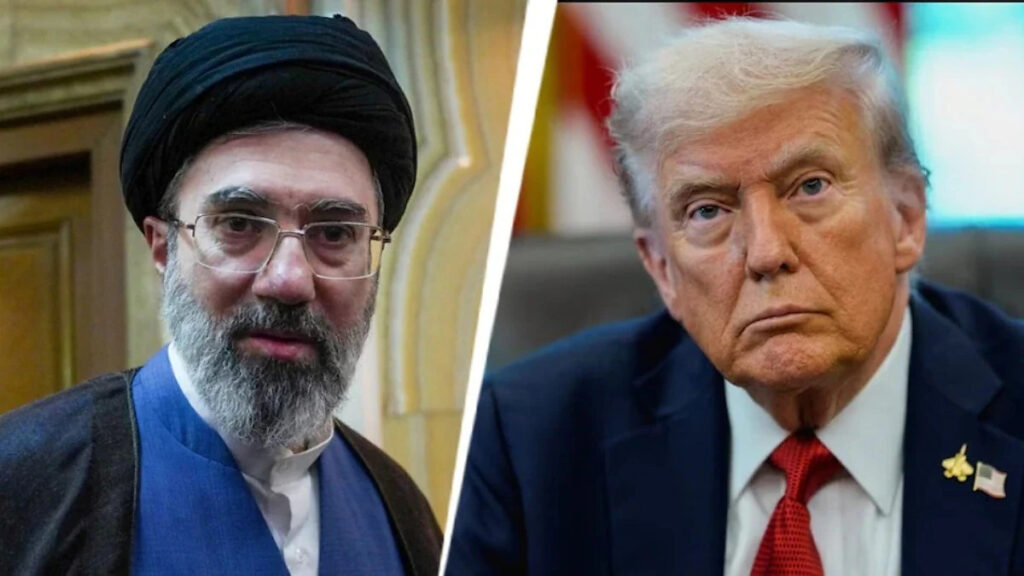
The latest round of statements between the United States and Iran has once again shown how unstable the diplomatic situation remains.
On one side, U.S. President Donald Trump claimed that negotiations with Iran were entering what he called the “final stages.”
On the other, Iranian officials dismissed any suggestion of forced surrender as unrealistic and politically impossible.
The contrast between the two narratives highlights just how far apart both sides still are, even as talks and indirect communications continue in the background of ongoing conflict.
Trump Signals Progress While Keeping Military Options on the Table
Speaking at Joint Base Andrews, Donald Trump described the situation with Iran as nearing a decisive moment.
He suggested that an agreement could still be reached, but warned that failure could lead to harsher action.
His remarks were direct, framing the situation as a narrow choice between diplomacy and escalation.
He also hinted that military pressure remained an option if negotiations collapsed.
This kind of dual messaging—talks paired with threats—has become a defining feature of the current phase of the U.S.–Iran standoff.
Iran Responds With Firm Rejection of Surrender Narrative
In Tehran, Iranian President Masoud Pezeshkian pushed back against any idea that the country would be forced into submission.
In a public message shared on social platforms, he emphasized that Iran remains open to dialogue but not under coercion.




He stressed that diplomacy is still possible, but only on the basis of mutual respect.
His wording made one point especially clear: Iran views “surrender” framing as politically unacceptable and strategically unrealistic.
Phone Call Tensions Between Trump and Netanyahu Add Another Layer
Behind the public statements, reports have also surfaced about a tense exchange between Donald Trump and Israeli Prime Minister Benjamin Netanyahu.
According to accounts cited in media reports, the call was described as long and heated, with disagreements over how aggressively to approach Iran.
One side reportedly favored pushing harder militarily, while the other leaned more toward securing a formal nuclear-related agreement first.
Despite the reported friction, Trump publicly downplayed any conflict, insisting the relationship remained strong.
Wider Conflict Background Shapes Every Statement
The diplomatic tension is unfolding against a broader regional war context involving strikes, counterstrikes, and stalled negotiations over Iran’s nuclear program.
Reports have also surfaced in international media describing early war planning discussions that included unconventional political scenarios for post-conflict leadership inside Iran.
While these claims remain disputed and politically sensitive, they underline how complex the strategic calculations have become.
At the same time, military developments have tightened pressure on global energy markets, especially after disruptions affecting the Strait of Hormuz, a key global oil route.
Impact and Consequences
The latest exchange of statements between Washington and Tehran is not just rhetorical—it carries real geopolitical weight.
- It increases uncertainty in global oil and energy markets
- It keeps military escalation risks elevated in the Middle East
- It makes diplomatic compromise harder as public positions harden
- It adds pressure on regional allies of both the U.S. and Iran
- It fuels global concern over broader regional destabilization
For both Donald Trump and Masoud Pezeshkian, messaging is now part of the negotiation itself, not just commentary around it.
What’s Next?
The next phase depends on whether quiet diplomatic channels can survive the public escalation.
Key developments to watch include:
- Whether formal talks resume or stall completely
- Any shift in U.S. military posture in the region
- Iran’s response to continued pressure over its nuclear program
- Stability of shipping routes and oil flow through strategic waterways
- Reactions from Israel and other regional actors
For now, both sides appear to be keeping options open while preparing for the possibility that talks fail entirely.
Summary
Tensions between the United States and Iran remain high as Donald Trump claims negotiations are nearing their final phase, while Iranian President Masoud Pezeshkian rejects any notion of forced surrender.
The situation is further complicated by reported disagreements with Israel and ongoing regional conflict dynamics, leaving diplomacy fragile and unresolved.
Bulleted Takeaways
- Trump says Iran talks are in “final stages” but warns of possible military action
- Iran rejects surrender framing, insists on mutual respect in diplomacy
- Tehran says it remains open to negotiations despite tensions
- Reports suggest Trump and Netanyahu had a heated call over war strategy
- Broader conflict includes ongoing Iran-related military and nuclear tensions
- Energy markets remain sensitive due to regional instability
- Diplomatic positions on both sides remain far apart
- Future talks depend on de-escalation and behind-the-scenes negotiations

