
South Africa’s municipal political landscape could be heading for a major reset as the government pushes forward with new legislation aimed at stabilising fragile coalitions.
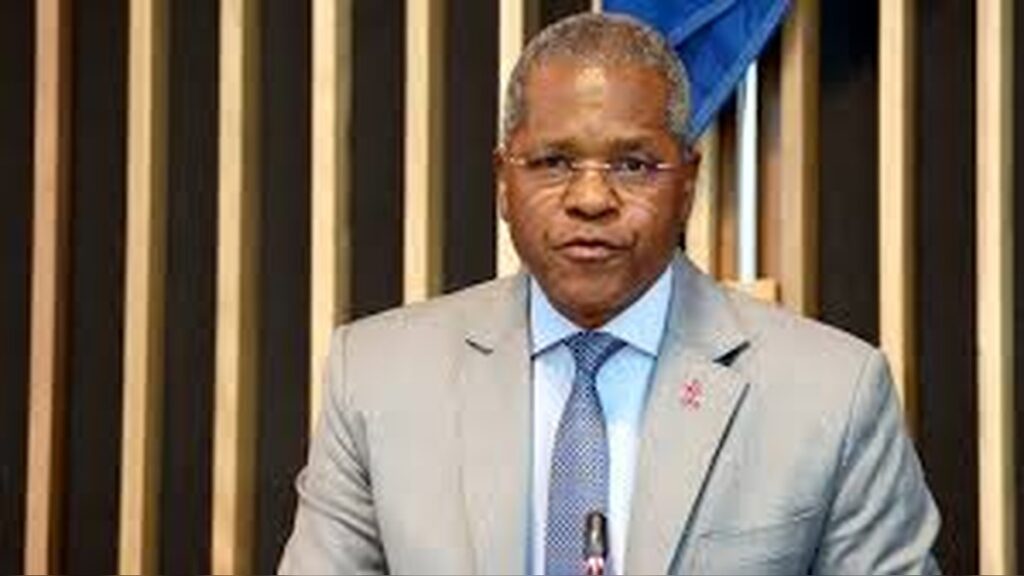
Cooperative Governance and Traditional Affairs (CoGTA) Minister Velenkosini Hlabisa says the upcoming “coalitions bill” will be ready in time for implementation after the November 4 local government elections.
Speaking in the National Assembly during the department’s 2026/27 budget vote, Hlabisa expressed confidence that the Municipal Structures Amendment Bill will be enforceable in the next electoral cycle.
The goal, he said, is simple: stop unstable coalition arrangements from weakening service delivery in municipalities.
A Push to End “Revolving Door” Local Governments
One of the central concerns driving the legislation is the instability seen in many councils since 2016, where coalition governments often collapse and reform within months.
In some municipalities, leadership changes have become routine rather than exceptional.
Johannesburg, South Africa’s largest and wealthiest metro, has become a symbol of this instability.
Since 2021 alone, the city has seen four different mayors from different political parties, each change reflecting shifting alliances rather than electoral continuity.
Hlabisa argues that this “revolving door” leadership style undermines governance and leaves residents without consistent service delivery.
Written Agreements to Replace Loose Political Deals
Under the proposed law, political parties that form coalitions after elections will be required to sign formal, legally binding agreements.
These documents will clearly outline responsibilities, governance commitments, and cooperation terms between partners.
The intention is to prevent informal or short-term arrangements that collapse under political pressure.
The bill also proposes limiting motions of no confidence against mayors and council speakers to once every 12 months, a move aimed at reducing constant political disruptions inside councils.
According to Hlabisa, the reforms are designed to ensure that coalition governments are built on structure rather than convenience.
Broader Governance Reforms on the Table
The coalitions bill is only one part of a wider municipal reform agenda being driven by the CoGTA department.
Other proposed legislation includes the Independent Municipal Demarcation Authority Bill, which is intended to improve transparency in boundary decisions, and a Draft Fire Services Bill aimed at modernising emergency response governance.




Hlabisa, who also leads the Inkatha Freedom Party (IFP) and is part of the Government of National Unity (GNU), says all these reforms are focused on restoring stability in local government.
He argues that stronger oversight, better discipline, and proper consequence management can significantly improve municipal performance when properly enforced.
Parliament Raises Alarm Over Municipal Collapse
Despite the minister’s optimism, several Members of Parliament painted a far more concerning picture during the budget debate.
Opposition voices highlighted widespread financial distress and governance failures across municipalities.
Rise Mzansi leader Songezo Zibi, who chairs Parliament’s Standing Committee on Public Accounts (Scopa), pointed to the City of Johannesburg’s escalating debt crisis, including its growing multi-billion-rand debt owed to Eskom, which has raised fears of potential power disruptions.
Zibi argued that political interference in municipal administration remains one of the biggest barriers to fixing local government.
He said real reform must include stricter rules for appointing municipal executives and professionalising leadership roles.
Funding Without Functionality Concerns
Build One South Africa MP Nobuntu Hlazo-Webster also raised concerns about the scale of municipal underperformance despite significant government funding.
She noted that a large proportion of municipalities are either financially distressed or facing serious governance breakdowns, suggesting that the problem is no longer lack of funding but poor accountability and weak leadership.
With CoGTA managing a budget of around R125 billion, critics argue that the challenge is ensuring that resources translate into actual service delivery rather than being absorbed by failing systems.
Impact and Consequences
If implemented effectively, the coalitions bill could significantly reshape how local governments operate in South Africa.
Formalised coalition agreements may reduce sudden leadership collapses and improve policy continuity in municipalities.
However, critics warn that overly rigid rules could also limit political flexibility in genuinely divided councils, where coalition-building is unavoidable.
There is also concern that enforcement could become uneven depending on local political dynamics.
More broadly, the legislation highlights growing frustration with municipal instability, especially in major cities where residents have experienced repeated leadership changes and declining service delivery.
What’s Next?
The bill is currently under review by the CoGTA portfolio committee before finalisation.
If passed in time, it will come into effect following the November 4 local government elections.
In the coming months, political parties will likely begin adjusting their coalition strategies in anticipation of stricter legal requirements.
Municipal governance reforms are also expected to remain a central issue in election campaigning.
Parliamentary oversight committees are expected to continue pushing for stricter appointment standards and greater accountability for senior municipal officials.
Summary
South Africa is preparing to introduce a new coalitions bill aimed at stabilising municipal governments ahead of the November elections.
The legislation will require formal coalition agreements and limit frequent no-confidence motions.
While government leaders believe the reforms will improve service delivery and governance, MPs continue to warn that deep-rooted financial and administrative failures remain unresolved.
Bulleted Takeaways
- South Africa’s coalitions bill may be enforced after November 4 local elections
- Minister Velenkosini Hlabisa says reforms will stabilise municipal governance
- Parties will be required to sign legally binding coalition agreements
- No-confidence motions may be limited to once per year per council
- Johannesburg has had four mayors since 2021, highlighting instability
- MPs say many municipalities face financial and governance collapse
- Eskom debt crisis in Johannesburg remains a major concern
- Critics argue the issue is governance failure, not lack of funding
- CoGTA oversees a R125 billion budget for municipal support
- Debate continues over balancing stability with political flexibility in coalitions
