
European football could be heading for one of its biggest structural shake-ups in decades, as UEFA prepares to redesign how World Cup and European Championship qualifiers work.
The proposed system is inspired by the “Swiss model” used in the UEFA Champions League, shifting away from traditional group stages toward a league-style format.
The idea, reported by the Economic Times, is to create a more competitive qualifying environment where stronger and weaker nations face more balanced opposition, reducing predictable one-sided matches that have long defined international qualifiers.
Goodbye Traditional Groups, Hello League-Style Competition
Under the new plan, Europe’s top 36 national teams would be placed into League A.
Instead of being split into small qualifying groups where teams play each other home and away, each nation would face six different opponents across the campaign.
The aim is to keep qualification fresh and unpredictable, with each match carrying more weight and variety.
UEFA believes this would improve both competitiveness and fan interest, especially during long international breaks.
Lower-ranked countries would not be left out.
They would compete in separate league structures, likely League B and below, with continued pathways into playoffs for major tournaments.
Automatic Qualification and a More Competitive Structure
One of the key ideas being discussed is that League A group winners would qualify directly for tournament finals.
That would reward consistent performance against top-level opposition rather than relying on repetitive group formats.
While the system is still under discussion, UEFA officials have emphasized that the international match calendar will remain largely intact, meaning players will not face significantly more fixtures than before.
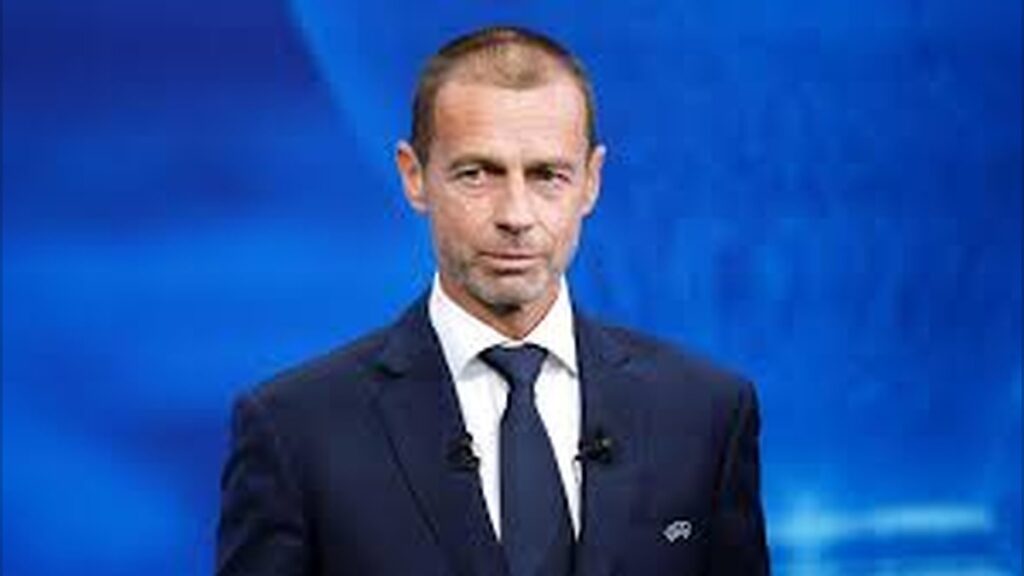
UEFA President Aleksander Čeferin has supported the broader goal of modernising international football while maintaining balance between club and national commitments.



Changes Also Coming to the Nations League
The reform is not limited to World Cup qualifying.
UEFA is also expected to reshape the UEFA Nations League starting from the 2028–29 cycle.
Instead of four tiers, the competition would be reorganised into three larger leagues of 18 teams each.
Teams would play five different opponents in a league phase, continuing the shift toward broader competition formats.
This would further align the Nations League with the proposed qualification model, creating a more unified European international football system.
Hosts, Exceptions, and Tournament Adjustments
The 2030 FIFA World Cup will be co-hosted by Spain, Portugal, and Morocco, and under current expectations, the host nations would qualify automatically for the tournament.
However, even with automatic qualification, they would still participate in certain competitive fixtures, mainly tied to Nations League-related objectives and rankings.
This reflects UEFA’s attempt to balance tradition with reform, ensuring hosts remain active in competitive football leading up to major tournaments.
Impact and Consequences
If implemented, this system would fundamentally change how European football nations approach qualification campaigns.
Smaller nations could benefit from more varied and meaningful matches instead of facing repeated heavy defeats against elite teams.
For top-ranked teams, the new structure could increase unpredictability, as fewer repeated fixtures mean less opportunity to “recover” lost points in familiar group setups.
Clubs may also feel indirect effects, as players face more diverse international opponents and potentially more tactically demanding matches during breaks.
However, critics may argue that reducing home-and-away consistency could make qualification less fair and harder to compare across teams.
What’s next?
UEFA is expected to continue refining the proposal ahead of a possible approval vote at its executive committee meeting in September.
If approved, the changes would likely be phased in gradually, starting with the Nations League reform in 2028–29 before affecting World Cup qualification cycles.
Further discussions will also focus on balancing fairness, travel demands, and broadcast scheduling, all of which are central to international football economics.
For now, the proposal remains in development—but momentum is clearly building toward a more league-driven European qualification system.
Summary
UEFA is planning a sweeping reform of World Cup and European Championship qualification formats, replacing traditional groups with a Swiss-style league system.
The changes aim to create more competitive matches, reshape the Nations League, and modernise international football while keeping the calendar stable.
Bulleted Takeaways
- UEFA plans to replace traditional qualifying groups with a league-style system
- Inspired by the Champions League Swiss model
- Europe’s top 36 teams would compete in League A structure
- Each team would face six different opponents instead of home-and-away groups
- League winners may qualify directly for major tournaments
- Nations League will also be restructured into three leagues of 18 teams
- 2030 World Cup hosts Spain and Portugal qualify automatically
- UEFA aims to keep the international match calendar unchanged
- Proposal may be approved at UEFA executive meeting in September
- Goal is to increase competitiveness and reduce one-sided fixtures

