
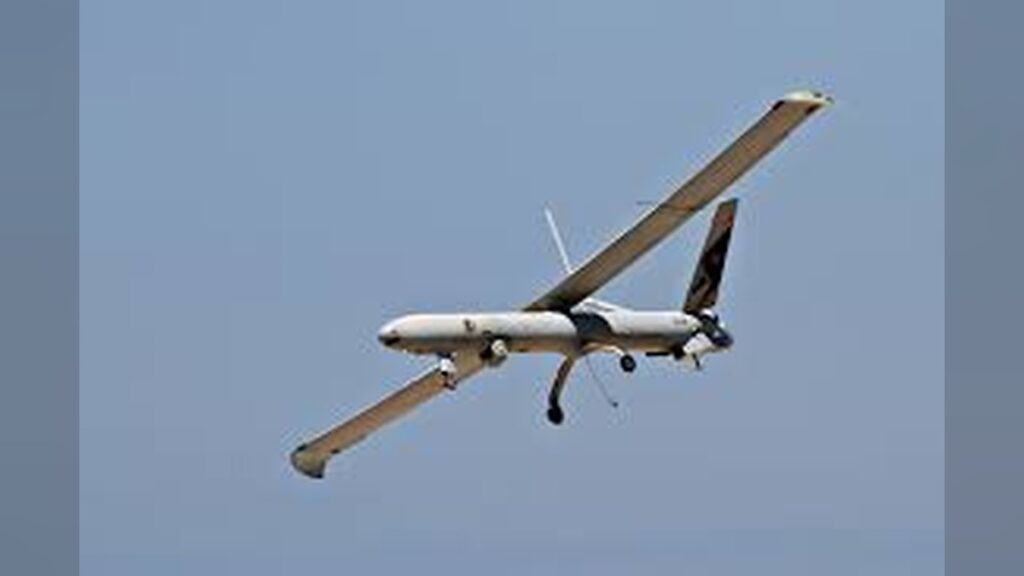
Israel’s defense sector is moving quickly to respond to a growing battlefield challenge: explosive drones controlled via fiber-optic cables.
Israel Aerospace Industries (IAI) and other defense firms have submitted a range of new interception concepts to the country’s Defense Ministry and the IDF, as the military looks for faster, more reliable countermeasures.
The urgency has increased sharply in recent months as these drones prove difficult to jam or disrupt using traditional electronic warfare systems.
New Wave of Drone Defenses Under Evaluation
At the center of the current push is a mix of experimental technologies designed to physically or energetically neutralize incoming drones.
Among the proposals are kinetic interception systems—essentially high-speed physical takedown methods—and energy-based systems that attempt to disable drones mid-flight.
One of the more unusual approaches under consideration uses electromagnetic force to seize control of a drone’s movement, effectively freezing or pulling it off course before impact.
These systems are now being tested in prototype form at the Defense Ministry’s Directorate of Defense Research & Development facilities, where engineers are assessing performance, reliability, and battlefield practicality.
Defense Ministry Moves From Ideas to Testing Phase
Officials within the Defense Ministry are currently reviewing multiple competing technologies.
Rather than selecting a single solution, the approach appears to favor parallel testing of different systems, with the possibility of combining them into layered defenses.
While some concepts are still in early development, others are considered close enough to production readiness that deployment timelines could be relatively short once approval is granted.
According to industry estimates, once the ministry gives final clearance, initial protective systems could be manufactured and deployed within weeks, with broader field distribution following within months.
Engineers Mobilize Even Before Formal Orders
Inside Israel Aerospace Industries, development reportedly began even before any official request was issued by defense authorities.
Engineers and staff voluntarily began exploring solutions as the threat from explosive drones escalated.




IAI leadership has emphasized that this sense of urgency comes from personal and national stakes, with many employees having direct connections to soldiers in active combat zones.
Boaz Levy, chairman of IAI, noted that once approval is granted, production could be rapidly accelerated, allowing early batches of defense systems to reach operational units in a short time frame.
Battlefield Pressure From Hezbollah Drone Attacks
The urgency behind these developments is directly tied to recent battlefield incidents involving Hezbollah-operated explosive drones.
These systems have increasingly been used against Israeli forces, creating a new layer of risk in the ongoing conflict.
Just within a single week, multiple IDF personnel were injured in drone-related attacks.
One day saw eight soldiers wounded, while another incident resulted in serious injuries to Colonel Meir Biderman, commander of the 401st Armored Brigade, along with other officers.
These events have highlighted how rapidly drone warfare is evolving, especially in asymmetric conflict environments where low-cost aerial systems can bypass traditional defenses.
Impact and Consequences
The rapid push for counter-drone technology signals a shift in modern warfare where traditional air defense systems are no longer sufficient on their own.
Fiber-optic-controlled drones, in particular, are difficult to jam, forcing militaries to rely on physical interception or advanced energy disruption methods.
If successful, Israel’s experimentation could influence global defense strategies, especially for NATO members and other militaries facing similar drone threats.
However, rushing prototypes into deployment also carries risks, including system reliability issues and battlefield unpredictability.
At a strategic level, the growing use of drones by non-state actors like Hezbollah is accelerating an arms race in electronic warfare and autonomous defense systems.
What’s Next?
The Israeli Defense Ministry is expected to continue evaluating multiple prototype systems in the coming weeks, with decisions likely focusing on a combination of technologies rather than a single solution.
If approval is granted, rapid-scale production could begin almost immediately, with early deployment possibly occurring within a few months.
Field testing under real combat conditions will likely shape further refinements.
Meanwhile, defense companies are expected to refine electromagnetic and kinetic interception systems further, potentially moving toward integrated multi-layer drone defense networks.
Summary
Israel’s defense industry is accelerating development of new counter-drone technologies to address the growing threat of fiber-optic-controlled explosive drones used in recent conflicts.
Israel Aerospace Industries and others have proposed kinetic and electromagnetic solutions currently being tested by the Defense Ministry.
With injuries mounting among IDF soldiers, officials are fast-tracking evaluation and preparing for possible near-term deployment.
Bulleted Takeaways
- Israeli defense firms are developing systems to counter fiber-optic-controlled explosive drones
- Proposed solutions include kinetic interception and electromagnetic capture technologies
- Israel Aerospace Industries is actively involved in prototype development and testing
- Defense Ministry is evaluating multiple technologies at its R&D facilities
- Some systems could be deployed within weeks if approved
- Engineers began development efforts even before formal government requests
- Hezbollah drone attacks have recently caused multiple IDF injuries
- One week saw eight soldiers wounded, including a senior armored brigade commander
- The conflict is driving rapid innovation in modern counter-drone warfare
- Future defense strategy may rely on layered, multi-system drone interception networks

