
There’s a familiar chill running through Havana’s political atmosphere after a new legal move from the United States reopened one of the most controversial episodes in modern Cuban-American relations.
Within hours of the announcement, the story had already spread across diplomatic circles, raising questions about timing, intent, and consequences.
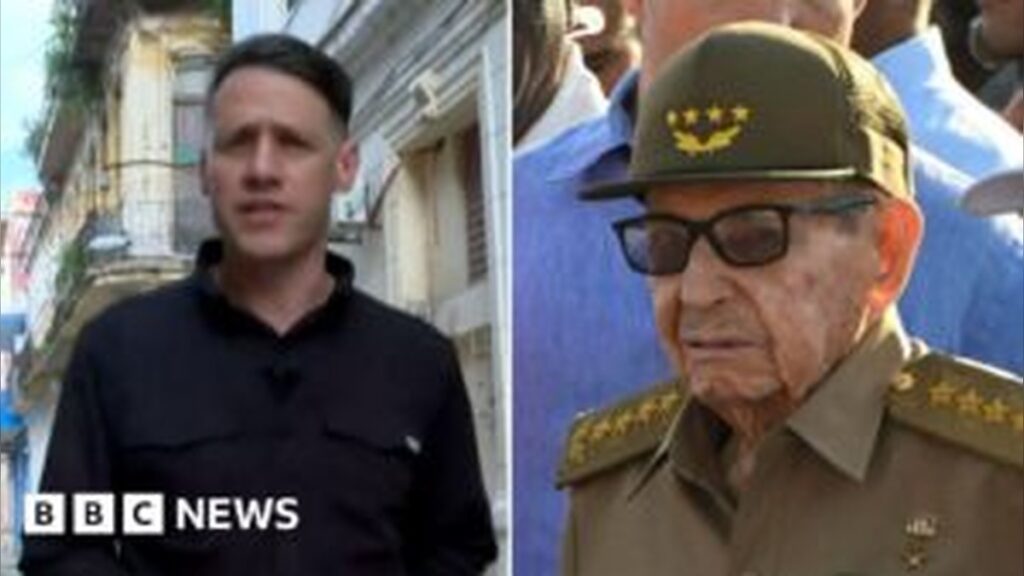
BBC correspondent Will Grant, reporting from Havana, described a city that is watching closely but speaking cautiously, as the latest accusations land decades after the events they relate to.
New US Charges Reignite a 1996 Aviation Tragedy
The case centres on a long-running dispute linked to the 1996 downing of two aircraft belonging to the Cuban-American organisation Brothers to the Rescue.
Four people were killed in the incident, including three US citizens, an event that has remained deeply sensitive in US-Cuba relations ever since.
On Wednesday, US authorities announced charges against former Cuban leader Raúl Castro and five others, alleging conspiracy to kill US nationals and related offences.
Although the case is being revived now, the incident itself sits firmly in Cold War-era political memory, when tensions between Havana and Washington frequently spilled into international crises and legal battles.
Havana Pushes Back Against the Allegations
The Cuban government reacted quickly and firmly.
President Miguel Díaz-Canel dismissed the charges outright, describing them as politically driven rather than legally grounded.
In Havana’s official response, the move was framed not as justice, but as strategy—another example, they argue, of Washington using historical incidents to apply pressure on Cuba’s leadership narrative.
Public messaging from Cuban authorities has remained consistent over the years: that many US legal actions against Cuban officials are viewed through a political lens rather than judicial neutrality.
Raúl Castro’s Long Shadow in Cuban Politics
At nearly 95 years old, Raúl Castro remains a highly symbolic figure in Cuba.



Even though he stepped back from formal leadership roles, he is still widely regarded as a key architect of the Cuban Revolution alongside his brother Fidel Castro.
His influence is not just historical—it remains embedded in Cuba’s political identity, where revolutionary legacy still plays a central role in governance and national memory.
That is part of why the new charges have drawn attention far beyond legal circles.
They touch on figures who are still emotionally and politically significant within the country.
A Case That Refuses to Fade Away
The 1996 incident involving Brothers to the Rescue has never fully disappeared from international discussion.
It resurfaces periodically whenever diplomatic tensions between the US and Cuba flare up.
Over the years, the event has become more than a legal matter—it has turned into a symbol of unresolved conflict, competing narratives, and the long-standing breakdown in trust between the two governments.
Each revival of the case tends to reopen not just legal arguments, but historical grievances on both sides.
Impact and Consequences
This latest development risks adding fresh strain to already fragile US-Cuba relations.
Even if the charges do not result in immediate legal action, they reinforce long-standing mistrust between the two governments.
For Cuba, the move strengthens its argument that legal proceedings from the US are politically motivated.
For Washington, it signals that historical cases involving US citizens remain open issues that can be revisited.
Diplomatically, it may limit room for soft engagement or dialogue, especially on humanitarian or economic issues where both sides occasionally find cautious common ground.
What’s Next?
At this stage, the legal process will likely unfold slowly, with diplomatic messaging taking centre stage alongside formal proceedings.
Cuba is expected to continue rejecting the legitimacy of the charges, while US officials may frame the case as part of broader accountability efforts.
What remains uncertain is whether this will escalate into wider diplomatic friction or remain largely symbolic in legal terms.
Either way, the case has already succeeded in pulling a decades-old tragedy back into global headlines.
Summary
The United States has charged former Cuban leader Raúl Castro and others in connection with the 1996 downing of two aircraft operated by Brothers to the Rescue, which killed four people including three Americans. Cuba has strongly rejected the allegations as politically motivated. The case has reignited long-standing tensions between Washington and Havana, with Raúl Castro still regarded as a major symbolic figure in Cuban political history.
Bulleted Takeaways
- US charges Raúl Castro over 1996 Brothers to the Rescue aircraft incident
- Four people were killed, including three US nationals
- Cuba’s President Díaz-Canel rejects charges as politically motivated
- Raúl Castro remains a symbolic figure in Cuban revolutionary history
- Case revives long-standing US-Cuba diplomatic tensions
- Incident continues to resurface in international relations debates
- Legal process expected to be slow with strong political messaging
- Situation risks further straining already fragile US-Cuba relations

