
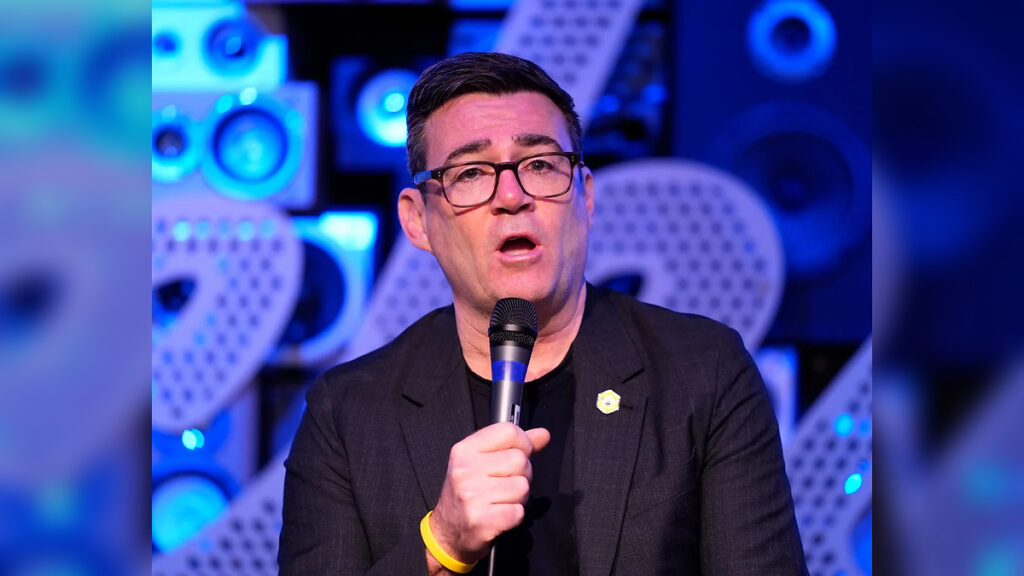
A fresh political storm has been brewing around Greater Manchester Mayor Andy Burnham, with critics arguing he has consistently sided with transgender rights activists in disputes over single-sex spaces.
At the centre of the controversy is the ongoing debate about whether biological women-only areas—such as toilets, changing rooms, and prison facilities—should include trans women.
The argument has reignited tensions inside Labour, a party already split over gender identity policy, women’s rights, and how far legal protections should extend.
Accusations of Political Positioning and Party Divide
Some commentators claim Burnham has leaned heavily toward what they describe as “gender identity ideology” whenever the issue has surfaced publicly.
They argue that instead of drawing clear lines on sex-based rights, he has tended to emphasise compromise and “consensus,” which critics say avoids the core question of biological sex in law.
This has fed into a wider Labour Party debate, especially as leader Keir Starmer has also been challenged over shifting positions on gender-related policies. Supporters of Burnham, however, argue that his approach is aimed at reducing social conflict and avoiding polarisation in already sensitive public discussions.
The disagreement reflects a broader ideological split within UK politics, where parties are under pressure to balance LGBTQ+ rights with concerns raised by some women’s advocacy groups.
Single-Sex Spaces at the Heart of the Debate
The most heated part of the discussion revolves around access to women-only spaces.
Critics of Burnham argue that he has not supported excluding trans women—biological males who identify as female—from such spaces.
They point to public statements he has made in the past, where he described the issue as highly “polarised” and “hateful,” suggesting the debate itself was becoming toxic.
His critics interpret this as dismissing legitimate concerns raised by women who feel vulnerable in shared facilities.
Supporters counter that existing equality laws already require careful balancing of rights and that Burnham’s stance reflects legal ambiguity rather than ideological commitment.
Legal Context and Supreme Court Developments
The issue has been further complicated by recent legal interpretations in the UK.
A Supreme Court ruling clarified aspects of how single-sex spaces should be protected under law, reinforcing that biological sex can be a determining factor in certain contexts.
However, debates continue over how guidance from bodies like the Equality and Human Rights Commission (EHRC) should be applied in real-world settings such as hospitals, prisons, and workplaces.
Burnham has previously criticised some interim guidance as unclear, calling for more practical clarity.




His critics argue this hesitation signals reluctance to fully enforce sex-based protections, while others say it shows concern about unintended consequences.
Wider Political and Cultural Pressure
The controversy does not exist in isolation.
Across the UK, institutions including universities, public services, and private organisations have been adjusting policies on gender identity, pronouns, and access to facilities.
This has led to legal disputes, workplace complaints, and public debate over how far inclusion policies should go.
Some high-profile cases have involved healthcare workers and authors facing backlash over expressing views on biological sex and gender identity.
At the same time, Scotland’s earlier attempts at gender recognition reform—particularly around self-identification—have been cited by critics as a cautionary example of rapid policy change under activist pressure.
Policy Questions Around Children and Healthcare
Another layer of concern raised in the wider debate relates to children and gender identity services.
Questions have been raised about funding and access to medical interventions for young people experiencing gender dysphoria, including puberty blockers.
Health regulators in the UK have already paused or reviewed certain clinical approaches, reflecting ongoing uncertainty in the medical community about long-term outcomes.
Critics of current policies argue that more cautious, non-medicalised approaches should be prioritised, while supporters emphasise the need for care for transgender youth.
Burnham has been linked to support for organisations involved in youth services funding, which has added further scrutiny from opponents of gender-affirming medical pathways.
Impact and Consequences
The ongoing debate has widened political division within Labour and across UK public life.
For supporters of Burnham, his position reflects pragmatism and an attempt to manage competing rights in a complex legal landscape.
For critics, however, it signals a broader shift in political leadership away from sex-based protections toward identity-based frameworks.
This tension is increasingly shaping elections, party membership debates, and candidate selection processes.
More broadly, the controversy highlights how gender policy has become one of the most sensitive and divisive cultural issues in British politics, influencing everything from legislation to workplace rules.
What’s Next?
The issue is unlikely to disappear soon. Future court rulings, updated EHRC guidance, and possible legislative changes could all reshape how single-sex spaces are defined and enforced in practice.
If Andy Burnham continues to be viewed as a potential national leadership figure, his position on gender policy is expected to face even closer scrutiny.
Labour, meanwhile, may be forced to produce clearer national policy to avoid internal fragmentation.
Public debate is also expected to intensify as more institutions attempt to align workplace and service policies with evolving legal standards.
Summary
Andy Burnham has come under criticism from opponents who argue he has prioritised transgender inclusion over strict sex-based protections in debates about single-sex spaces.
The issue sits within a wider UK political and legal struggle over gender identity, with courts, regulators, and policymakers still shaping the final framework.
The controversy continues to influence Labour politics and national debate.
Bulleted Takeaways
- Andy Burnham is criticised for his stance on single-sex spaces and transgender inclusion
- Debate centres on whether biological women-only spaces should include trans women
- Critics say he avoids firm positions and relies on “consensus” language
- UK Supreme Court rulings have reinforced sex-based legal interpretations in some areas
- EHRC guidance and government policy remain contested and evolving
- Wider UK institutions are still adjusting gender identity policies
- Children’s gender healthcare policies, including puberty blockers, remain controversial
- The issue has deepened divisions within the Labour Party
- Supporters say Burnham promotes balance and legal pragmatism
- The debate is expected to continue shaping UK politics and public policy decisions

