
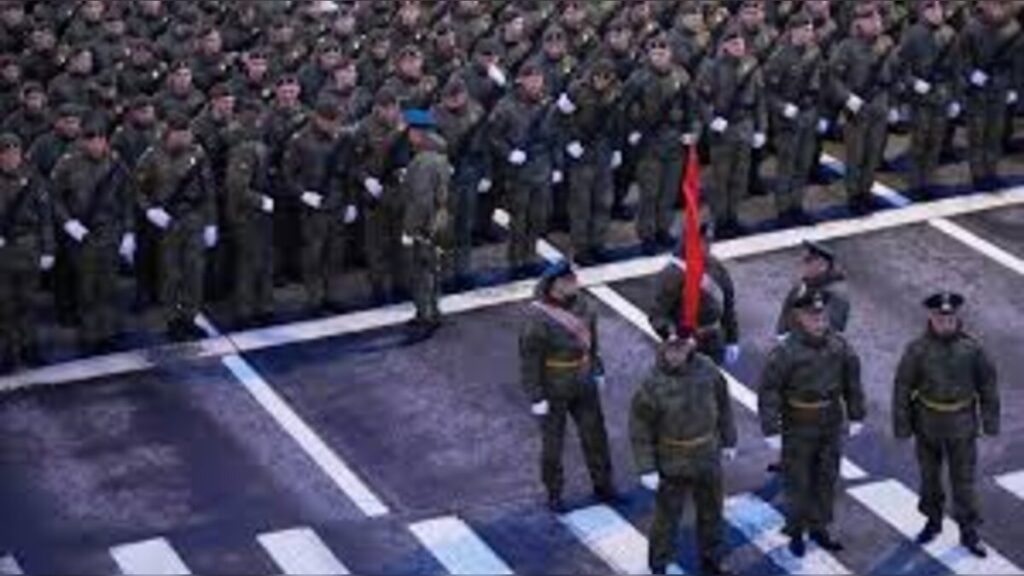
What was meant to be a short pause in fighting to align with commemorations of the Soviet Union’s victory over Nazi Germany quickly turned into another night of chaos.
Within hours of the declared truce, both sides in the conflict accused each other of launching or responding to large-scale drone attacks, undermining any hope that the ceasefire would hold even temporarily.
The timing made the situation even more sensitive.
The truce had been presented as a symbolic gesture tied to Victory Day observances, a date still marked with major military parades and national reflection across parts of the region.
Instead, reports of renewed strikes dominated the headlines almost immediately.
Drone Warfare Overshadows the Truce Announcement
According to statements released by both camps, hundreds of drones were allegedly involved in overnight operations and counter-operations.
Each side claimed it was reacting defensively, insisting the other had violated the agreement first.
Drone warfare has become one of the defining features of this conflict in recent years.
Cheap to deploy and difficult to fully intercept, drones are now used for surveillance, targeted strikes, and disruption of infrastructure.
That reality makes temporary ceasefires extremely fragile, especially when trust between the parties is already low.
Similar breakdowns have happened before during announced pauses, where the lack of independent monitoring and differing interpretations of “ceasefire conditions” often lead to immediate accusations of violations.
Symbolism of Victory Day Adds Political Weight
The truce was tied to commemorations of the Soviet Union’s victory over Nazi Germany, an event still deeply embedded in political identity and public memory across the region.
Victory Day, observed on May 9, typically includes large-scale military parades and public ceremonies.
In past years of conflict, attempts to align temporary ceasefires with symbolic dates have often been overshadowed by renewed fighting, as both sides accuse each other of using the pause for tactical advantage.



Military analysts have long noted that symbolic truces rarely hold in active war zones unless backed by third-party enforcement or robust monitoring mechanisms, which are largely absent in this case.
Competing Narratives and Conflicting Claims
As with many developments in this war, information coming from both sides presents sharply different versions of events.
Each party insists it acted in response to provocations, and each claims the other escalated first.
Independent verification is difficult in real time, especially when drone activity spans multiple regions and involves rapid strikes that leave limited immediate evidence.
This information gap often fuels competing narratives, making it hard for observers to determine the exact sequence of events.
Broader Context of the Ongoing Conflict
Drone attacks have become increasingly central to the wider war strategy, reflecting a shift away from conventional battlefield engagements toward more dispersed, technology-driven warfare.
In recent years, both sides have invested heavily in drone production, air defense systems, and electronic warfare tools designed to disrupt unmanned aerial systems.
This has created a cycle where offensive drone use is often met with immediate counter-drone operations, sometimes escalating tensions even during supposed de-escalation periods.
Temporary ceasefires in this conflict have historically struggled to survive beyond initial hours, particularly when frontline positions remain active and highly sensitive.
Impact and Consequences
The immediate collapse of the truce undermines diplomatic efforts to create even short-term pauses in fighting.
It reinforces the perception that ceasefires announced during major symbolic dates are unlikely to hold without stronger enforcement mechanisms.
On the ground, continued drone activity increases risks for civilian infrastructure, especially energy facilities, transport routes, and residential areas that have been repeatedly affected throughout the conflict.
Politically, the breakdown adds further strain to already stalled negotiations, making future agreements harder to propose and even harder to trust.
It also deepens international concern about escalation during historically sensitive dates.
What’s Next?
Attention now turns to whether either side will formally withdraw from the truce framework or attempt to reframe the violations as isolated incidents.
Diplomatic actors and international observers are likely to call for renewed restraint, though previous cycles suggest limited immediate success without direct enforcement mechanisms.
Military activity is expected to continue at elevated levels, particularly in areas where drone strikes were reported.
Analysts also expect increased counter-drone measures and potential retaliatory operations in the short term.
Summary
A truce intended to coincide with Victory Day commemorations quickly fell apart as both sides reported large-scale drone attacks within hours of its start.
Each party accuses the other of violating the agreement, continuing a pattern of disputed ceasefires throughout the conflict.
The situation highlights the fragility of temporary pauses in modern drone-heavy warfare and the difficulty of sustaining even symbolic peace efforts.
Bulleted Takeaways
- A truce linked to Victory Day celebrations collapsed within hours of starting
- Both sides reported and accused each other of hundreds of drone-related incidents
- Drone warfare continues to dominate modern battlefield tactics in the conflict
- Conflicting claims make independent verification difficult
- Similar ceasefire breakdowns have occurred in previous attempts
- The situation increases diplomatic strain and reduces trust in future truce efforts
- Civilian infrastructure remains at risk amid ongoing aerial activity

