
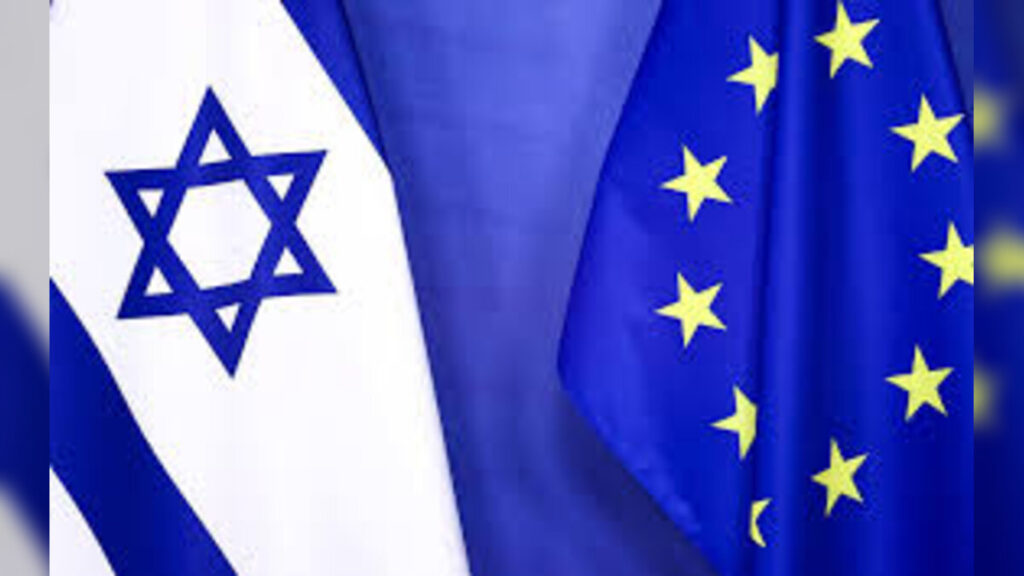
The European Union appears to be edging closer to imposing fresh sanctions on Israeli settlements in the West Bank, marking what could become one of the bloc’s strongest policy shifts toward Israel in recent years.
The development was hinted at by Michael Mann, who said discussions in Brussels are moving in a direction that may finally allow long-delayed measures to move forward.
Speaking during the annual conference organized by the Berl Katznelson Foundation, Mann suggested that political changes in Europe — especially in Hungary — may remove one of the biggest obstacles that had prevented sanctions from advancing.
For years, the EU struggled to reach unanimous agreement on punitive measures tied to Israeli settlements because some member states opposed them.
Hungary, led by Viktor Orbán, had consistently resisted moves viewed as hostile toward Israel.
But after Orbán’s reported electoral defeat, European diplomats now believe Budapest’s stance may soften.
Why the West Bank Settlements Matter to Europe
The issue of Israeli settlements has long been one of the most sensitive disputes between Israel and the European Union.
The EU considers settlements in the West Bank illegal under international law and views continued expansion as a major obstacle to a future two-state solution between Israelis and Palestinians.
According to Mann, settlement expansion is regarded as a “red line” for the EU.
He stressed that European leaders are prepared to use every available diplomatic and economic tool to pressure Israel into slowing or halting further development in the territories.
The West Bank has remained at the center of international criticism for decades, but tensions have intensified sharply since the outbreak of the Gaza war in 2023.
Several European governments have become increasingly vocal about violence involving extremist settlers and growing instability in Palestinian communities.
Hungary’s Political Shift Could Change EU Policy
One of the key reasons sanctions never fully materialized was the EU’s requirement for consensus among member states on major foreign policy decisions.
Hungary’s repeated vetoes effectively froze tougher measures.
Now, diplomats believe the political atmosphere is changing.
Mann openly acknowledged that Brussels had long maintained plans for additional sanctions targeting extremist settlers but lacked the political unity needed to implement them.
With Hungary potentially no longer standing in the way, officials believe new proposals may finally gain traction.
European insiders also say frustration has been growing across the continent over the worsening humanitarian and political situation in the West Bank.
Possible Sanctions Being Discussed
Among the proposals reportedly being reviewed is a French-Swedish initiative aimed at banning imports from Israeli settlements.
Such a move would carry major symbolic and economic significance because it would directly target settlement-linked goods entering European markets.
Other potential measures may include travel bans, asset freezes, or restrictions on individuals and organizations associated with settlement expansion or violence.
While Europe has criticized settlement activity for years, broader economic punishment against Israel itself remains unlikely at this stage.




Israeli officials have so far managed to prevent more dramatic actions, including efforts to suspend the EU-Israel Association Agreement, which forms the foundation of trade and political cooperation between both sides.
That agreement is extremely important because the EU remains one of Israel’s largest trading partners.
Growing Strain Between Israel and Europe
The latest discussions also reveal widening cracks in relations between Israel and several European allies.
A senior European official familiar with the negotiations reportedly warned that Europe is becoming increasingly exhausted by developments in the West Bank and wants to send a stronger political message to the Israeli government.
This comes at a time when some European nations are facing growing domestic pressure from voters, activists, and human rights organizations demanding firmer action regarding the Israeli-Palestinian conflict.
Countries like Ireland, Spain, Belgium, and parts of Scandinavia have recently pushed for stronger criticism of Israeli policies, while others remain more cautious due to diplomatic, security, and historical ties with Israel.
The Importance of the May 11 EU Meeting
Attention is now turning to the upcoming meeting of the EU Foreign Ministers’ Council scheduled for May 11.
Diplomats believe this gathering could become a decisive moment for settlement-related sanctions.
If ministers reach agreement, the EU could formally adopt measures targeting settlers or settlement businesses.
Even if full sanctions are not immediately approved, observers expect intense debate that may shape Europe’s Middle East policy for months ahead.
Israel’s Likely Response
Israel has consistently rejected international accusations regarding settlements and argues that many European actions unfairly single out the country.
Israeli leaders are also likely to resist any trade-related restrictions or punitive diplomatic measures.
In the past, Israel has accused parts of Europe of applying double standards while ignoring security threats faced by Israeli communities.
The government may intensify lobbying efforts among sympathetic EU states in hopes of preventing harsher penalties from moving forward.
At the same time, Israeli officials are expected to closely monitor changes inside Hungary, given how crucial Budapest’s support had been in blocking unfavorable EU actions.
Impact and Consequences
If sanctions are approved, the decision could significantly deepen tensions between Israel and the European Union.
Economically, restrictions on settlement goods could affect businesses operating in the West Bank and potentially discourage future investment in disputed territories.
Politically, it would send a strong signal that Europe is prepared to move beyond verbal criticism and adopt more concrete action.
The move could also influence global diplomacy.
Other countries may feel encouraged to adopt similar policies, increasing international pressure on Israel over settlement expansion.
On the other hand, sanctions could trigger backlash from Israeli leaders and their allies, potentially harming diplomatic cooperation on trade, technology, defense, and regional security.
For Palestinians, tougher EU action may be viewed as long-overdue recognition of concerns surrounding settlement growth and violence in the West Bank.
What’s Next?
All eyes are now on the EU Foreign Ministers’ Council meeting, where discussions could evolve into formal policy decisions.
If member states unite behind sanctions, implementation may begin in phases, starting with targeted restrictions against individuals or settlement-linked products.
However, negotiations inside the EU are often slow and politically delicate.
Some countries may still seek compromise measures rather than sweeping penalties.
Israel is also expected to intensify diplomatic outreach in an effort to prevent escalation and preserve existing agreements with Europe.
The coming weeks could therefore become a critical turning point in EU-Israel relations.
Summary
The European Union is moving closer to imposing sanctions connected to Israeli settlements in the West Bank after years of internal political disagreement.
Comments by EU Ambassador Michael Mann suggest momentum is building in Brussels, especially following political changes in Hungary that may remove a long-standing veto against such measures.
Possible sanctions include bans on settlement imports and targeted restrictions against extremist settlers.
European officials say settlement expansion remains a major red line for the EU and that pressure on Israel is increasing amid growing frustration across Europe.
Although more severe actions against Israel have so far been blocked, the upcoming EU Foreign Ministers’ Council meeting on May 11 may prove decisive in determining Europe’s next steps.
Bulleted Takeaways
- The EU is considering new sanctions tied to Israeli settlements in the West Bank.
- Michael Mann said discussions in Brussels are moving toward possible action.
- Hungary had previously blocked sanctions, but political changes there may shift EU policy.
- Proposed measures include banning imports from settlements and targeting extremist settlers.
- The EU considers settlement expansion a “red line.”
- European officials say frustration with the situation in the West Bank is growing.
- A major EU Foreign Ministers’ meeting on May 11 could determine whether sanctions move forward.
- Israel has so far prevented harsher measures, including suspension of the EU-Israel Association Agreement.
- New sanctions could worsen tensions between Israel and European allies.
- The outcome may reshape EU-Israel relations in the months ahead.

