
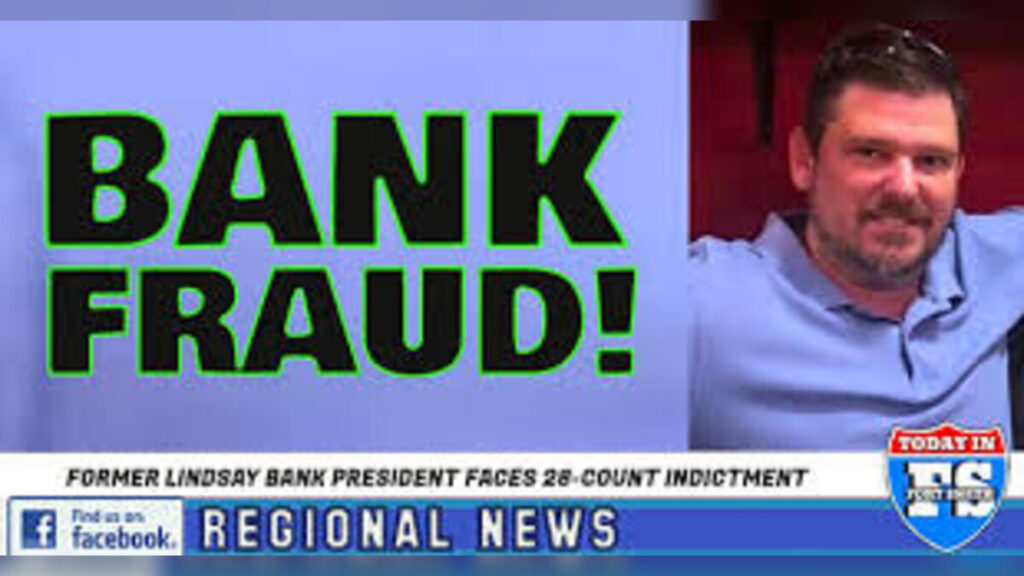
A major banking scandal has shaken Lindsay, Oklahoma, after the former head of a local financial institution admitted in court that he orchestrated a long-running fraud inside the bank he once ran.
Danny Seibel, aged 55, who previously served as president and CEO of the now-closed First National Bank of Lindsay, pleaded guilty to one count of bank fraud after investigators uncovered years of suspicious lending activity and falsified financial records.
The case has drawn attention not only for the scale of the misconduct, but also for how deeply it allegedly involved personal relationships, manipulated paperwork, and hidden financial losses.
Inside the Alleged Loan Manipulation Scheme
Court filings show that Seibel worked at the bank for over 15 years, from around February 2007 until his removal in September 2024.
During that period, prosecutors say he approved loans to individuals who were often personal friends and neighbours.
The problem, according to investigators, was that many of these loans were never properly repaid.
Rather than allowing the losses to appear in the bank’s accounts, Seibel allegedly altered internal records to make the loans look healthy.
Authorities say he used new loans or internal fund transfers to cover overdrafts and conceal the growing financial damage.
This created a false impression that the bank was performing far better than it actually was.
Regulators Step In as the Bank Collapses
The situation escalated in October 2024 when the Office of the Comptroller of the Currency stepped in and appointed a receiver for the bank.
By that point, the financial institution could no longer continue normal operations.
Federal investigators later concluded that the bank’s financial reports had been significantly overstated, masking its true level of risk and instability.
The collapse of First National Bank of Lindsay has since been cited as another example of how internal misconduct at small financial institutions can spiral into full regulatory intervention.
The Guilty Plea and Possible Prison Time
Seibel formally admitted to bank fraud in court.




The charge carries a maximum penalty of 30 years in prison and fines of up to $1 million, although sentencing will ultimately depend on federal guidelines and the judge’s discretion.
A sentencing date has not yet been scheduled.
Legal experts note that in financial fraud cases of this type, final sentences can vary widely depending on factors such as cooperation with investigators, the total financial loss involved, and prior conduct.
Federal Agencies Coordinate Investigation
The case was investigated through a wide collaboration between multiple U.S. agencies, including:
- Federal Deposit Insurance Corporation Office of Inspector General
- Federal Bureau of Investigation Oklahoma City Field Office
- Internal Revenue Service Criminal Investigation division
- Federal Housing Finance Agency Office of Inspector General
Prosecutors from the U.S. Department of Justice and the Western District of Oklahoma are handling the case in court.
Officials say the investigation focused heavily on tracing financial records, loan approvals, and internal banking transactions that were allegedly used to hide losses.
How the Scheme Allegedly Worked Inside the Bank
According to prosecutors, the alleged fraud relied on repeated cycles of internal loan restructuring.
Instead of allowing unpaid loans to default, funds were moved around within the bank system to temporarily cover gaps.
This type of activity, often described by financial regulators as “evergreening,” can make a struggling loan portfolio appear stable when it is actually deteriorating.
Financial crime specialists say such practices can be especially damaging in smaller banks, where oversight structures may be less robust than in large national institutions.
Wider Context: Banking Oversight and Fraud Risks
Cases like this highlight ongoing concerns in the banking sector about internal controls and executive oversight.
The U.S. Department of Justice has repeatedly emphasized the importance of prosecuting financial institution insiders whose actions threaten public trust in the financial system.
The division involved in this case also focuses on dismantling financial crime networks and recovering assets tied to fraudulent activity, particularly when banking systems are misused by insiders.
Impact and Consequences
The fallout from the case extends beyond one individual or one institution.
- The bank itself has effectively ceased normal operations following regulatory intervention
- Customers and community members may face disruption or uncertainty regarding accounts and services
- Regulatory agencies are likely to increase scrutiny of similar small financial institutions
- The case reinforces the risks of internal fraud carried out by trusted executives
- Public confidence in smaller regional banks can be affected when governance failures occur
Financial crime experts often point out that insider fraud cases are particularly damaging because they undermine trust at the core of banking relationships.
What’s Next?
The next major step in the case is sentencing.
A federal judge will review evidence, sentencing guidelines, and any mitigating factors before deciding on punishment.
Separately, regulatory authorities will continue to examine the bank’s records to determine the full extent of financial losses and whether additional legal actions are necessary.
There may also be further civil proceedings related to asset recovery or restitution, depending on what investigators uncover during ongoing reviews.
Summary
Danny Seibel, former CEO of First National Bank of Lindsay in Oklahoma, has pleaded guilty to bank fraud after authorities accused him of approving unrepayable loans to acquaintances and disguising financial losses through falsified records.
The scheme allegedly continued for years before regulators intervened and shut down normal bank operations.
Multiple federal agencies helped investigate the case, which is now heading toward sentencing.
Bulleted Takeaways
- Former bank CEO Danny Seibel pleaded guilty to bank fraud
- He led First National Bank of Lindsay from 2007 until 2024
- Prosecutors say he approved loans that were not properly repaid
- Alleged manipulation of records hid financial losses inside the bank
- Regulators appointed a receiver for the bank in October 2024
- Seibel faces up to 30 years in prison and up to $1 million in fines
- Multiple federal agencies including FBI and IRS-CI investigated the case
- The case highlights risks of insider fraud in smaller financial institutions
- Sentencing date has not yet been set
- Authorities continue to assess full financial damage and accountability measures

