
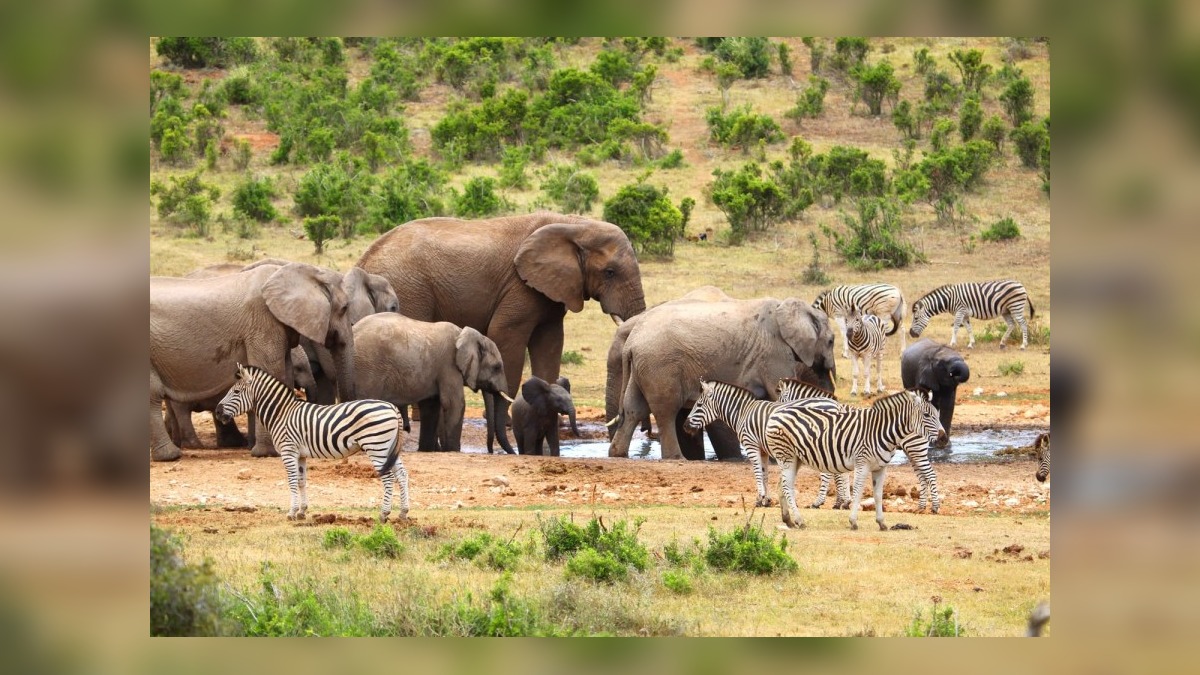
Addo Elephant National Park in South Africa’s Eastern Cape is home to a wide range of wildlife, including the Big Five and numerous smaller, less frequently seen species.
According to SANParks, the reserve records 91 mammal species and 418 bird species. Although elephants are among its main attractions, visitors can also encounter predators, antelope and other animals across the park.
Elephants, Buffalo and Other Big Five Species
African elephant
Addo is home to more than 600 elephants, which can be seen throughout the main game-viewing area. Waterholes are particularly useful locations for observing them during hot weather.
Cape buffalo
SANParks records more than 400 Cape buffalo in the park. The reserve describes the population as one of the largest disease-free buffalo herds in South Africa.
Lion
Lions were reintroduced to Addo in 2003. They can be harder to locate than elephants because they often rest or remain concealed in vegetation. SANParks identifies early mornings and evenings as suitable times to look for them.
Black rhino
Black rhinos also inhabit the park, although sightings are less predictable than those of elephants and buffalo.
Leopard
Leopards occur in Addo but are rarely seen. SANParks describes the animals as shy and secretive, making them among the most difficult members of the Big Five to spot.
Zebras, Antelope and Other Commonly Found Animals
Beyond the Big Five, Addo supports several other mammal species that visitors may encounter in the main game-viewing area.
These include zebras, kudu, eland, red hartebeest, warthogs, bushbuck, bushpigs, springbok and gemsbok.



Spotted hyenas are also found in the park. They were reintroduced in 2003 and are among the predators visitors may be fortunate enough to see during a safari.
Elusive Species Include Aardvarks and Caracals
Some of Addo’s mammals are more difficult to encounter because they are nocturnal or particularly secretive.
These include aardwolves, aardvarks, caracals, meerkats, honey badgers, bat-eared foxes, Cape porcupines and klipspringers.
Sightings of these animals are less predictable than those of species commonly seen along the park’s tourist roads.
Flightless Dung Beetles Require Care on Park Roads
Addo is also known for its flightless dung beetle, a small species that plays an important role in recycling nutrients within the ecosystem.
The beetles can cross the park’s roads, and drivers are asked to take care when travelling through the reserve to avoid harming them.
Addo’s Big 7 Includes Whales and Great White Sharks
Addo is promoted as a Big 7 destination because its broader conservation area includes two marine species alongside the traditional Big Five.
The Big 7 comprises the African elephant, lion, leopard, black rhino, Cape buffalo, southern right whale and great white shark.
The whales and sharks form part of the park’s wider marine conservation area and are not seen during ordinary game drives through the main terrestrial viewing section.
Which Animals Are Visitors Most Likely to See?
Wildlife sightings are never guaranteed, but some animals are generally easier to spot than others during a visit to Addo.
| Animal | General sighting prospects |
|---|---|
| Elephant | Very good |
| Zebra | Good |
| Warthog | Good |
| Kudu | Good |
| Buffalo | Good |
| Lion | Possible |
| Spotted hyena | Possible |
| Rhino | Possible |
| Leopard | Rare |
| Aardvark and aardwolf | Rare |
Waterholes Offer Opportunities for Wildlife Viewing
Visitors exploring Addo in their own vehicles can improve their chances of seeing wildlife by slowing down and spending time near waterholes rather than concentrating on covering long distances.
SANParks permits self-drive visits through the main game-viewing area, allowing visitors to explore the park independently.
While elephants are among the animals most frequently associated with Addo, the reserve’s wider range of mammals and birdlife also includes species that are much harder to find during a safari.

