
Inside Israel’s defence circles, a familiar but uncomfortable question is resurfacing: is another war in Gaza becoming unavoidable?
Senior officers in the Israel Defense Forces Southern Command are reportedly revising operational blueprints for a possible renewed ground campaign.
These plans include scenarios that go beyond targeted strikes and could involve expanding control into areas of Gaza still outside Israeli military presence.
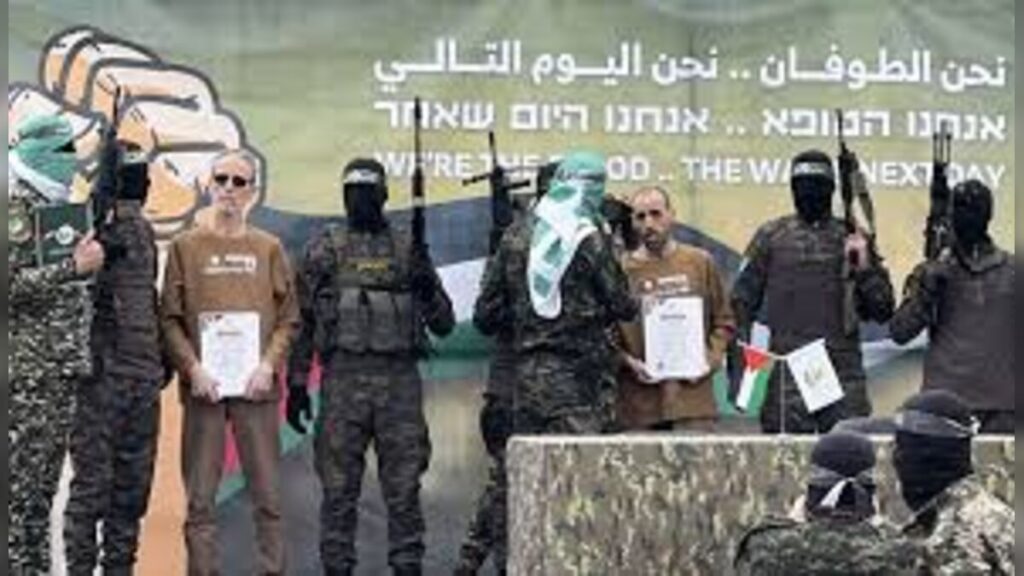
What is driving this reassessment is the growing assessment that Hamas is not gone.
It has been weakened, but not eliminated.
Hamas Regroups Despite Heavy Israeli Military Pressure
Military officials describe a Gaza where Hamas is slowly reasserting itself.
Even after years of conflict, intelligence reports and field observations suggest the group is rebuilding infrastructure, restoring command structures, and re-establishing influence over civilians.
Fighters are reportedly more visible again, and humanitarian corridors are allegedly being exploited for smuggling activity.
Israel still maintains control over key areas, including buffer zones established during earlier phases of the war, but commanders on the ground believe Hamas is steadily regaining operational confidence.
Financial networks, once heavily disrupted, are also believed to be recovering, giving the group renewed capacity to pay fighters and administer control in parts of the Strip.
A Conflict History That Refuses to Stay in the Past
One of the central concerns among Israeli planners is that Hamas has repeatedly demonstrated long-term rebuilding capacity.
The group that carried out the October 7 attack did not emerge overnight.
Its capabilities were built gradually over years—starting with short-range rockets, later advancing to tunnels, coordinated assaults, and more complex military planning.
Israeli officials now fear that the same slow reconstruction cycle may be underway again, even after one of the most destructive wars in Gaza’s history.
Two Options, Neither Without Serious Risk
Policy discussions inside Israel increasingly revolve around two difficult choices.
The first is another large-scale military offensive aimed at dismantling Hamas once again.
This would likely involve re-entering densely populated areas of Gaza and attempting to eliminate remaining operational structures.
But many within the defence establishment acknowledge a hard truth: Israel has already attempted this.
Despite major battlefield successes, Hamas leadership was severely weakened but not fully destroyed.
The second option is containment—maintaining current ceasefire-like conditions, relying on international coordination frameworks, and attempting to pressure Hamas into disarmament over time.




Supporters of this approach point to diplomatic mechanisms involving international stakeholders and reconstruction plans.
However, there is no guarantee Hamas would voluntarily relinquish power, and previous experience has shown how quickly militant groups can rebuild during lulls in fighting.
The Reconstruction Dilemma and the Vacuum Problem
A recurring lesson from past operations is that military gains do not automatically translate into lasting control.
In several areas cleared by Israeli forces, Hamas has reportedly returned once troops withdrew.
This cycle has created what analysts describe as a “vacuum effect,” where destroyed governance structures are quickly replaced by militant control if no alternative authority is established.
The same concern extends beyond Gaza.
Similar debates have followed Israel’s confrontations with other regional actors, where ceasefires did not always translate into long-term stability.
The International Dimension Complicates Any New Offensive
A renewed war would not take place in a political vacuum.
Israeli officials are aware that international perception has shifted since earlier phases of the conflict. Many global audiences may interpret any new large-scale operation as escalation rather than continuation of an unfinished war.
Another challenge is communication.
Critics inside Israel argue that there has been limited sustained diplomatic effort to clearly explain why security officials believe Hamas is rebuilding and why further military action may be considered necessary.
This gap in messaging could shape how any future operation is received internationally.
Why Military Power Alone Has Not Ended the Conflict
A deeper strategic question is emerging within Israeli policy circles: why has overwhelming military force not produced a final resolution?
Despite extensive operations by the Israel Defense Forces, Hamas continues to exist as an organised entity.
This has led some analysts to argue that military success alone cannot fully resolve deeply entrenched political and territorial conflicts.
Past operations, including hospital raids and tunnel destruction campaigns, achieved tactical victories but did not always prevent the return of militant infrastructure over time.
The absence of a stable alternative governing structure has repeatedly allowed armed groups to re-emerge in cleared areas.
Impact and Consequences
The current situation places Israel at a strategic crossroads with wide-reaching implications.
If another war begins, it could lead to renewed regional instability and further strain Israel’s diplomatic relations.
Civilian populations in Gaza would face renewed displacement and humanitarian pressure, while Israeli society would again confront prolonged mobilisation and security risk.
If Israel chooses restraint instead, critics argue it risks allowing Hamas to rebuild further, potentially setting the stage for future large-scale attacks.
Either path carries long-term consequences, not just militarily but politically, economically, and diplomatically.
What’s Next?
In the coming months, decisions within the Israel Defense Forces and the Israeli government are expected to shape the next phase.
Possible developments include expanded limited operations, increased border security measures, or renewed diplomatic efforts involving international mediators.
At the same time, Hamas’s activity on the ground will heavily influence whether tensions escalate or remain contained.
The situation remains fluid, and many officials believe the next major shift could come quickly if conditions deteriorate.
Summary
Israel is once again confronting the possibility of renewed war in Gaza as military leaders assess Hamas’s reported reconstitution.
While the group has been significantly weakened, intelligence suggests it is rebuilding influence and infrastructure.
Israeli decision-makers face two difficult paths: re-entering full-scale conflict or attempting long-term containment through political and diplomatic mechanisms.
Neither option offers a clear or guaranteed solution.
Bulleted Takeaways
- The Israel Defense Forces is reportedly preparing contingency plans for renewed operations in Gaza
- Hamas is believed to be rebuilding operational and financial capacity
- Israeli officials fear a repeat of past cycles where cleared areas are later re-infiltrated
- Two main options are under debate: renewed war or long-term containment strategy
- Military operations alone have not fully eliminated Hamas’s presence in Gaza
- International perception could strongly shape response to any new Israeli offensive
- Lack of a stable alternative governance structure in Gaza remains a key challenge
- The situation remains fluid, with escalation or stabilization both possible outcomesf

