
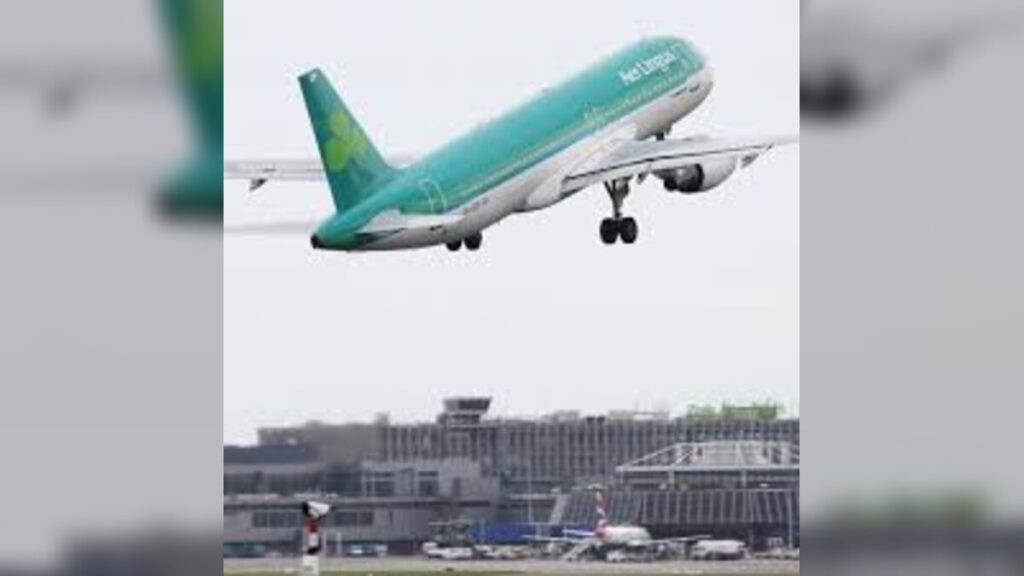
Irish airline Aer Lingus has reported a tougher start to the year than expected, with operating losses widening significantly in the first quarter.
The carrier posted a €103 million loss for the opening three months, nearly double the €55 million loss recorded during the same period last year.
While airline executives were quick to point out that the first quarter is traditionally the weakest period for travel demand, this year’s downturn was intensified by rising fuel prices, higher carbon costs, and broader industry pressures.
A Weak Quarter Made Worse by Rising Costs
The airline industry is no stranger to seasonal losses early in the year, but Aer Lingus says the pressure this time was heavier than usual.
Fuel prices climbed sharply, and environmental compliance costs also increased, adding extra strain to operations.
Carbon pricing mechanisms across Europe have been tightening, meaning airlines like Aer Lingus are paying more to offset emissions.
Combined with volatile global oil markets, the cost base became harder to manage.
Even so, passenger demand did not collapse.
In fact, the airline still recorded a modest 1.1% increase in passenger numbers, supported by new and expanded routes across both short-haul and long-haul networks.
Expansion Continues Despite Financial Strain
Despite the financial setback, Aer Lingus continued to grow its network.
New services launched during the period included Dublin–Cancún in Mexico and Dublin–Turin in Italy, along with regional connections such as Cork–Geneva and Cork–Prague.
These additions are part of a broader strategy to capture both leisure and business travel demand as international mobility continues to recover after years of disruption across the aviation sector.
Industry observers note that expanding routes during a cost-heavy period is a balancing act—airlines must grow revenue while trying to avoid overextending financially.
Fuel Supply Concerns Add Pressure to Aviation Sector
Beyond financial results, there has also been growing concern across the airline industry about potential disruptions in global fuel supply chains.
Some carriers have already adjusted operations after geopolitical tensions and shipping disruptions affected oil transport routes.




The closure or restriction of key maritime corridors such as the Strait of Hormuz has raised fears of tighter global jet fuel availability, contributing to volatility in pricing.
However, Aer Lingus CEO Lynne Embleton reassured markets that the airline has secured sufficient fuel for its upcoming summer schedule.
She emphasized that while supply is stable in the short term, price uncertainty remains a serious concern.
Leadership Signals Cost Controls Ahead
Embleton acknowledged that the airline is not insulated from broader global pressures.
Rising fuel costs and an unpredictable economic environment are forcing the company to reassess its spending strategy.
According to her, Aer Lingus is actively reviewing its cost structure and future scheduling plans beyond the summer season.
The goal, she said, is to maintain operational efficiency while preparing for continued uncertainty in global energy markets.
The airline also pointed to one-off restructuring charges, including costs linked to the closure of its Manchester base, as additional contributors to the quarterly loss.
Industry Pressure and Competitive Transatlantic Market
Aer Lingus also faces strong competition on transatlantic routes, where pricing pressure remains intense.
Rival airlines are aggressively competing for passengers between Europe and North America, squeezing margins even as demand improves.
This competitive environment makes it harder for carriers to pass rising fuel and operational costs directly onto customers, especially in price-sensitive leisure markets.
Still, analysts note that Aer Lingus benefits from its position within the wider International Airlines Group structure, which provides financial resilience during volatile periods.
Impact and Consequences
The immediate impact of the results is increased financial pressure on Aer Lingus as it heads into its busiest travel season.
Higher operating costs may limit flexibility in pricing, staffing, and route expansion decisions.
There is also a broader industry implication.
Rising fuel and carbon costs are reshaping how European airlines plan growth, with many now prioritizing efficiency over rapid expansion.
For passengers, this could mean more gradual fare increases, tighter schedules in less profitable routes, or shifts toward high-demand destinations.
What’s Next?
The focus now shifts to the summer season, which is traditionally the most profitable period for airlines.
Aer Lingus is betting on strong passenger demand to offset earlier losses.
Key areas to watch include:
- Stability of global jet fuel prices
- Performance of new routes such as Dublin–Cancún
- Passenger demand across transatlantic services
- Cost-control measures introduced by management
- Broader geopolitical developments affecting fuel supply chains
If fuel prices stabilize, the airline could recover some ground. If not, further pressure on margins is likely.
Summary
Aer Lingus reported a €103 million operating loss in the first quarter, nearly double last year’s figure, driven mainly by higher fuel and carbon costs. Despite this, passenger numbers grew slightly and new routes were added. The airline remains confident about fuel availability for summer operations but is reviewing costs amid ongoing global uncertainty.
Bulleted Takeaways
- Aer Lingus posted a €103 million operating loss in Q1
- Losses nearly doubled compared to €55 million last year
- Higher fuel prices and carbon costs were key drivers
- Passenger numbers still grew by 1.1% year-on-year
- New routes launched, including Dublin–Cancún and Cork–Prague
- CEO Lynne Embleton confirmed fuel supply is secured for summer
- Airline is reviewing costs due to global economic uncertainty
- Competition on transatlantic routes continues to pressure margins
- One-off charges, including Manchester base closure, affected results
- Industry-wide fuel supply concerns remain a risk factor going forward

