
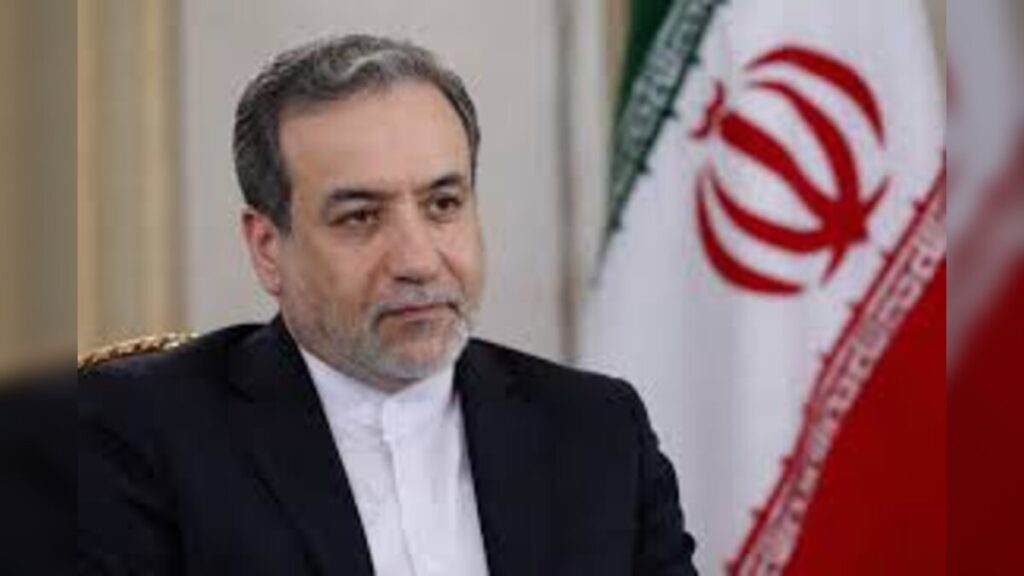
Iran’s Foreign Minister Abbas Araghchi has once again escalated tensions with Washington, accusing the United States of repeatedly leaning toward military confrontation instead of diplomacy.
His comments reflect the long-standing mistrust between Tehran and Washington, especially over Iran’s nuclear programme and wider regional security issues.
Speaking in strongly worded remarks, Araghchi argued that whenever diplomatic progress appears possible, the United States instead shifts toward what he described as a “reckless military adventure.”
The statement adds fresh pressure to already fragile efforts aimed at preventing further escalation in the Middle East.
A Familiar Cycle of Talks and Tension
The back-and-forth between Iran and the US is not new.
Over the past two decades, relations have swung repeatedly between negotiation and confrontation.
One of the most notable moments came with the 2015 nuclear agreement, formally known as the Joint Comprehensive Plan of Action (JCPOA).
That deal saw Iran limit its nuclear activities in exchange for sanctions relief.
However, the US withdrawal from the agreement in 2018 under President Donald Trump disrupted that diplomatic framework and triggered renewed tensions.
Since then, indirect talks have continued intermittently, often mediated through European or regional partners, but a lasting agreement has remained out of reach.
Araghchi’s latest comments reflect Tehran’s view that diplomatic openings are frequently undermined by military posturing, sanctions pressure, or regional security incidents involving US allies.
Rising Regional Pressure and Security Flashpoints
The broader backdrop to these accusations is a region already under strain.
Tensions involving Iran, Israel, Gulf Arab states, and US military presence in the Middle East have all contributed to an unstable security environment.
Iran has expanded its regional influence through allied groups in countries such as Iraq, Syria, Lebanon, and Yemen, while the US continues to maintain military bases across the Gulf region.


These overlapping spheres of influence often lead to indirect confrontation, even when both sides publicly avoid direct war.
In recent years, incidents involving maritime security in the Strait of Hormuz and attacks on regional facilities have further heightened fears of miscalculation that could spiral into open conflict.
Diplomatic Efforts Struggling to Gain Momentum
Despite repeated breakdowns, diplomatic channels between Iran and the US have never fully closed.
European nations, particularly France, Germany, and the United Kingdom, have often attempted to revive negotiations tied to Iran’s nuclear programme.
However, progress has been slow and inconsistent.
One major obstacle remains disagreement over sanctions relief and nuclear enrichment limits.
Another is political distrust, with each side accusing the other of failing to honour commitments.
Araghchi’s statement reflects a broader Iranian position that diplomacy is still possible but is being undermined by what Tehran sees as contradictory US policy signals.
Impact and Consequences
The latest remarks are likely to deepen mistrust between Tehran and Washington at a time when regional tensions are already high.
First, they reinforce Iran’s public narrative that the US is unreliable in negotiations, making future diplomatic breakthroughs even more difficult.
Second, such statements can harden domestic political positions in both countries, limiting room for compromise.
Third, allies of both nations in the Middle East may interpret the rhetoric as a signal of possible escalation, increasing military alertness in an already sensitive region.
Finally, energy markets and global security analysts may view the situation as another risk factor in an area that plays a critical role in global oil and trade routes.
What’s Next?
For now, no immediate breakthrough in US-Iran relations appears likely.
Diplomatic talks may continue quietly through intermediaries, but public rhetoric suggests both sides remain far apart.
Iran is expected to maintain its stance that sanctions must be lifted before major concessions are made, while the United States continues to push for stricter limits on Iran’s nuclear programme and regional activities.
Much will depend on whether backchannel diplomacy can survive ongoing political pressure and regional incidents that risk escalating tensions further.
Summary
Iran’s Foreign Minister Abbas Araghchi has accused the United States of repeatedly choosing military confrontation over diplomacy.
His comments highlight the long-standing breakdown in trust between the two countries, especially following the collapse of the 2015 nuclear agreement and ongoing regional tensions.
While diplomatic efforts have not completely stopped, both sides remain deeply divided on key issues, making progress toward a lasting agreement uncertain.
Bulleted Takeaways
- Iran’s Foreign Minister accused the US of favouring military action over diplomacy.
- Tensions are rooted in the long-running dispute over Iran’s nuclear programme.
- The 2015 nuclear deal (JCPOA) collapsed after US withdrawal in 2018.
- Regional instability continues across the Middle East involving multiple actors.
- Diplomatic talks persist but remain fragile and inconsistent.
- Both sides disagree on sanctions relief and nuclear restrictions.
- The situation increases risks for regional security and global energy markets.
- Future progress depends on backchannel diplomacy and political willingness.

