
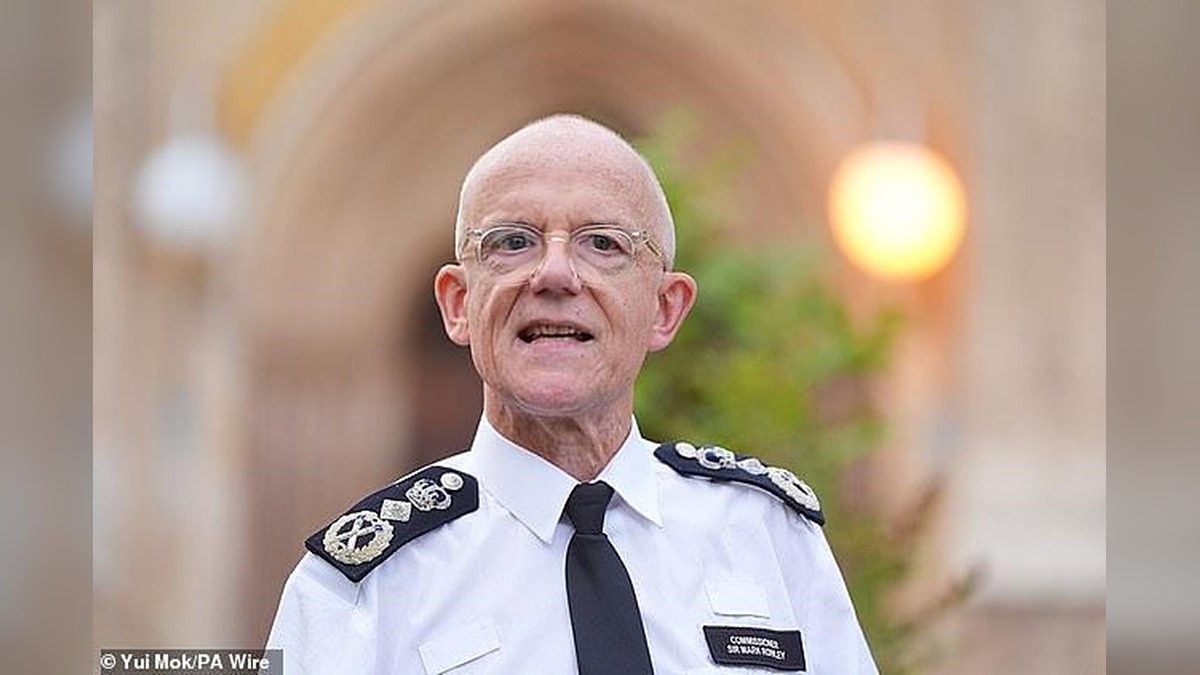
Metropolitan Police Commissioner Sir Mark Rowley has warned that police forces across Britain risk failing to tackle organised crime and grooming gangs unless urgent reforms are introduced.
Speaking at a keynote event in Manchester, Sir Mark criticised the existing policing structure, describing it as a bureaucratic and overly complicated system that prevents forces from responding effectively to modern criminal threats.
He argued that replacing the current arrangement with a more streamlined structure would reduce administrative duplication, improve the use of technology and put more officers on neighbourhood patrols.
Sir Mark warned that failing to introduce widespread changes could result in what he described as the inevitable decline in the police’s ability to protect the public.
He said: “There comes a point when the world evolves beyond the ability of the systems built to service.
British policing has reached that point once again, and there’s a very real risk to the public if we don’t urgently reform to meet that challenge.”
He added: “In short, and it hurts me to say this, policing will fail.”
Police Chiefs Propose Three-Tier Structure
Sir Mark is among several senior police chiefs supporting a major restructuring of policing in England and Wales.
Their proposal would replace the existing network of 43 separate constabularies with a three-tier system operating under a National Police Service.
The proposed arrangement would include up to ten regional police forces, supported by neighbourhood teams responsible for local communities.
Supporters believe the changes would simplify policing operations, reduce repeated administrative costs and allow individual forces to share resources more effectively.
However, the proposal has attracted criticism from those who believe larger forces are not necessarily more effective.




Concerns have also been raised about the potential consequences for smaller police organisations that currently operate efficiently.
Funding Shortages Add to Policing Challenges
The Metropolitan Police chief also criticised successive governments for allowing investment in policing to fall behind the demands placed on the service.
He described the level of underfunding as dangerous but acknowledged that the proposed restructuring, estimated to cost approximately £2billion, was unlikely to receive substantial additional funding from the Treasury.
Instead, he argued that police forces would need to change how existing resources are allocated.
Reducing duplicated spending across the 43 constabularies, including expenditure on separate headquarters and IT systems, could release money for frontline operations.
Explaining the proposed approach, Sir Mark told the Mail that the priority should be increasing the number of officers on the streets while improving the technology and specialist support available to them.
He said: “It’s about more bobbies on the beat, who then behind them have got better technology, so they do their job better.
“And then they’ve got better support from specialists to help them succeed against the most difficult criminals.”
He questioned whether the public would prefer police funding to maintain 43 separate headquarters and IT systems at the expense of neighbourhood officers.
Modern Criminal Networks Expose Weaknesses in Current System
Sir Mark identified organised crime groups, fraud networks, online child abuse, cybercrime and threats from hostile states among the major dangers facing communities.
He argued that these criminal activities increasingly operate across regional, national and international boundaries, making it difficult for a policing structure built around individual local forces to respond effectively.
According to the commissioner, criminal networks will continue to exploit these weaknesses unless policing arrangements are redesigned to reflect the scale and complexity of modern threats.
He said advances in technology had made it necessary for the police service to evolve rather than continue relying on structures established for a different era.
Home Secretary’s Reform Blueprint Includes National Police Service
The commissioner’s intervention comes amid wider efforts to reform Britain’s criminal justice system.
Earlier this year, Home Secretary Shabana Mahmood unveiled a blueprint for changes to policing, including the creation of a National Police Service.
The proposed reforms are expected to generate £350million in savings, which would be redirected towards frontline policing.
The plans form part of efforts to reduce duplication, improve coordination between forces and strengthen the police’s ability to respond to serious and complex criminal activity.
