
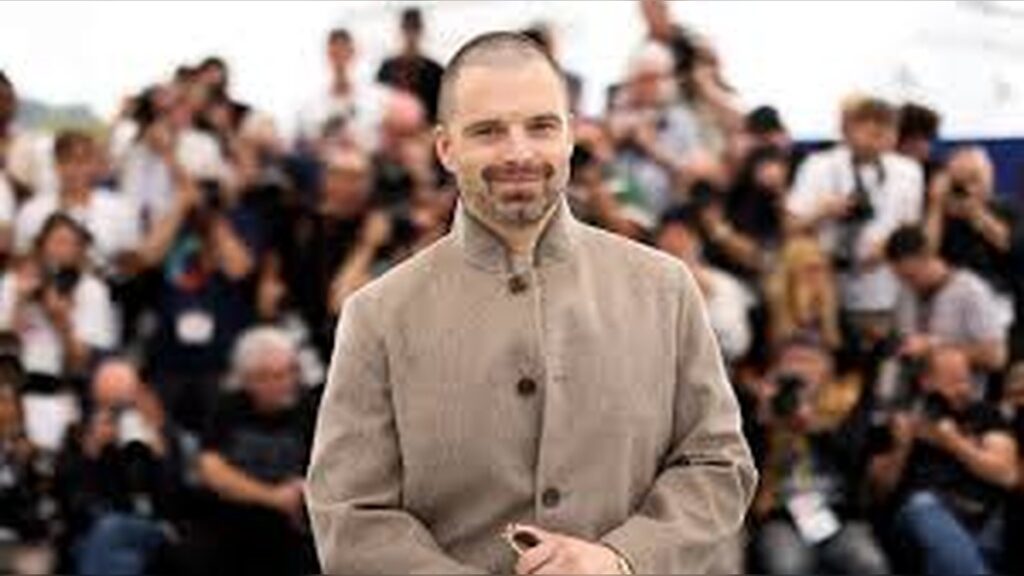
What was meant to be a routine promotional stop at the Cannes Film Festival quickly shifted into controversy when actor Sebastian Stan was asked about the early stage of Donald Trump’s second term.
The moment, captured on camera and later widely circulated, sparked immediate debate far beyond the film world.
Stan, 43, was there to promote his new project Fjord, but the conversation drifted into politics almost instantly—setting off a reaction that would follow him long after the festival ended.
“Not a Laughing Matter” Sets the Tone
During the interview, Stan pushed back against the light tone of the question, saying the current political climate was “not a laughing matter” and describing the situation as “really, really bad.”
He then expanded his comments, touching on issues like media concentration, censorship concerns, and ongoing legal and political disputes that he suggested were shaping public discourse in troubling ways.
His remarks weren’t delivered as a single statement but as a flowing critique, the kind of answer that often lands differently depending on who’s listening.
The Apprentice Backstory Reemerges
Stan also brought up his previous role portraying Donald Trump in the 2024 film The Apprentice, a performance that earned him major awards attention, including a Golden Globe win and an Oscar nomination.
He recalled the uncertainty surrounding the film’s Cannes premiere, saying the team wasn’t even sure the movie would screen just days before the festival due to controversy.
That experience, he suggested, shaped how he views the intersection of politics, media pressure, and entertainment.
Online Reaction Turns Divided and Heated
Once the clip hit social platforms, the response split sharply.
Critics accused Stan of being disconnected from everyday reality, arguing that Hollywood voices often speak from a sheltered environment.
Some posts dismissed his comments entirely, saying entertainers should avoid political commentary.




Others took a more personal tone, accusing celebrities of hypocrisy for criticizing the system while benefiting from it.
At the same time, supporters defended his perspective, arguing that his concerns were less about party politics and more about broader structural issues in media and governance.
The divide reflected a familiar pattern: celebrity political comments rarely stay neutral in public conversation.
The Bigger Media Conversation in the Background
Stan’s remarks also landed alongside ongoing debates about political influence in entertainment media.
Late-night hosts like Jimmy Kimmel and Stephen Colbert have themselves faced scrutiny in recent years over politically charged commentary and industry pressure.
In Colbert’s case, his long-running program was later confirmed to be ending after decades on air, with officials citing financial reasons, though speculation about political timing continued online.
These overlapping stories added fuel to the broader narrative about whether entertainment and politics have become too intertwined to separate cleanly.
Impact and Consequences
The fallout from Stan’s interview shows how quickly celebrity commentary can shift from entertainment news into political flashpoints.
For Sebastian Stan, the reaction may influence how future interviews are handled, especially on sensitive topics.
More broadly, the incident highlights:
- How Cannes Film Festival press moments can escalate into global discourse within hours
- The increasing sensitivity around political commentary from Hollywood figures
- The way social media amplifies polarized reactions instantly
- The reputational risk actors face when discussing real-world politics
It also reinforces a growing trend where film promotion and political debate are becoming harder to separate.
What’s Next?
For Stan, the immediate focus will likely return to Fjord and how the film performs after the publicity storm.
However, interviews may now come with tighter boundaries or more media training emphasis around political questions.
In the wider entertainment industry, studios and publicists may become more cautious about how talent is prepared for politically charged press environments, especially at high-profile festivals like Cannes.
Meanwhile, online debate around celebrity political speech is unlikely to cool down anytime soon, especially as audiences become more divided in how they interpret it.
Summary
A Cannes Film Festival interview with Sebastian Stan sparked backlash after the actor criticized Donald Trump’s political climate and broader media dynamics.
The comments triggered intense online debate, splitting audiences between criticism and support.
The situation also reignited broader conversations about celebrity influence, media power, and political speech in entertainment.
Bulleted Takeaways
- Sebastian Stan criticized the political climate during a Cannes interview
- He called the situation “not a laughing matter” and “really, really bad”
- Comments quickly went viral and triggered strong online backlash
- Critics accused him of being out of touch, while others defended him
- Stan referenced challenges surrounding his Trump biopic The Apprentice
- Broader debate ties into media figures like Jimmy Kimmel and Stephen Colbert
- Industry conversation continues around politics in entertainment media
- The incident highlights risks celebrities face when speaking on politics

