
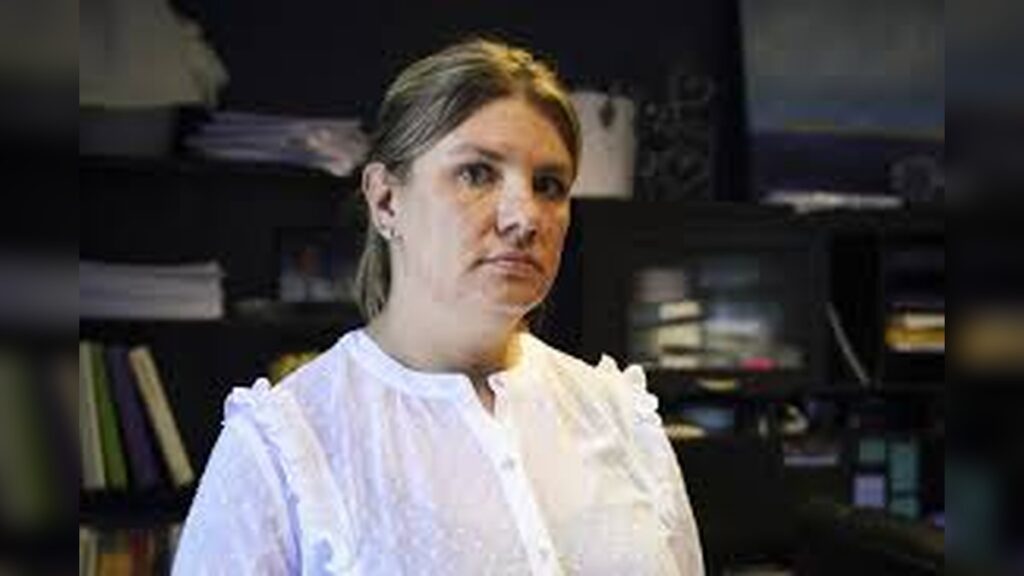
Aimee Bock once stood under bright lights at a Minneapolis gala, surrounded by sequins, flowers, and applause for what appeared to be a rising nonprofit success story.
As the founder of Feeding Our Future, she was presented as a community leader dedicated to fighting childhood hunger in Minnesota.
Back then, the image was polished and convincing.
But within just a few years, that same woman would become the central figure in what federal prosecutors describe as one of the largest COVID-era fraud schemes in the United States.
Feeding Our Future and the Promise That Drew National Attention
Feeding Our Future, launched in 2016, positioned itself as a nonprofit helping feed low-income children through federal nutrition programs.
During the pandemic, the organization gained access to massive emergency funding meant to keep children fed while schools were closed.
That sudden expansion of funding created opportunities—and, according to investigators, a system that was allegedly exploited on an extraordinary scale.
Prosecutors say funds intended for children’s meals were instead redirected into personal accounts, luxury purchases, and shell companies.
The Turning Point as Federal Investigators Closed In
At the same time Bock was publicly defending her organization, authorities were already investigating suspicious financial activity tied to Feeding Our Future.
One particularly striking moment cited by prosecutors came during a gala speech where she criticized the Minnesota Department of Education, saying it had no authority to “steal money from the community.”
Investigators now argue that this statement was made while the nonprofit was actively involved in diverting millions of dollars in federal funds.
That contradiction has become a central theme in the case against her.
Luxury Spending, Personal Relationships, and Alleged Cash Flow Misuse
Court documents describe a pattern of spending that prosecutors say was far removed from feeding children.
They allege hundreds of thousands of dollars were used for travel, designer goods, luxury car rentals, and high-end vacations, including a trip to Las Vegas.




A significant portion of the money was allegedly routed through accounts linked to Empress Malcom Watson Jr, Bock’s then-partner, who operated a shell company reportedly connected to the financial network under investigation.
Authorities say the couple’s lifestyle included expensive shopping, cash withdrawals, and transfers that had no clear nonprofit purpose.
From Suburban Stability to Criminal Conviction
Before the scandal, Bock lived what appeared to be a stable suburban life in Minnesota with her family.
She owned a home in the Twin Cities area and had two children.
However, financial pressure was not new to the household, as earlier records show a bankruptcy filing years before the pandemic.
Her personal life was also in transition, including a long and complicated divorce that overlapped with the period investigators say the fraud occurred.
That background is now part of the broader narrative prosecutors use to explain how her circumstances evolved before the collapse of her public image.
A Massive Federal Case With Dozens of Convictions
The Feeding Our Future investigation has expanded far beyond one individual.
Federal authorities have charged dozens of people, with many already convicted in connection to what prosecutors call an organized, large-scale fraud network.
The case has been described by officials as one of the most significant pandemic-era financial crimes in the country, with losses reaching hundreds of millions of dollars from federal nutrition programs.
Impact and Consequences
The fallout has been severe both legally and reputationally.
Bock faces a potential decades-long prison sentence, with prosecutors pushing for up to 50 years, arguing the scale and impact of the fraud demand a harsh penalty.
Beyond her personal case, the scandal has triggered wider scrutiny of emergency federal aid systems, exposing vulnerabilities in oversight during the COVID-19 crisis.
Public trust in nonprofit administration and government relief programs in Minnesota has also been deeply damaged.
Communities that relied on legitimate aid programs have been left questioning how such a large scheme went undetected for so long.
What’s next?
Bock is awaiting sentencing, where the court will determine how long she will remain in prison.
Her defense has argued for leniency, pointing to her lack of prior criminal history and claiming she was unaware of the full extent of the fraud.
Meanwhile, federal authorities continue to pursue remaining defendants and recover misused funds where possible.
Additional related prosecutions are still moving through the courts, suggesting the case is far from fully closed.
The broader policy debate over oversight of emergency funding is also expected to continue, especially as lawmakers review how similar programs can be protected in future crises.
Summary
Aimee Bock’s rise as a nonprofit leader ended in a federal conviction tied to a massive COVID-era fraud case involving Feeding Our Future.
Once celebrated for charity leadership, she now faces the possibility of spending decades in prison as prosecutors argue she played a central role in diverting federal funds meant for children’s nutrition programs.
Bulleted Takeaways
- Aimee Bock founded Feeding Our Future in Minnesota in 2016
- The nonprofit received large COVID-era federal nutrition funds
- Prosecutors allege around $250 million was misused in a fraud scheme
- Money was allegedly spent on luxury goods, travel, and personal expenses
- Federal authorities say dozens of co-defendants have been convicted
- Bock faces a potential sentence of up to 50 years in prison
- Defense claims she lacked criminal intent and prior financial crimes
- The case has exposed major weaknesses in emergency funding oversight
- Public trust in nonprofit and aid systems in Minnesota has been significantly damaged

