
A quiet Wednesday morning in Seoul turned into a moment of shock for South Korea’s legal community after a senior judge was found dead inside one of the country’s most important judicial buildings.
The judge, Shin Jong-o, was discovered unconscious in the early hours of the morning at the Seoul High Court.
Police later confirmed he was taken to hospital but pronounced dead shortly after arrival.
Authorities were quick to say there were no immediate signs of foul play, though the incident has triggered intense public attention given the timing and Shin’s recent high-profile ruling.
A Case Linked to a High-Profile Political Figure
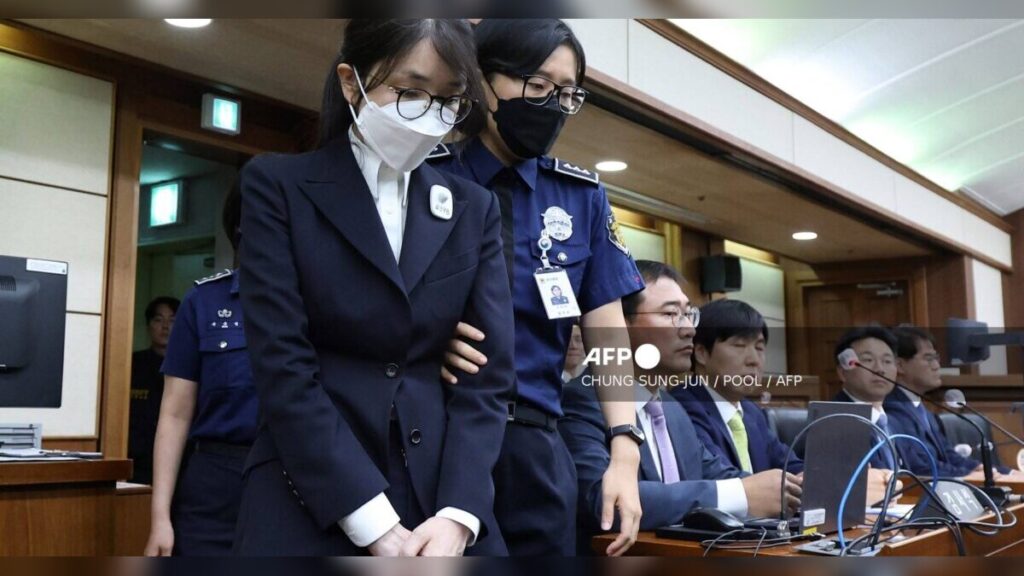
Shin had only recently presided over a politically sensitive appeal involving Kim Keon Hee, the former first lady of South Korea.
In that case, he upheld serious charges of stock manipulation and bribery, significantly increasing her sentence from 20 months to four years.
The ruling came after a lower court had initially cleared her of key allegations.
His judgment drew widespread attention, not just because of the defendant’s status, but also because of the sharp tone he used in court, where he criticized her lack of accountability and what he described as repeated excuses.
That decision placed Shin at the center of one of South Korea’s most closely watched legal battles.
Conflicting Reports and Public Uncertainty
Initial local media reports suggested that a suicide note had been found.
However, police later pushed back on that claim, saying no such note was recovered at the scene.
Investigators confirmed that Shin was found around 1:00 a.m. local time and that emergency responders were called immediately.



Despite medical intervention, he was declared dead shortly after.
Officials have urged the public to avoid speculation while investigations continue.
In South Korea, where judicial independence and pressure on public officials are often discussed in political discourse, incidents involving senior legal figures tend to attract significant scrutiny.
Pressure and Scrutiny in High-Stakes Courts
Although authorities have not linked Shin’s death to his recent rulings, the situation has reignited conversations about stress levels within the judiciary.
South Korea’s court system, particularly at higher levels such as the Seoul High Court, frequently handles cases involving powerful political and corporate figures.
Judges in these roles often work under intense public and media attention.
Past studies and public reports have highlighted concerns about workload pressure, reputational risk, and emotional strain among senior judges in the country’s legal system.
Still, officials have not confirmed whether any of these factors played a role in Shin’s case.
Official Response and Family Privacy Request
Police have described the situation as under investigation but reiterated that there is currently no evidence of external involvement.
They also noted that Shin’s family is in deep distress and has requested privacy during this period.
Authorities have avoided releasing additional personal details, focusing instead on procedural confirmation of events leading up to his death.
Impact and Consequences
The incident has already triggered several broader implications:
- Renewed debate about mental health pressures in South Korea’s judiciary
- Increased scrutiny of high-profile political corruption cases and the judges handling them
- Public concern over working conditions within senior court institutions
- Potential review of support systems for judges handling sensitive cases
- Heightened media attention on ongoing legal battles involving political figures
Beyond institutional impact, the case has also unsettled public confidence, as unexpected deaths among senior officials often raise difficult questions even when no wrongdoing is suspected.
What’s Next?
Authorities are expected to continue standard investigative procedures, including reviewing Shin’s recent work schedule, communications, and circumstances leading up to his death.
An official cause of death will likely be confirmed after further forensic examination.
At the same time, legal observers expect renewed discussion within judicial circles about stress management and institutional safeguards for judges handling politically sensitive trials.
The appeal case involving Kim Keon Hee is also likely to face continued public attention, though court proceedings are expected to proceed independently of the incident.
Summary
A senior South Korean judge, Shin Jong-o, has been found dead inside a major court building in Seoul shortly after presiding over a high-profile corruption appeal involving the former first lady.
While authorities report no signs of foul play, the circumstances have triggered widespread public concern and renewed debate about pressure within the judiciary.
Bulleted Takeaways
- Judge Shin Jong-o was found unconscious at the Seoul High Court building in Seoul
- He was pronounced dead shortly after being taken to hospital
- No evidence of foul play has been confirmed by police
- He recently increased Kim Keon Hee’s prison sentence to four years for bribery and stock manipulation
- Conflicting reports about a suicide note have not been confirmed by authorities
- His ruling had drawn major public and political attention
- South Korea’s judiciary is facing renewed discussion on stress and workload issues
- Officials have requested privacy for the judge’s bereaved family
- Investigations into the circumstances of his death are ongoing

