
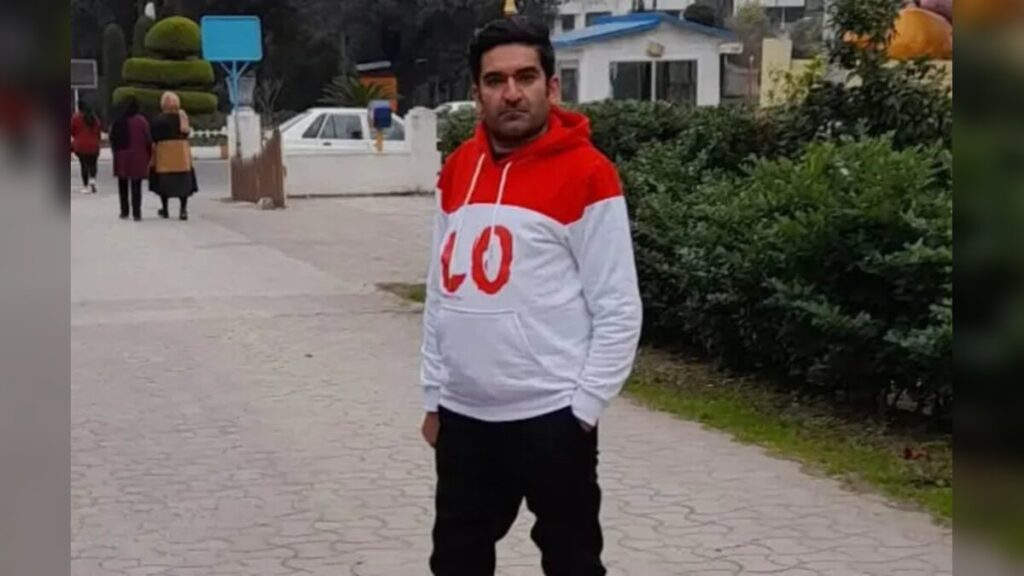
Three men executed at Orumiyeh Central Prison in Iran were allegedly tortured, pressured into confessions, and denied final family visits before their deaths, according to letters and recorded phone calls shared with The Jerusalem Post by the Kurdistan Human Rights Network.
The rights group said Yaghoub Karimpour, 43, Nasser Bakerzadeh, 26, and Mehrab Abdollahzadeh, 28, all managed to communicate with KHRN before they were executed.
Karimpour and Bakerzadeh were hanged on Saturday, while Abdollahzadeh was executed on Sunday. KHRN said their relatives were not informed beforehand, despite Iranian law allowing families a final visit before execution.
Rights Group Says Families Were Kept In The Dark
KHRN said the men did not know they were about to be executed when Rebin Rahmani, a representative of the organization, spoke with them on the Saturday before their deaths.
The organization also said the men’s families were later denied access to their bodies after approaching officials at Orumiyeh Central Prison.
According to KHRN, authorities also prevented the families from holding religious memorial ceremonies.
Yaghoub Karimpour Said He Was Forced To Confess
Yaghoub Karimpour, a disabled Azerbaijani Turkic citizen, had been accused of passing sensitive information to a Mossad officer.
Iran’s judiciary sentenced him to death on allegations of espionage. But KHRN and the Hengaw Organization for Human Rights said his confession came after severe physical and psychological pressure.
In a January letter shared with The Jerusalem Post, Karimpour said interrogators threatened to intensify the torture of his wife, whose cries he said he could hear during questioning.
“Many things were dictated to me, and I wrote untruths involuntarily and out of helplessness so that the torture and harassment of my wife would not continue,” he wrote.
Karimpour Described Denial Of Medicine And Legal Rights
Karimpour said he was arrested on June 16, 2025, and held for about two months in what he described as a “dark detention center of the Intelligence Ministry” before being transferred to Orumiyeh Central Prison.
From prison, he told KHRN he had been subjected to torture for roughly two months before confessing to the charge of “Corruption on Earth” before Judge Sajjad Dousti.
A law graduate, Karimpour said his rights were repeatedly violated. He said he was not told he had the right to a lawyer, was denied legal representation, interrogated while blindfolded, threatened with death, and tried in absentia through a video proceeding that lasted less than 15 minutes.
He also said the indictment was changed on the day of trial to a charge carrying the death penalty.
Karimpour denied ever having access to government secrets.
“I have never held a position anywhere, nor have I frequented or entered government, military, or institutional centers.
Naturally, I had no access to ordinary, confidential, or top-secret data, and I have not sent any information to any place or person; so how can they accuse me of espionage? [Ministry of] Intelligence agents want to blame their own faults and shortcomings on ordinary people; because if they were not at fault, so many commanders, scientists, and ordinary people would not have been killed in the 12-day war,” he wrote.
Karimpour Said His Disabilities Were Used Against Him
Karimpour said he had several serious health conditions, including complications from spinal and lung surgeries, chronic breathing issues, limited use of his limbs, and severe mental health struggles.
He said Iranian authorities knew about his disabilities because he had received state support before his detention, but still denied him medication as a form of pressure.
“I suffer from a severe physical disability; my entire spine has been plated, I suffer from severe shortness of breath due to surgery on my right lung, my limbs, namely my arms and legs, are incapacitated, and I suffer from a severe neurological and mental illness, and I have fear, panic, and phobia of narrow, dark, and enclosed spaces. Also, due to my skeletal deformity, severe pressure is placed on my heart,” he wrote.
He added that panic attacks worsened his breathing problems and increased his heart rate.
“Nervous attacks exacerbate my shortness of breath and increase my heart rate. I have medical records for each of my conditions and am under treatment.
Despite my specific physical and mental status, I was treated like an ordinary person and subjected to various forms of torture, duress, and coercive suggestion to extract false statements dictated by the interrogator.”
KHRN said Karimpour survived in prison largely through help from other inmates.
Nasser Bakerzadeh Said His Case Was Reframed As Espionage
Nasser Bakerzadeh was also accused of spying for Israel. According to audio recordings and documents he sent to KHRN, his death sentence for “spreading corruption on earth through intelligence cooperation or espionage in favor of the Zionist regime” had been overturned twice.
In a phone call with KHRN, Bakerzadeh said plainclothes IRGC agents first came to his shop in 2023 and forced him to go with them.
“About four or five months before I was actually arrested, in the summer of 2023, some men came to my shop in plain clothes. When I asked who they were, they didn’t answer. They were armed and told me that if I didn’t come with them, they would take me by force,” he said. “I was scared, so I closed up my shop and went with them. I got into a Persian car, and a motorcycle followed behind us. I didn’t even consider for a second that they might be from the IRGC Intelligence Organization; I had no idea who they were.”
He said the men blindfolded him and took him to a private room, where they questioned him about a person named Hashem, with whom he said he had worked on tourism projects.



Bakerzadeh Insisted His Work Was Tourism-Related
Bakerzadeh said his connection to Hashem began in 2020 and involved tourism work, not military or intelligence activity.
“Since I hadn’t done anything wrong, I spoke freely. I told them everything: in the winter of 2020, Hashem had messaged me saying he worked for a tourism company and wanted to collaborate on tourism projects. I agreed, and we ended up working together on several tourism-related jobs. That’s all it was, tourism. We never even took a photo near a military site. We were doing tourism research,” he said.
He also said he had permission from the IRGC before taking photos of tourism locations.
Court documents cited in the report said Bakerzadeh had claimed from the start that he did not provide information about military sites and had contacted authorities after becoming suspicious of the person he was dealing with.
The Supreme Court also said prosecutors had not proven the alleged Mossad officer was connected to Israel.
Bakerzadeh said the original accusation against him was “acting against national security,” but it soon changed.
“When I was first arrested, the charge was ‘acting against national security,’ and there was no mention of Israel at all. Within two or three hours, that changed to “espionage for Israel.” They took the opportunity and completely reframed the charges against me,” he claimed.
Bakerzadeh Said He Was Held In Solitary Confinement
Bakerzadeh said he later agreed to help IRGC agents locate Hashem because he feared imprisonment. But he said the agents continued harassing him and even took phones belonging to his customers.
He said the behavior made him question whether the men were truly IRGC agents, prompting him to travel to Iraqi Kurdistan for 20 days to think through the situation.
“Every day I would call the man and say, ‘If you’re really from the IRGC Intelligence Organization, come meet me and bring my phones back.’ My plan wasn’t to flee. I went to Bashur only to figure out who these people actually were,” he told KHRN. “If they were from the IRGC Intelligence Organization, I would go back and answer their questions. I hadn’t done anything wrong. And if they weren’t, and they turned out to be just robbers, I would report them to the security forces.”
After returning to Iran, Bakerzadeh and his father demanded the return of the phones and filed a complaint with the IRGC. He said the agent responded by obtaining an arrest warrant and accusing him of spying.
Bakerzadeh was arrested on January 2, 2024. He said he spent three months in solitary confinement at an IRGC Intelligence unit and faced intense psychological torture.
“They left me alone in that cell for twenty days at a time. I had lost my mind,” he said.
Mehrab Abdollahzadeh Denied Killing A Security Officer
Unlike the other two men, Mehrab Abdollahzadeh was not accused of spying for Israel.
He was executed over his alleged role in the killing of security officer Abbas Fatemiyeh during the 2022 Women, Life, Freedom protests. Abdollahzadeh denied the accusation during calls with KHRN.
“I am completely innocent, but they want to make me a scapegoat,” he said.
He said IRGC agents came to his shop about a month after protests began following the death of 22-year-old Mahsa Amini. According to Abdollahzadeh, the agents demanded that he spy on people in his community.
He said he refused, explaining that he was not a prominent figure and had no useful information.
Abdollahzadeh Said He Signed A Confession Under Pressure
Abdollahzadeh told KHRN that after he rejected the IRGC’s demands, agents physically and psychologically tortured him.
“They then subjected me to both physical and psychological torture. They tied me to a chair and beat me for a week. When they realized I was innocent and couldn’t give them what they wanted, they switched to psychological torture. It got so bad that I started hitting my head against the wall, splitting it open in 20 to 30 places. I had lost my mind. They also gave me hallucinogenic substances to try to make me work for them,” he said. “After 30 to 40 days, they interrogated me again and showed me a video of a Basij member being killed. They told me they knew I wasn’t in the video and that I hadn’t done it.”
He said agents promised to release him if he gave information about attacks on Basij members, but he had none to provide.
Abdollahzadeh said he eventually signed a confession after agents abducted his girlfriend and threatened his family.
He said he was then kept for 15 days in a tiny room measuring about two to three square meters. According to him, he was moved only after a doctor said his mental state had collapsed.
Trial And Appeals Ended With Death Sentence
Abdollahzadeh said that once he reached a regular prison cell, media reports about his case began circulating. But his family asked the media to stop because they believed the courts would handle the matter properly.
“Once I was in prison, news about my situation started to appear in the media. But my family asked the media to stop, because they didn’t know any better; they believed the legal process would take care of things,” he said. “They thought the state wouldn’t convict someone for no reason. We believed that confessions made under torture would not be accepted in court and that a judge wouldn’t hand down a sentence without proper grounds. So, we hired a lawyer, and my trial took place seven to eight months later.”
He said his trial was held across three sessions, but he was allowed to speak for less than five minutes in total.
He was sentenced to death on September 19, 2024. His lawyers appealed after he was informed in October, but on December 18, 2025, he was told that Branch Nine of the Supreme Court had upheld the sentence. In mid-February 2026, the Supreme Court rejected his retrial request.
Abdollahzadeh said the IRGC had pressured people who knew he was innocent to remain silent.
“Every judge tells me to get the plaintiff’s consent. But the IRGC will not allow it. They openly want to make me the scapegoat,” he said. “They openly threaten my family. We have hired two lawyers, both of whom have written defenses and traveled to Tehran, but no one is willing to listen, and no one is hearing our voice. All they want is to make me the scapegoat.”
He told KHRN he was speaking publicly as a last resort.
Impact and Consequences
The executions have intensified concerns among human rights groups over Iran’s use of torture, forced confessions, secretive judicial proceedings, and denial of family rights in death penalty cases.
KHRN’s account suggests that all three men faced serious due process concerns before being executed. The allegations include lack of access to lawyers, coerced statements, solitary confinement, physical abuse, psychological torture, and denial of final visits.
The cases also highlight broader fears that Iranian authorities are using security-related accusations to silence dissent, punish alleged links to foreign states, and intimidate communities after periods of protest and conflict.
For the families, the consequences remain immediate and painful. According to KHRN, they were denied final visits, denied access to the bodies, and barred from holding religious memorial ceremonies.
What’s Next?
KHRN is continuing to publicize the men’s accounts and the circumstances surrounding their executions.
Rebin Rahmani of KHRN told The Jerusalem Post that the Iranian regime has begun executing prisoners involved in security-related cases as an “act of revenge” against Israel and the United States.
“The regime wants to spread fear and intimidation among people, so telling the people,” he said, adding that the purpose was to frighten Iranians away from protesting against the government or having any contact with Israel.
Human rights organizations are likely to continue pressing for international attention on the cases, particularly the allegations of torture, coerced confessions, and denial of basic legal protections.
Summary
Three men executed at Orumiyeh Central Prison allegedly described torture, coercion, denial of legal rights, and forced confessions before their deaths, according to materials shared by the Kurdistan Human Rights Network.
Yaghoub Karimpour and Nasser Bakerzadeh were accused of spying for Israel, while Mehrab Abdollahzadeh was accused of involvement in the killing of a security officer during the 2022 Women, Life, Freedom protests. All three denied key accusations or said their confessions were forced.
KHRN said none of their families received a final visit, and authorities have continued to deny families access to the bodies and memorial ceremonies.
Bulleted Takeaways: Iranian Prisoners Allegedly Tortured Before Execution In Orumiyeh Central Prison
- Three men were executed at Orumiyeh Central Prison after allegedly describing torture and mistreatment to KHRN.
- Yaghoub Karimpour, 43, and Nasser Bakerzadeh, 26, were hanged on Saturday.
- Mehrab Abdollahzadeh, 28, was executed on Sunday.
- KHRN said the men’s families were not informed ahead of the executions and were denied final visits.
- Karimpour, a disabled Azerbaijani Turkic citizen, said he confessed after threats were made against his wife.
- Bakerzadeh said his case began as a national security accusation but was later reframed as espionage for Israel.
- Abdollahzadeh denied killing a security officer and said he was made a scapegoat after the Women, Life, Freedom protests.
- All three cases involved allegations of torture, coercion, denial of legal rights, or forced confessions.
- KHRN said families have been denied access to the bodies and barred from holding religious memorial ceremonies.
- A KHRN representative said Iran is using security-related executions to spread fear and intimidate the public.
