
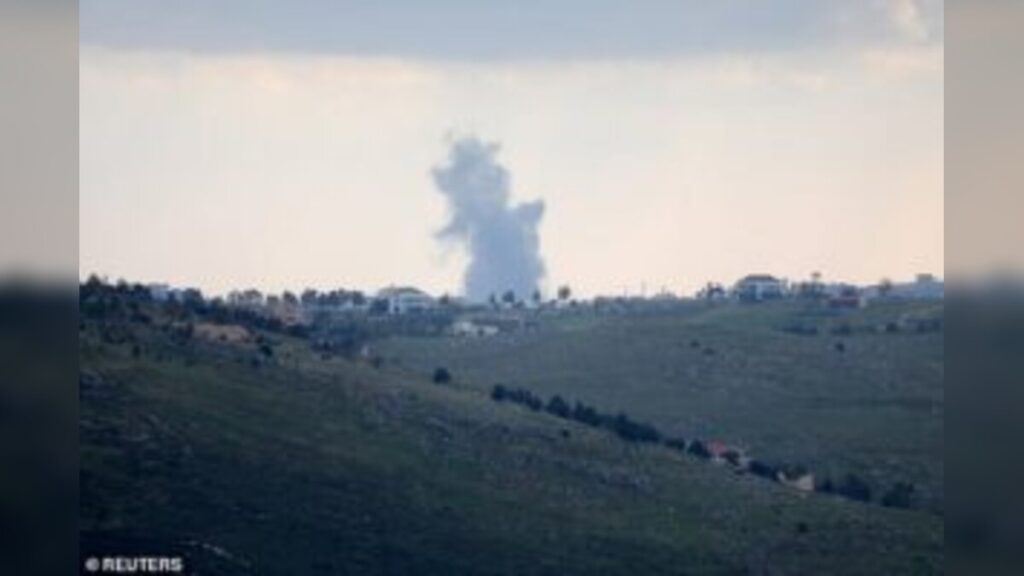
Just when it seemed like things in the Middle East were cooling off, the situation snapped back into crisis mode.
Reports emerged of drones and missiles targeting the United Arab Emirates over two consecutive days, rattling nerves across the Gulf.
The incidents followed a fragile stretch of calm, making the sudden escalation feel even more alarming.
Officials in the UAE moved quickly, confirming that their air defence systems were actively intercepting incoming threats.
Residents in some areas reported loud blasts—later explained as defensive systems knocking down missiles, cruise weapons, and drones mid-air.
Iran Pushes Back Against Accusations
While fingers were quickly pointed at Iran, Tehran didn’t waste time issuing a firm denial.
A spokesperson for the Islamic Revolutionary Guard Corps stated clearly that no Iranian forces had launched attacks on the UAE in recent days.
But the denial came with a warning. Iranian officials stressed that if the UAE—or any ally—decided to retaliate militarily, the response from Iran would be “crushing” and deeply consequential.
That combination of denial and threat has only added to the uncertainty.
UAE Stands Firm Amid Ongoing Threats
On the other side, the UAE maintained that the attacks were real and serious.
Its foreign ministry described the situation as a direct threat to national security, signaling that the country reserves the full right to respond.
The night before, emergency teams were already dealing with the aftermath of a drone strike that triggered a fire in a major oil facility—highlighting how quickly these incidents can impact critical infrastructure.
The Bigger Picture: A Fragile Region
The tensions aren’t happening in isolation.
The United States, represented by Defense Secretary Pete Hegseth, has insisted that a ceasefire agreement with Iran—reached on April 13—is still technically in place.



However, reports suggest Iran has carried out multiple attacks against US interests since then, raising doubts about how meaningful that ceasefire really is.
Meanwhile, Iranian President Masoud Pezeshkian has accused the US of playing a double game—applying pressure while expecting cooperation in negotiations.
According to him, that approach simply won’t work.
Strategic Moves Around the Gulf
One of the most critical developments is Iran’s move to tighten control over the Strait of Hormuz—a vital artery for global oil shipments.
Tehran has introduced new rules requiring ships to coordinate passage with its military and warned the US Navy to keep its distance.
This isn’t a minor tweak; it’s a move that could ripple across global trade and energy markets if tensions continue to rise.
Diplomatic Undercurrents and Global Reactions
Elsewhere, diplomatic channels are trying to stay alive.
Iraq’s incoming leader has offered to mediate between Washington and Tehran, signaling that regional players are eager to prevent a full-scale conflict.
At the same time, global political drama is adding fuel to the fire.
Donald Trump has reignited controversy by clashing with Pope Leo over the conflict, while Israel’s military leadership has hinted it could deploy its entire air force if needed.
Impact and Consequences
The immediate impact is clear: heightened fear, disrupted airspace, and potential damage to critical infrastructure. But the ripple effects go much further.
Oil prices are already under pressure, global markets are jittery, and international travel routes—especially around the Gulf—are facing increased risk.
For civilians, especially in the UAE and nearby regions, it means living under the shadow of sudden attacks and uncertainty.
For the global economy, even a small disruption in the Gulf can trigger widespread consequences.
What’s Next?
At this point, the situation could swing in multiple directions.
If diplomatic efforts gain traction, there’s a chance tensions could cool—at least temporarily.
But if another confirmed strike occurs or retaliation begins, escalation could happen quickly.
Much will depend on how the UAE responds, whether the US takes a more direct role, and if Iran sticks to its current stance or shifts strategy.
Summary
The Middle East is once again on edge.
The UAE reports being under attack, Iran denies involvement but issues stern warnings, and global powers are circling cautiously.
With military, political, and economic stakes all intertwined, even a single misstep could push the region into deeper conflict.
Bulleted Takeaways
- The United Arab Emirates reported two days of drone and missile attacks
- Iran denied responsibility but warned of a “crushing response” to retaliation
- Air defence systems in the UAE successfully intercepted multiple aerial threats
- A key oil facility fire highlights risks to critical infrastructure
- The Strait of Hormuz has become a new flashpoint with tighter Iranian control
- The US says its ceasefire with Iran is still in place despite repeated incidents
- Diplomatic efforts, including mediation offers, are ongoing but fragile
- Global markets and energy supply chains are already feeling the pressure

