
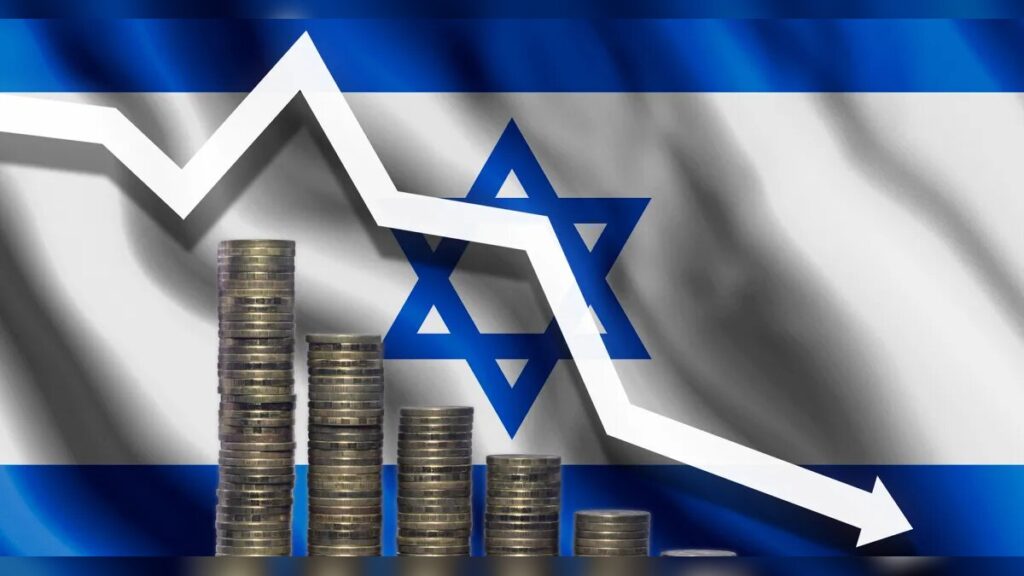
If you zoom out and look at the numbers, something pretty remarkable has been happening in Israel’s financial landscape.
In just a few short years, everyday investors—through pensions, savings plans, and market exposure—have quietly accumulated record-breaking wealth.
Fresh data from the Bank of Israel shows that by early 2026, the public’s financial asset portfolio hit a staggering NIS 7.4 trillion.
That’s not just a milestone—it’s a leap. Within a single year, the total grew by about NIS 1.1 trillion.
Stretch the timeline back six years, and the increase reaches roughly 80%.
To put that into perspective: at the start of 2020, the figure stood at NIS 4.1 trillion.
The acceleration since then tells a story of shifting habits, rising markets, and a public becoming more financially engaged.
Where the Money Actually Sits
This massive pool of wealth isn’t sitting in one place. It’s spread across:
- Bank deposits
- Pension and provident funds
- Mutual funds
- Stocks and bonds
Together, these assets paint a picture of how Israelis think about money—how much risk they’re willing to take, and how actively they participate in financial markets.
And that picture is changing.
A Growing Taste for Risk
Not long ago, Israeli investors leaned more conservative. But that’s evolving.
By the end of 2022, about 39% of public portfolios were tied up in riskier assets like stocks and bonds.
Fast forward to 2026, and that figure has climbed to 48%.
That shift isn’t random. It’s closely tied to years of strong market performance—both locally and globally.
When markets go up consistently, people naturally want in.
There’s also a broader trend at play: financial literacy.
More access to investment tools, advice, and education has made people more comfortable stepping beyond basic savings accounts.
Interestingly, even with this shift, Israelis still tend to be more cautious than investors in places like the U.S., where stock-heavy portfolios are the norm. But the gap is narrowing.
Betting More on Home Turf
Another noticeable trend? A stronger preference for investing locally.



Israeli holdings in domestic stocks have surged dramatically—more than doubling compared to just a couple of years ago.
Much of this activity revolves around companies listed on the Tel Aviv Stock Exchange.
Why the shift?
A few reasons stand out:
- Currency effects: The strength of the shekel against the dollar makes foreign investments less predictable.
- Familiarity: Investors often feel more confident putting money into companies they know.
- Institutional moves: Large financial bodies have also been reallocating funds back into local markets.
In short, there’s been a subtle but meaningful pivot inward.
The “Wealth Effect” Is Real
Here’s where things get interesting beyond the numbers.
When people see their investments grow, they don’t just feel richer—they behave differently.
Economists call this the wealth effect. Even if someone’s salary hasn’t increased, a rising portfolio can boost confidence.
That often leads to more spending, which in turn fuels economic activity.
In fact, the recent annual increase in financial assets exceeded the total wages paid across the economy in that same period.
That’s a powerful signal of how much influence asset growth now has.
But there’s a catch: it can make traditional economic tools less effective.
For example, if interest rates rise to slow spending, people might still spend freely because their investment gains cushion the impact.
Is This the Start of a Bubble?
With growth this fast, it’s natural to ask: are things overheating?
One metric economists look at is the ratio between total financial assets and GDP.
In Israel, that ratio has climbed from about 285% to 350% in just two years.
That’s a sharp jump—and it raises eyebrows.
Some experts argue that when financial assets grow much faster than the real economy, it could signal inflated market valuations.
Others push back, noting that markets often price in future growth, not just current conditions.
So, is it a bubble? There’s no clear consensus.
It’s more of a “watch this space” situation than a definitive warning sign.
Impact and Consequences
The ripple effects of this wealth surge are already being felt:
- Higher consumer spending: People feel financially secure and are more willing to spend.
- Greater market sensitivity: More households are exposed to market swings than ever before.
- Policy challenges: Central banks may find it harder to control inflation using traditional tools.
- Inequality concerns: Those invested in markets benefit more, potentially widening wealth gaps.
Perhaps most importantly, a market downturn today would hit far more people than it would have in the past.
What’s Next?
Looking ahead, several paths are possible:
- If markets continue rising, participation could grow even further.
- If volatility returns, newer investors may face a steep learning curve.
- Policymakers may need to rethink how they manage an economy so tied to asset performance.
- The balance between local and global investing will likely keep evolving.
Much will depend on global economic conditions, interest rates, and geopolitical stability.
Summary
Israel’s financial landscape has undergone a quiet transformation.
Record-breaking asset growth, a rising appetite for risk, and a renewed focus on local markets are reshaping how people build and perceive wealth.
But with greater opportunity comes greater exposure.
The same forces driving growth today could amplify risks tomorrow.
Bulleted Takeaways
- Israel’s public financial assets reached a record NIS 7.4 trillion in early 2026
- Wealth has grown by NIS 1.1 trillion in just one year
- Investors are shifting toward riskier assets like stocks and bonds
- Local market investments have surged significantly
- Rising asset values are boosting consumer confidence and spending
- The gap between financial asset growth and GDP is widening
- Experts remain divided on whether this signals a market bubble
- Future stability will depend on both local and global economic conditions

