
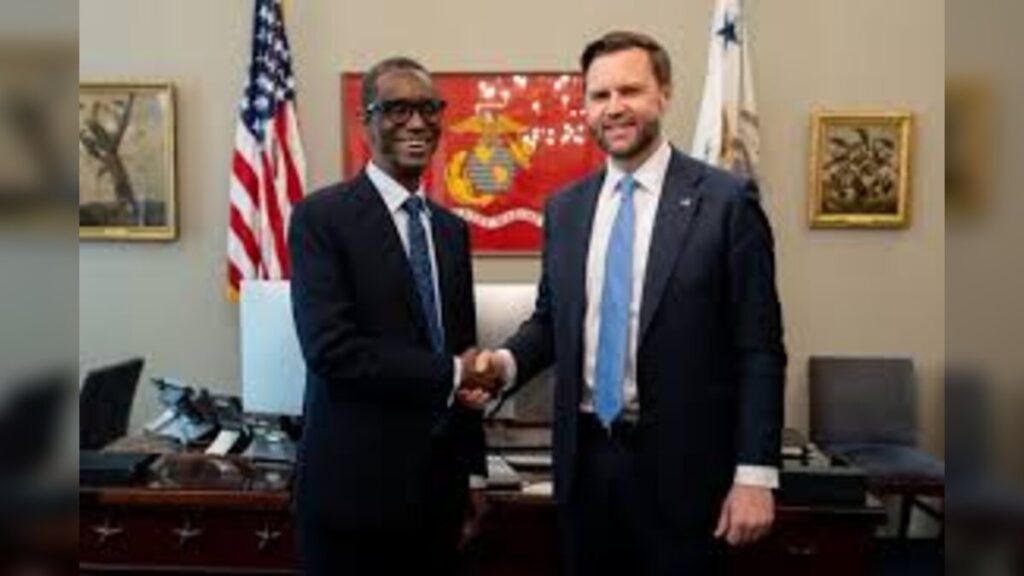
Nigeria’s National Security Adviser, Nuhu Ribadu, has wrapped up a key diplomatic visit to the United States aimed at strengthening security cooperation between both nations.
The three-day trip, which ran from May 4 to May 6, brought together some of the most influential figures in the American government and highlighted growing concerns about terrorism and instability across West Africa and the Sahel.
The visit comes at a time when regional security threats are becoming more complex, with armed extremist groups, cybercrime networks, and cross-border criminal activities continuing to affect several African countries.
Nigerian officials believe deeper cooperation with Washington could help improve intelligence gathering, military coordination, and regional stability efforts.
Ribadu Meets Top US Officials in Washington
During the visit, Ribadu held separate meetings with senior members of the US administration, including Vice President J. D. Vance and Secretary of State Marco Rubio, who is currently also serving as Acting National Security Adviser.
He also met with Allison Hooker and Assistant Secretary of War Daniel Zimmerim during the high-level discussions.
According to a statement released by presidential spokesman Bayo Onanuga, Ribadu used the meetings to reaffirm President Bola Tinubu’s commitment to maintaining strong diplomatic and strategic relations with the United States.
Focus on Terrorism and Regional Security
One of the major topics during the talks was the worsening security situation in the Sahel and parts of West Africa.
Ribadu reportedly stressed the need for long-term international cooperation to tackle terrorism, violent extremism, transnational organised crime, and emerging cyber threats.
Nigeria has remained one of the countries most affected by insurgency in the Lake Chad Basin region, particularly from extremist groups such as Boko Haram and ISWAP.
Over the years, the country has relied on military operations, intelligence sharing, and regional alliances to contain the threats, although attacks and kidnappings still persist in several northern communities.
The Nigerian delegation explained that security challenges in the region can no longer be treated as isolated national problems.
Instead, they require coordinated international support involving intelligence exchange, military training, and economic interventions.
Nigeria Highlights Its Regional Leadership Role
During the engagements, Ribadu positioned Nigeria as a frontline state in the battle against terrorism in West Africa.
He noted that Nigeria continues to play a leading role in regional peacekeeping and counterterrorism operations around the Lake Chad Basin.
The discussions also touched on Nigeria’s participation in wider African security initiatives and its partnerships with neighbouring countries such as Niger, Chad, and Cameroon.
American officials reportedly acknowledged Nigeria’s strategic importance on the continent and praised its role in promoting regional peace and democratic stability.



Talks Covered Intelligence and Defence Cooperation
Another major outcome of the meetings was renewed commitment to the Nigeria-US Joint Working Group framework, which was created to improve structured cooperation on security and strategic matters between both countries.
Both sides reviewed progress already made under the agreement and discussed new ways to strengthen collaboration in areas such as intelligence sharing, military partnerships, border protection, strategic communication, and institutional capacity building for Nigerian security agencies.
Ribadu also thanked the US government for its continued support through security assistance programmes, defence training, and counterterrorism cooperation.
Tinubu Administration’s Security Strategy Explained
American officials were also briefed on the Tinubu administration’s broader national security strategy.
Ribadu explained that the government is pursuing what he described as a “whole-of-government” approach to insecurity.
That strategy combines military action with non-military efforts such as community engagement, deradicalisation programmes, economic development projects, and regional diplomacy.
Nigerian authorities believe that fighting insecurity requires not only force but also addressing poverty, unemployment, and social conditions that often fuel extremism.
This approach reflects growing international thinking that military operations alone cannot permanently defeat insurgent movements without social and economic reforms.
Growing US Interest in African Security
The meetings also underline Washington’s renewed attention to Africa’s security environment.
In recent years, the United States has increased its focus on the Sahel because of rising extremist violence, political instability, and the growing influence of rival global powers in the region.
Security analysts say the US sees Nigeria as one of its most important African partners due to its population size, economic influence, and military capabilities.
Nigeria also hosts one of the continent’s largest armed forces and has historically contributed troops to regional peacekeeping missions.
The discussions in Washington suggest both countries are trying to deepen cooperation at a time when instability across parts of Africa continues to raise international concern.
Impact and Consequences
The renewed engagement between Nigeria and the United States could have major implications for regional security operations.
Stronger intelligence sharing and defence cooperation may improve Nigeria’s ability to track terrorist networks, disrupt arms trafficking, and strengthen border surveillance.
The talks could also open doors for additional military training, technology support, and strategic assistance from Washington.
This may help Nigerian security agencies improve operational efficiency in ongoing counterterrorism campaigns.
On the diplomatic side, the meetings reinforce Nigeria’s image as a major regional power and a critical security partner for Western governments.
However, analysts note that the success of these agreements will largely depend on implementation and whether promised cooperation translates into visible improvements on the ground.
What’s Next?
Following the Washington meetings, both countries are expected to continue engagements through the Nigeria-US Joint Working Group framework.
Officials are likely to begin implementing specific agreements relating to intelligence exchange, defence cooperation, and institutional development.
Nigeria may also seek broader international partnerships as it attempts to confront evolving security threats across the country and the wider region.
Observers will now watch closely to see whether the strengthened partnership leads to measurable gains in reducing insurgency, kidnapping, cybercrime, and organised criminal activities.
Summary
Nigeria’s National Security Adviser, Nuhu Ribadu, visited the United States for high-level security talks with senior American officials, including Vice President J.D. Vance and Secretary of State Marco Rubio.
The discussions focused on counterterrorism, intelligence sharing, defence cooperation, and regional stability in West Africa and the Sahel.
Both countries reaffirmed their commitment to deepening bilateral cooperation under the Nigeria-US Joint Working Group framework, while Nigeria highlighted its leadership role in regional security efforts.
Bulleted Takeaways
- Nigeria and the United States held high-level talks on security cooperation.
- Nuhu Ribadu met with top US officials including J.D. Vance and Marco Rubio.
- Discussions focused on terrorism, cyber threats, and organised crime.
- Nigeria reaffirmed its commitment to regional peace and democratic stability.
- Both countries reviewed progress under the Nigeria-US Joint Working Group.
- Intelligence sharing and military cooperation were major discussion points.
- The Tinubu administration promoted a combined military and non-military security strategy.
- US officials praised Nigeria’s leadership role in West African security efforts.
- The partnership could strengthen counterterrorism operations across the region.
- Future cooperation is expected to continue through diplomatic and defence engagements.

