
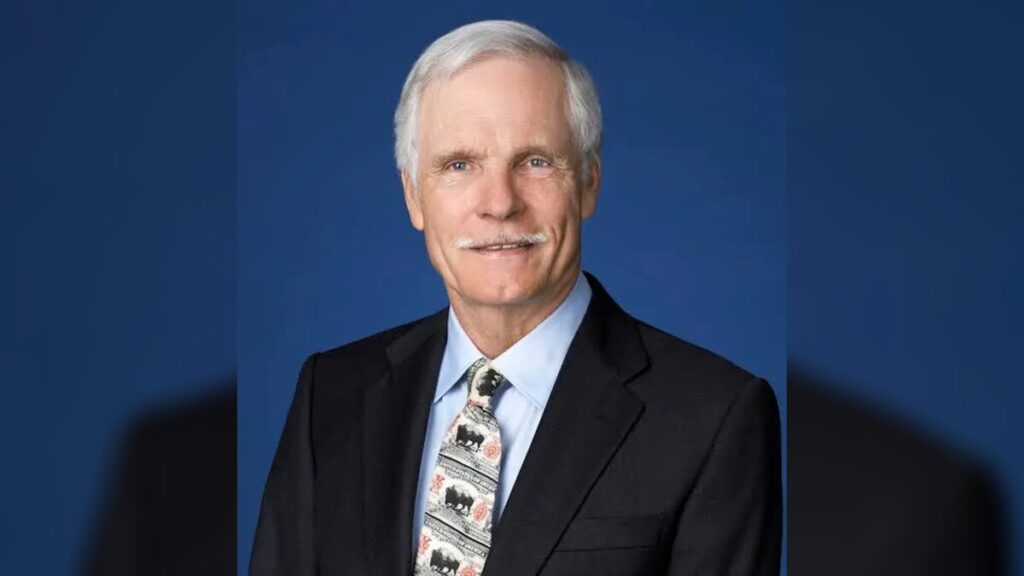
Ted Turner, the outspoken media executive who changed how Americans watched breaking news, has died at the age of 87.
Turner Enterprises confirmed his death Wednesday, May 6, 2026.
Turner was best known as the founder of CNN, the first 24-hour cable news network in the United States, a bold idea that reshaped television journalism and forced the rest of the media industry to rethink how news should be delivered.
The Man Who Bet Big on All-Day News
When Turner launched CNN in 1980, the concept sounded almost unrealistic to many critics. At the time, most Americans got their television news from scheduled evening broadcasts, not from a channel that stayed live around the clock.
Turner saw something different. He believed viewers would want access to news as it happened, whether it was morning, midnight, or the middle of a global crisis.
That gamble eventually became one of the most influential moves in modern media. CNN helped make real-time coverage a normal expectation, especially during wars, disasters, elections, and major political events.
From Superstation Visionary to Media Empire Builder
CNN was not Turner’s first major television breakthrough. Before building the cable news giant, he helped create cable’s first “superstation,” using satellite distribution to send a local Atlanta station to viewers across the country.
That move helped open the door for the cable TV boom. Turner later expanded his media footprint into movies, sports, and animation through networks and properties connected to TBS, TNT, Cartoon Network, and the Atlanta Braves.
Known for his confidence and sharp tongue, Turner earned the nickname “The Mouth of the South.” He was blunt, competitive, and often unpredictable, but his instincts repeatedly pushed television into new territory.
CNN Changed the Rhythm of News
Turner’s biggest legacy remains CNN.
The network’s mission was simple but revolutionary: provide live news from anywhere in the world at any time. That approach helped viewers follow major events as they unfolded instead of waiting for the next newspaper or nightly broadcast.
By the early 1990s, CNN had become a global force. In 1991, Time magazine named Turner its Man of the Year, crediting him with changing how audiences in countries around the world witnessed history in real time.



Life Beyond the Newsroom
Turner’s public life stretched far beyond television.
He was a champion yachtsman, a sports team owner, a philanthropist, and an environmental advocate. He founded the United Nations Foundation after making a historic pledge to support UN causes, and he became an outspoken voice on nuclear disarmament and global peace efforts.
He also became one of the largest private landowners in the United States and played a major role in bison conservation. His environmental work even reached children’s television through the creation of Captain Planet, a cartoon built around ecological awareness.
Health Struggles in Later Years
Turner revealed in 2018 that he had been diagnosed with Lewy body dementia, a progressive brain disorder that can affect thinking, movement, mood, and behavior.
In early 2025, he was hospitalized with a mild case of pneumonia and later recovered at a rehabilitation facility, according to reports cited in coverage of his death.
CNN Pays Tribute to Its Founder
CNN Worldwide Chairman and CEO Mark Thompson praised Turner’s legacy after the announcement of his death.
Thompson described Turner as fearless, deeply involved, and willing to trust his instincts when others doubted him. He said Turner would remain the “presiding spirit” of CNN and called him the giant on whose shoulders the network stands.
Impact and Consequences
Turner’s death closes the chapter on one of the most disruptive careers in American media.
His decision to launch CNN changed the expectations of audiences, politicians, journalists, and governments. News no longer had to wait for fixed broadcast times. Major events could be followed live, minute by minute, from almost anywhere in the world.
That shift brought enormous benefits, including faster access to information during emergencies and global crises. It also helped create the modern pressure for nonstop updates, instant analysis, and continuous coverage, a media environment that still shapes politics and public opinion today.
Turner’s influence can also be seen outside journalism. His philanthropy, conservation work, and global activism made him a major figure in environmental and humanitarian circles.
What’s Next?
Turner’s media legacy will continue through CNN and the broader cable news industry he helped create.
His family, business associates, former colleagues, and philanthropic organizations are expected to continue honoring his work in media, conservation, and global advocacy.
Turner is survived by five children, 14 grandchildren, and two great-grandchildren.
Summary
Ted Turner, the founder of CNN and one of the most important figures in cable television history, has died at 87.
His launch of CNN in 1980 created the first 24-hour cable news network in the United States and permanently changed how people followed breaking news.
Beyond television, Turner was also known for sports ownership, yachting, philanthropy, environmental activism, bison conservation, and his support for global causes.
He had disclosed a Lewy body dementia diagnosis in 2018 and remained widely recognized as one of the most influential media pioneers of the modern era.
Bulleted Takeaways: Ted Turner, CNN Founder and Media Pioneer, Dies at 87
- Ted Turner died Wednesday, May 6, 2026, at age 87.
- Turner Enterprises confirmed his death.
- Turner founded CNN in 1980.
- CNN became the first 24-hour cable news network in the United States.
- His around-the-clock news model changed television journalism.
- He was known for his blunt personality and nickname, “The Mouth of the South.”
- Before CNN, Turner helped develop cable’s first superstation.
- His media empire included major interests in cable programming, movies, animation, and sports.
- Turner owned the Atlanta Braves and was also known as a competitive yachtsman.
- Time magazine named him Man of the Year in 1991.
- Turner founded the United Nations Foundation and supported nuclear disarmament efforts.
- He became a major conservationist and helped restore bison populations.
- Turner disclosed in 2018 that he had Lewy body dementia.
- CNN leaders praised him as a fearless media visionary.
- He is survived by five children, 14 grandchildren, and two great-grandchildren.
