
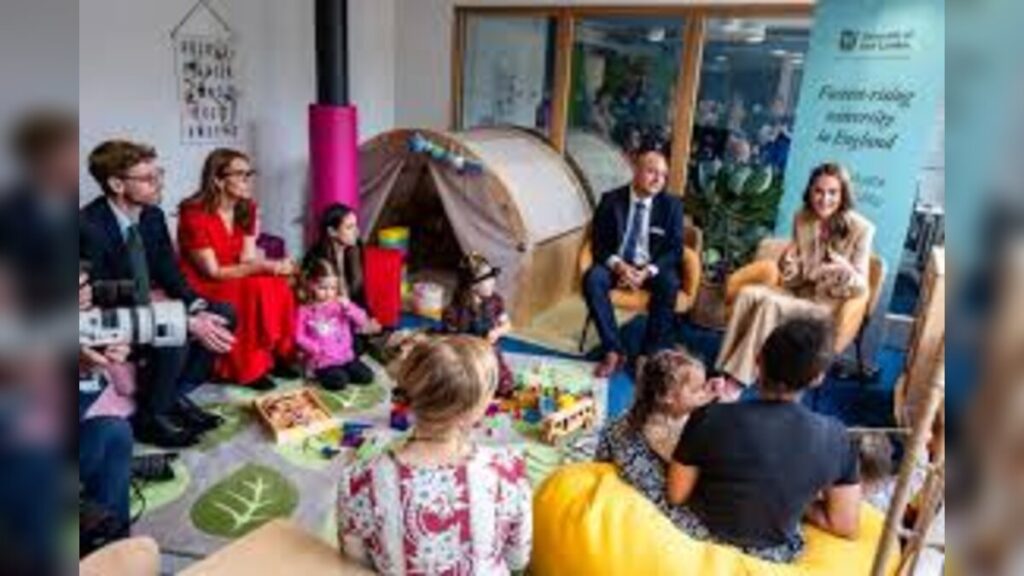
There was a familiar moment of public warmth this week as Catherine, Princess of Wales re-emerged at an engagement focused on early childhood development.
Her visit took her to the University of East London’s Institute for the Science of Early Years & Youth, tied to her long-running “Centre for Early Childhood” programme.
For supporters, it was a reassuring sign of recovery and continuity after her recent cancer treatment.
For critics, it reopened an old argument about how the modern royal family connects with everyday Britain, especially at a time when economic pressure dominates daily life.
Early Childhood Mission Meets a Hard Public Mood
Kate’s work in early development has been one of her key long-term projects, focusing on children’s emotional and social growth.
But outside palace circles, awareness of the initiative remains surprisingly low.
Some observers argue that while the message is positive, it struggles to cut through when families are dealing with rising living costs, housing pressure, and reliance on food banks.
In that context, abstract ideas about “nature walks and emotional bonding” can feel distant from immediate survival concerns.
The contrast is often drawn with earlier generations of royals who attached themselves to highly visible, emotionally charged global causes.
The Shadow of Diana and Expectations of Royal Influence
Comparisons inevitably surface with Princess Diana, whose public work reshaped expectations of royal engagement.
Her 1987 HIV hospital visit, where she famously shook hands with an AIDS patient without gloves, is still remembered as a turning point in public attitudes.
Diana’s later campaigning on landmines further cemented her global humanitarian image, making her a benchmark for emotional impact and visibility.
That legacy creates an ongoing question for the current Princess of Wales: whether traditional, quieter causes are enough in an age that rewards bold, headline-grabbing action.
Royal Family, Public Scrutiny, and Uneasy Headlines
The wider royal backdrop has not been free from turbulence either.
Occasional reports involving Prince Andrew continue to fuel media attention, including past incidents involving security concerns during private walks near his Norfolk residence.




At the same time, royal visibility remains under constant scrutiny, with public expectations often swinging between admiration, frustration, and fatigue.
Celebrity Culture, Image, and the Noise Around Public Life
Away from royalty, celebrity culture continues to dominate conversation.
Actress Nicole Kidman drew attention at the Met Gala with a striking red outfit, sparking the usual mix of admiration and online speculation about appearance and aging.
Meanwhile, singer Kylie Minogue shared nostalgic reflections on her past relationship with INXS frontman Michael Hutchence ahead of a documentary project, reminding audiences how personal stories often resurface decades later in public life.
Knighthoods, Pop Tours, and Britain’s Cultural Priorities
This week also saw broadcaster Richard Osman receive an OBE from Princess Anne, prompting debate about modern honours systems and who gets recognised in today’s Britain.
Elsewhere, nostalgia continues to fuel entertainment business ideas, with the Spice Girls reportedly exploring avatar-style concert technology inspired by the success of ABBA’s virtual performances.
Even consumer fashion trends entered the conversation, with retailers like Marks & Spencer drawing attention for bold seasonal designs that divide opinion as much as they sell out.
Health Scares, Public Figures, and Viral Moments
Public curiosity also extended to unusual headlines: chef Paul Hollywood was fined after a high-speed drive described as a “mercy dash” to help his sick cat, adding a human twist to an otherwise routine legal story.
At the same time, renewed discussion around figures like Jeffrey Epstein and past prison notes has resurfaced online, feeding ongoing fascination with unresolved historical scandals.
Even science and health news entered uneasy territory, with reports of cruise passengers exposed to rare infections such as hantavirus raising fresh memories of early pandemic uncertainty.
Cost of Living Reality vs Public Distractions
In the background of all this sits a political and economic mood shift.
Recent UK local election outcomes saw gains for Reform UK led by Nigel Farage, reflecting voter frustration with mainstream parties.
For many households, these debates feel far more urgent than celebrity updates or royal programmes, reinforcing a widening gap between public priorities and media narratives.
Impact and Consequences
The biggest impact of the ongoing debate around Kate’s work is not about one event, but perception.
If royal initiatives are not widely understood or felt in daily life, they risk being seen as symbolic rather than practical.
At the same time, comparisons with past royals like Princess Diana create an almost impossible benchmark, shaping expectations that may not reflect the modern role of the monarchy.
There is also a broader cultural consequence: public attention becomes fragmented between serious issues like cost of living and the constant stream of celebrity-driven headlines.
What’s Next?
Kate is expected to undertake a solo overseas visit to Italy in the coming weeks, an early test of how she is reintroduced into international royal duties following her health treatment.
Public focus will likely follow two tracks: her personal recovery journey and whether her projects gain stronger visibility beyond royal and academic circles.
Meanwhile, broader conversations about the relevance of monarchy, media priorities, and public engagement are unlikely to fade.
Summary
The Princess of Wales has returned to public life with renewed focus on early childhood development, but her work arrives at a time when public attention is divided and often skeptical.
Between royal expectations shaped by Princess Diana’s legacy, ongoing cost-of-living pressures, and a crowded celebrity news cycle, her initiative sits in a complicated space.
The question is less about intention and more about impact: whether royal projects can still meaningfully connect with everyday life in modern Britain.
Bulleted Takeaways
- Catherine, Princess of Wales attended an early years programme at the University of East London.
- Her initiative focuses on childhood emotional and social development.
- Public awareness of the programme remains relatively low outside royal circles.
- Comparisons continue with the legacy of Princess Diana and her global humanitarian impact.
- Wider royal context includes scrutiny of Prince Andrew.
- Celebrity culture remains dominant, with figures like Nicole Kidman and Kylie Minogue in public discussion.
- Entertainment and honours debates include Richard Osman receiving an OBE and Spice Girls exploring avatar concert ideas.
- Political mood shifts include rising support for Reform UK led by Nigel Farage.

