
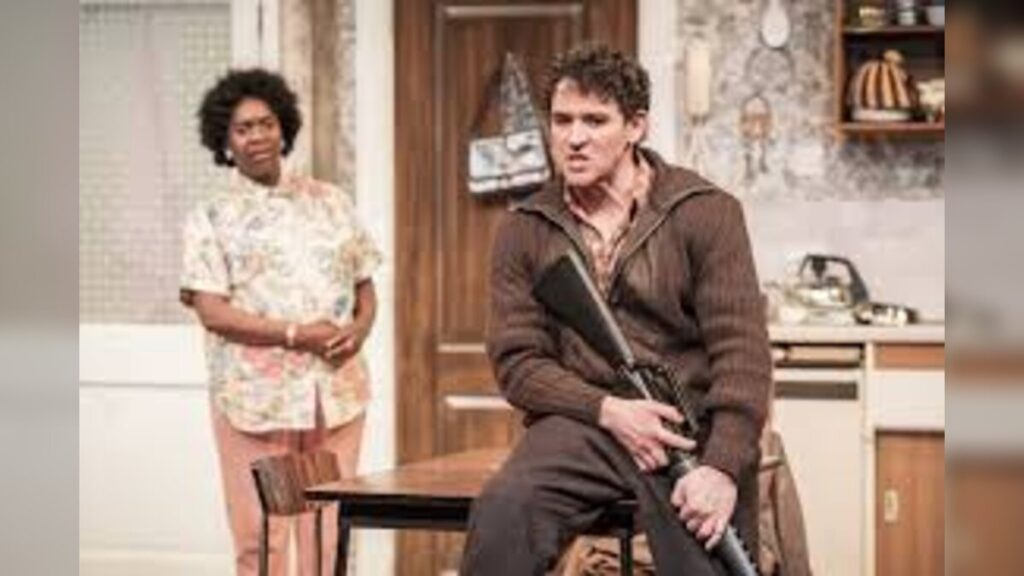
A theatre production in Liverpool has stirred up a storm of opinions after bringing a politically charged story to the stage at a sensitive moment.
The adaptation of The Assassination of Margaret Thatcher has reopened arguments about art, violence, and timing in public life.
The production, staged at the Liverpool Everyman Theatre, is based on a short story by author Dame Hilary Mantel and later adapted for the stage by playwright Alexandra Wood.
It imagines a fictional attempt on the life of former UK Prime Minister Margaret Thatcher.
The controversy has been amplified by timing.
The show opened shortly after heightened global political tensions and in the same period as local elections in the UK, raising questions about whether such a narrative should be staged at all right now.
A Story Rooted in Fiction but Triggering Real-World Emotions
The plot itself is not new. It originates from Mantel’s short story published after Thatcher’s death in 2013.
The narrative is set in 1983 and follows a fictional Liverpool sniper planning an assassination attempt.
Despite being clearly fictional, the subject matter has always been sensitive due to Thatcher’s divisive political legacy and the history of real-life violence against UK politicians.
That sensitivity has only increased in recent years, especially following the murders of MPs Jo Cox and David Amess, which reshaped public awareness around political safety in the UK.
Why the Timing Became the Main Flashpoint
What might have been a standard theatre controversy escalated because of when the production opened.
The show began running just days after a reported security incident involving former US President Donald Trump, where an armed individual allegedly attempted to breach a political event.
For critics, this coincidence made the production feel unusually provocative.
Former Conservative Party leader Iain Duncan Smith publicly questioned whether the play’s timing risked sending the wrong message during a period of political tension.
Others argued that staging a fictional assassination plot so close to real-world violence against politicians, including recent UK attacks, felt unnecessarily inflammatory.




Supporters Defend Artistic Freedom and Intent
Those involved in the production have pushed back strongly against accusations that the play promotes violence.
Playwright Alexandra Wood has stated that the adaptation does not endorse harm toward political figures in any form.
Supporters argue that theatre has always explored difficult subjects, including political conflict, moral ambiguity, and historical trauma.
In that sense, this production is seen as part of a long tradition of using art to examine uncomfortable realities rather than glorify them.
Dame Hilary Mantel herself defended the original story during her lifetime, describing it as a way of confronting political history rather than avoiding it.
Her broader literary reputation often centered on challenging established narratives and exploring power structures in British politics.
The Thatcher Legacy Still Shapes the Debate
Much of the intensity around the production comes from the enduring legacy of Margaret Thatcher herself.
As a deeply polarizing figure, she remains central to debates about Britain’s economic and social transformation in the 1980s.
The story also echoes real historical events, including the 1984 IRA bombing of the Brighton hotel during the Conservative Party conference, which nearly killed Thatcher and injured multiple people.
That event continues to influence how any fictional depiction of violence against her is received.
Even decades later, reactions remain divided.
Some view such works as valid artistic exploration, while others see them as reopening old wounds.
Impact and Consequences
The production has reignited a broader discussion about where the boundary lies between artistic expression and public sensitivity.
In an era where political violence is no longer just historical memory, the stakes feel higher.
For theatres, the controversy highlights the challenge of programming politically themed works without triggering backlash or public concern.
It also raises questions about whether timing should factor into artistic decisions as much as content does.
At a societal level, the debate reflects growing unease about normalizing narratives involving political assassination, even in fictional form, when real-world incidents remain fresh in public memory.
What’s Next?
The play continues its scheduled run at the Liverpool Everyman Theatre until May 23, with a 14+ age restriction and content warnings covering violence, abuse, and death-related themes.
Going forward, the production is likely to remain a talking point in media and political circles, especially as discussions around safety, censorship, and artistic freedom continue to evolve.
There may also be increased scrutiny of similar productions in other UK theatres, particularly those dealing with politically sensitive historical figures or recent events.
Summary
A stage adaptation of The Assassination of Margaret Thatcher in Liverpool has sparked debate over timing, tone, and artistic responsibility.
While supporters defend it as legitimate creative expression rooted in historical fiction, critics argue its release during a period of heightened political sensitivity is troubling.
The controversy reflects a wider tension between protecting artistic freedom and responding to public concern about political violence.
Bulleted Takeaways
- Liverpool Everyman Theatre is staging an adaptation of The Assassination of Margaret Thatcher
- The work is based on a short story by Dame Hilary Mantel and adapted by Alexandra Wood
- It depicts a fictional assassination plot against Margaret Thatcher, former UK Prime Minister
- Critics say the timing is sensitive due to recent political violence and global tensions
- The production opened shortly after a reported security incident involving Donald Trump
- Supporters argue the play does not promote violence and is purely fictional
- Real-world events such as the murders of Jo Cox and David Amess have intensified reactions
- The show runs until May 23 with age restrictions and content warnings in place

