
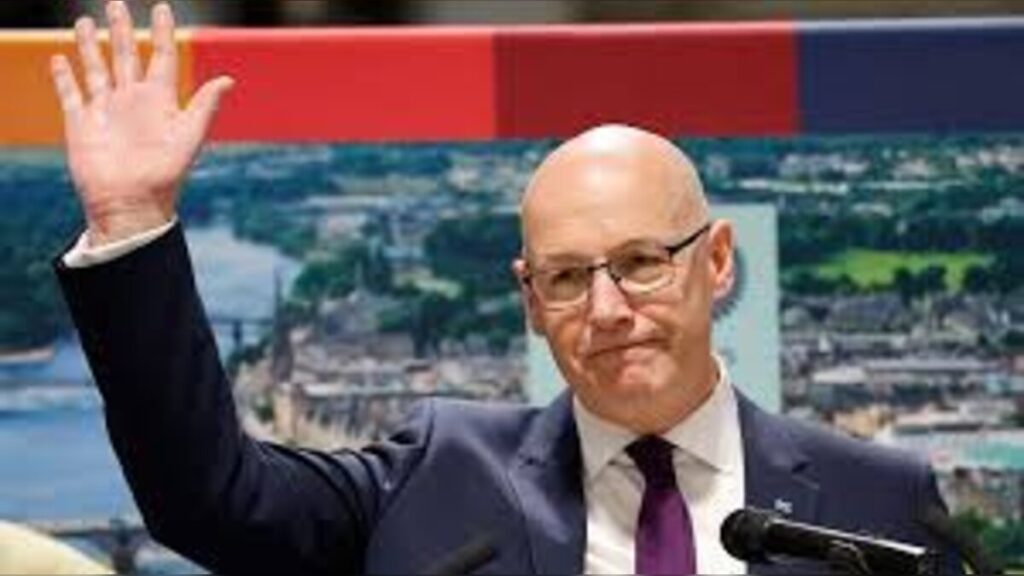
Scotland’s political landscape is once again being shaped by the Scottish National Party after the party secured its fifth consecutive election victory, paving the way for John Swinney to return as First Minister.
The result reinforces the SNP’s long-standing dominance in Scottish politics and signals that, despite recent internal struggles and leadership turbulence, the party still commands significant support across the country.
For many observers, the outcome marks both a political comeback for Swinney and a test of whether the SNP can rebuild public confidence after a difficult period filled with resignations, investigations, and growing criticism from opposition parties.
A Familiar Face Returns to Lead Scotland
Swinney is no stranger to the top level of Scottish politics.
A veteran figure within the SNP, he has spent decades in government and has held several major cabinet positions over the years.
His return comes at a moment when the party is trying to steady itself after months of uncertainty.
Unlike newer political figures who often arrive with dramatic promises, Swinney’s image has long been tied to stability, experience, and party loyalty.
Supporters see him as someone capable of calming tensions within the SNP while keeping the independence movement alive.
His re-emergence also highlights how heavily the party still relies on experienced leadership during politically sensitive moments.
The SNP’s Grip on Scottish Politics Remains Strong
Winning five Scottish elections in a row is no small achievement.
The SNP has dominated Scottish politics for nearly two decades, transforming itself from a nationalist movement into Scotland’s governing force.
Even though recent years have exposed cracks within the party, voters still appear willing to trust the SNP more than its rivals.
Analysts say the opposition has struggled to present a unified alternative capable of breaking the party’s hold over Scotland’s devolved government.
The latest victory suggests that many Scots remain aligned with the SNP’s broader message on public services, Scottish autonomy, and the long-running push for independence.
Independence Still Looms Over Scottish Politics
Although everyday concerns such as healthcare, the economy, and energy costs influenced voters, the issue of Scottish independence continues to hover in the background.
The SNP has consistently argued that Scotland should have the right to decide its future through another independence referendum.
However, political and legal barriers from the UK government have slowed progress on that front.
Swinney is expected to continue pressing the constitutional debate, though many believe he may adopt a more measured and strategic approach compared to some previous leadership rhetoric.
The challenge for him will be balancing calls for independence with immediate domestic concerns affecting Scottish households.




Opposition Parties Face Difficult Questions
The result will likely trigger fresh debate among Scotland’s opposition parties, especially over why they have repeatedly failed to remove the SNP from power.
Critics of the Scottish government had hoped recent controversies surrounding the SNP would weaken voter confidence enough to create a major political shift.
Instead, the election showed that dissatisfaction with the party has not yet translated into broad support for its opponents.
Political analysts believe opposition leaders may now need to rethink their strategies, messaging, and coalition-building efforts ahead of future elections.
A Party Recovering From Internal Turmoil
The SNP’s latest victory arrives after one of the most turbulent periods in the party’s modern history.
Leadership changes, financial scrutiny, and internal disagreements had raised serious concerns about the party’s future direction.
Some former supporters questioned whether the SNP had lost focus after years in power.
Others feared voter fatigue could finally weaken the party’s electoral strength.
Yet the election result suggests the SNP still possesses a strong political machine and a loyal base capable of carrying it through difficult moments.
For Swinney, however, the real challenge starts now.
Winning an election is one thing; restoring public trust and maintaining unity inside the party is another.
Impact and Consequences
The election outcome is expected to have major implications both inside Scotland and across the wider United Kingdom.
First, the SNP victory strengthens Scotland’s pro-independence movement, even if another referendum remains uncertain in the short term.
The result will likely increase political pressure on Westminster whenever constitutional issues resurface.
Second, Swinney’s leadership could reshape the tone of Scottish politics.
His experience may bring a calmer, more pragmatic style of governance compared to the turbulence seen in recent months.
There are also economic and policy implications.
The Scottish government faces growing pressure over healthcare waiting times, public spending, education performance, and cost-of-living concerns.
Voters will now expect the SNP to move beyond political survival and deliver practical improvements.
For opposition parties, the defeat could trigger internal reviews and leadership scrutiny as they attempt to understand why the SNP continues to outperform them electorally.
What’s Next?
Attention will now shift toward how Swinney forms his government and the priorities he chooses in his opening months as First Minister.
Several key issues are expected to dominate his agenda:
- Improving Scotland’s healthcare system
- Addressing economic pressures on households
- Managing public finances
- Rebuilding confidence in government institutions
- Keeping the independence conversation politically alive
Observers will also watch closely to see whether Swinney reshuffles senior party figures or introduces a fresh governing style aimed at reconnecting with frustrated voters.
The relationship between the Scottish government and the UK government could also become increasingly important, particularly on constitutional and economic matters.
Summary
John Swinney’s expected return as First Minister marks another major chapter in the SNP’s long-running dominance of Scottish politics.
Despite recent scandals and political instability, the party has once again convinced enough voters that it remains the strongest option to govern Scotland.
The victory reinforces the SNP’s resilience while placing enormous responsibility on Swinney to restore confidence, manage internal unity, and address mounting public concerns.
At the same time, the result ensures that Scotland’s political future — especially the debate around independence — will remain firmly in the spotlight.
Bulleted Takeaways
- John Swinney is set to return as Scotland’s First Minister
- The SNP has now achieved a fifth consecutive Scottish election victory
- The result confirms the party’s continued dominance despite recent controversies
- Scottish independence remains a major long-term political issue
- Opposition parties failed to convert SNP difficulties into electoral gains
- Swinney is expected to focus on stability, governance, and rebuilding public trust
- Key challenges ahead include healthcare, the economy, and constitutional debates

